
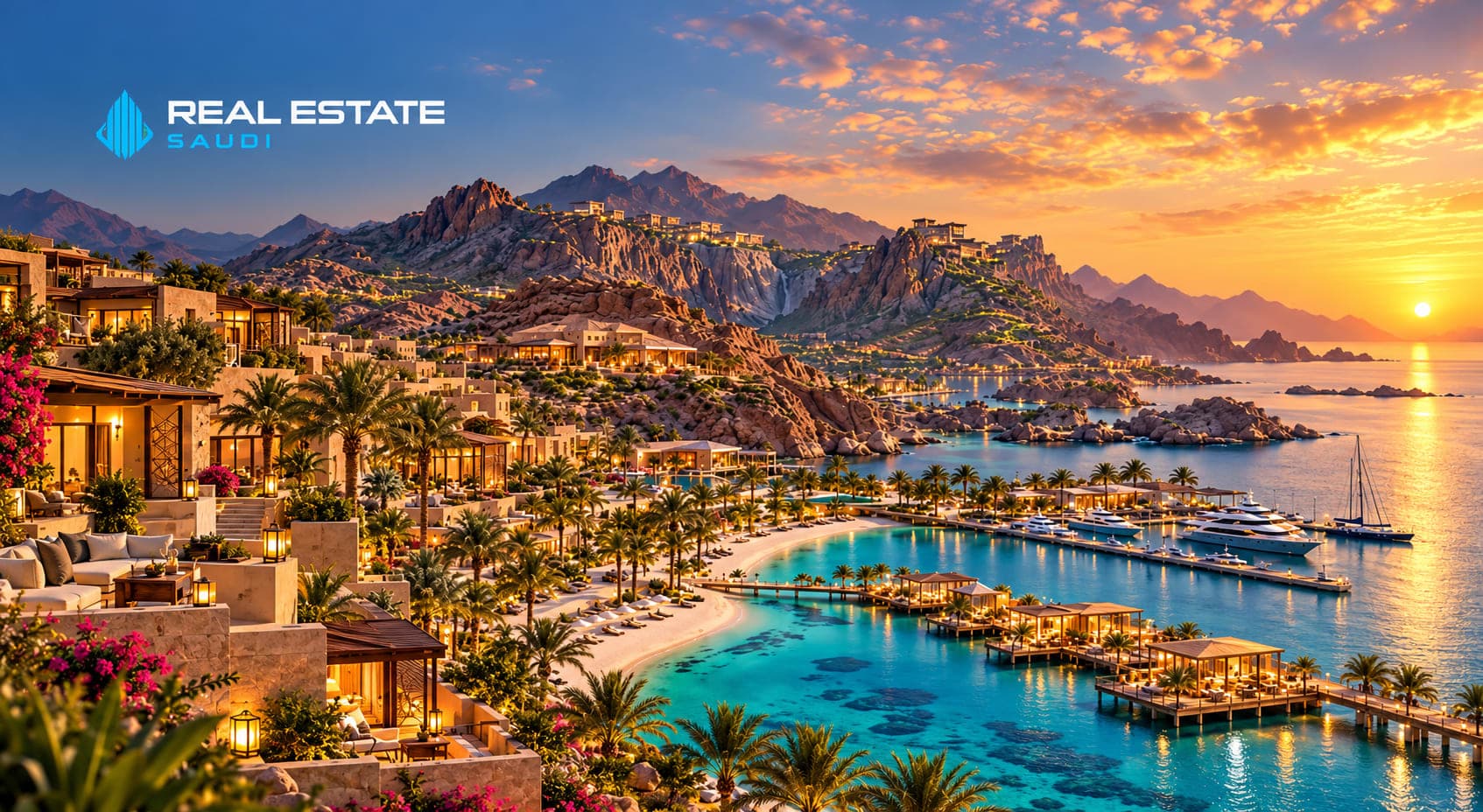
Tourism Development Projects in Saudi Arabia are entering a more operational phase in 2026. Several former masterplan destinations are now opening hotels, attractions, residential products and visitor infrastructure. For investors, this changes the question from “Which giga-project is biggest?” to “Which destination has real visitor demand, credible delivery, a suitable investment structure and an asset that can perform after fees, operating costs and future supply are considered?”
The opportunity spans resorts, residences, retail, entertainment and destination services. The major projects also serve different markets, from Red Sea luxury and AMAALA wellness to Diriyah heritage, AlUla culture, Qiddiya entertainment and Soudah mountain tourism.
Tourism Development Projects in Saudi Arabia: 2026 Overview
Saudi Arabia’s tourism strategy is backed by substantial existing demand. The Ministry of Tourism reported about 123 million domestic and inbound tourists in 2025, including 29.3 million inbound visitors, while the national strategy targets 150 million annual tourists by 2030. A June 2026 Ministry report also said tourism investments exceeded USD 120 billion and more than 200,000 new rooms were expected to enter the market by 2030, with roughly half of that pipeline financed by the private sector. The figures are detailed in the Ministry of Tourism’s 2026 tourism-investment report. Ministry of Tourism Saudi Arabia
For investors, the practical lesson is that national tourism growth does not automatically make every tourism-linked property attractive. A destination can be successful while a specific unit is overpriced, burdened by high service charges or exposed to too much competing supply. Investment analysis should therefore begin with the project’s current operating status, visitor proposition, access, ownership structure, developer, operator and realistic exit market.
The wider transformation also connects with the way Vision 2030 is changing land use and urban development across the Kingdom. Real Estate Saudi’s guide to how Vision 2030 is transforming Saudi real estate provides useful background on the relationship between national diversification and property development.
ما نوع العقار والمنطقة المناسبة؟
اختر نوع العقار والمدينة المستهدفة لاستعراض أنسب الخيارات.
Why Saudi Arabia’s Tourism Real Estate Market Is Different in 2026
The 2026 market is more mature because several destination projects now have operating assets. The Red Sea began welcoming guests in 2023 and has added more hotels and experiences through 2026. AMAALA officially moved into operations in June 2026. Qiddiya City has begun opening visitor attractions. Diriyah is advancing large hospitality and branded-residential packages, while AlUla continues to develop its long-term heritage-led masterplan.
Operating assets provide better evidence than a brochure: investors can examine openings, access, operators and actual project sequencing. Early occupancy or launch activity still should not be treated as a guaranteed-return forecast.
Saudi Arabia’s updated non-Saudi property ownership system also took effect on 22 January 2026. International investors may have new ownership pathways, but eligibility remains subject to location, buyer category and regulatory conditions.
1. The Red Sea: Regenerative Tourism Becomes an Operating Market
The Red Sea is one of the clearest examples of a Saudi tourism development moving from vision to a functioning destination. The official Red Sea destination overview confirms that the destination welcomed its first guests in 2023, expanded with additional resorts in 2024 and 2025, and continued opening hotels, entertainment and residential components in 2026.
The destination covers 28,000 square kilometres and more than 90 islands. Red Sea Global currently describes a planned hotel portfolio of 18 hotels with around 3,000 keys, more than 1,000 residential homes across Laheq and Shura islands, and a tourism ecosystem supported by Red Sea International Airport. This combination creates a broader investment thesis than hotel development alone.
The real-estate component includes branded and limited-edition residences, while the tourism ecosystem requires property management, facilities management, transport, leisure, food and beverage, retail, healthcare and staff services. Red Sea Global also reports that its destination is powered by renewable-energy infrastructure, with sustainability forming a core part of the product rather than a separate marketing layer.
Investors researching the region can use Real Estate Saudi’s Red Sea area guide and its detailed Red Sea tourism projects analysis to compare the destination with the wider west-coast market.
2. AMAALA: Wellness, Yachting and Branded Residential Demand
AMAALA is another major 2026 milestone because it moved into live operations with the opening of Four Seasons Resort and Residences AMAALA at Triple Bay in June 2026. Red Sea Global described the launch as the official start of operations at the destination. The official AMAALA opening announcement confirms that the first guests were welcomed on 15 June 2026.
Additional hospitality openings followed during the year, reinforcing AMAALA’s positioning around wellness, performance, luxury lifestyle and marine tourism. Rosewood AMAALA, Equinox Resort AMAALA and Nammos Resort AMAALA were among the properties announced as opening during 2026.
Unlike a conventional beach resort, AMAALA is designed as an integrated destination where hotels, branded residences, marina infrastructure, wellness facilities, restaurants and experiences support one another. The opening of the AMAALA Yacht Club in September 2026 added a marine-tourism dimension aimed at attracting the international yachting market as well as domestic and regional visitors.
For investors, branded residences are particularly relevant because they sit between traditional residential property and hospitality. The brand, operator, rental programme, owner-use rules, service charges and management agreement can all affect the economics. A globally recognised hotel name may support positioning, but it does not eliminate the need to compare purchase price, recurring fees, future inventory and resale conditions.
3. Diriyah: Heritage Tourism Meets Mixed-Use Development
Diriyah is a different form of tourism-led real estate. Rather than relying primarily on beaches or entertainment rides, the development is built around Saudi heritage, Najdi architecture, cultural experiences, hospitality, residences, museums, dining and retail. Its proximity to Riyadh also gives it access to the capital’s resident, corporate and international visitor base.
In October 2026, the official Diriyah Company construction announcement confirmed two construction contracts with a combined value of SAR 2.729 billion for hospitality and residential assets in Diriyah Square. The announced scope included five luxury hotels, three residential assets, 413 hotel rooms and 34 branded residential units.
Diriyah Company also says the wider Diriyah and Wadi Safar masterplans are planned to include nearly 34 luxury hotel brands. The company’s long-term target is to attract 50 million visits a year when the wider development is complete. That is a masterplan target rather than a current visitor count, so investors should treat it as a planning ambition rather than an operating-performance metric.
The opportunity in Diriyah includes hotels, branded residences, retail, food and beverage and culture-led commercial space. Investors can also use the Diriyah area guide to understand how the project fits into the broader Riyadh property market.
4. AlUla: Culture, Archaeology and Low-Density Hospitality
AlUla is built around heritage conservation rather than conventional high-density development. The Royal Commission for AlUla’s Journey Through Time masterplan organises development across five districts stretching from AlUla Old Town toward Hegra. It includes cultural assets, visitor experiences, landscape regeneration, hospitality and a planned low-carbon tramway.
The masterplan targets more than 5,000 additional hospitality keys as part of a wider target of 9,400 keys by 2035. It also includes 15 cultural assets, a 20-kilometre public realm known as the Wadi of Hospitality and a 46-kilometre low-carbon tramway connecting AlUla International Airport with the five districts.
For property and hospitality investors, AlUla offers a different risk profile from a large city. Heritage protection, environmental sensitivity and development controls can limit density, but those same constraints can help preserve destination character. Opportunities may emerge across hospitality, experiences, logistics, food and beverage, residential concepts and destination services.
Real Estate Saudi’s AlUla area guide provides additional location context for investors comparing heritage tourism with coastal or entertainment-led projects.
5. Qiddiya City: Entertainment, Sports and Visitor Economy
Qiddiya City is the entertainment and sports counterpart to Saudi Arabia’s heritage and coastal destinations. The official Qiddiya City masterplan places the city about 45 kilometres from downtown Riyadh and describes a development area of more than 360 square kilometres across more than 20 neighbourhoods.
The project includes Six Flags Qiddiya City, Aquarabia, the Gaming & Esports District, Speed Park Track, the Prince Mohammed bin Salman Stadium, sports facilities, cultural venues and residential neighbourhoods. Aquarabia officially opened to the public on 23 April 2026, giving the destination an operating attraction rather than only future construction.
For investors, Qiddiya can create potential demand for hotels, serviced accommodation, retail, restaurants, entertainment-linked commercial space and residential communities serving workers and residents. Yet the correct investment depends on phasing. A property delivered years before surrounding attractions, transport or services may perform differently from an asset entering after the district has established regular visitor flows.
Real Estate Saudi’s Qiddiya project guide can be used for further property-focused analysis.
6. Soudah Peaks: A Mountain Tourism Market
Soudah Peaks expands Saudi Arabia’s tourism offer beyond cities and coastlines. The official Soudah Peaks masterplan describes the project as a luxury mountain destination in the Asir Region focused on culture, nature, wellness, adventure and sport.
The current masterplan targets 2,810 hotel rooms, 1,337 residential units and second homes, and more than 30 commercial and entertainment attractions. This mix creates a potential real-estate ecosystem around hotels, second homes, retail, restaurants, outdoor experiences and destination services.
Mountain tourism has different economics from a major urban destination. Access, weather, seasonal travel patterns, topography, construction costs and environmental controls can have a larger influence on development. Investors should therefore avoid applying Riyadh or Jeddah residential assumptions to a project such as Soudah Peaks.
حدد ميزانيتك الاستثمارية
حدد ميزانيتك التقديرية لنقوم بتضييق خيارات العروض.
7. NEOM Tourism: Multiple Destinations, Not One Property Market
NEOM is often discussed as if it were a single tourism project, but investors should separate its different regions and destination concepts. The official NEOM tourism overview identifies Trojena as a mountain destination and Magna as a coastal concept alongside other nature-led visitor experiences.
The investment timeline can also differ significantly between NEOM destinations. Some assets may be long-horizon opportunities rather than immediately investable property. Before relying on a marketing announcement, investors should confirm whether the project has released a specific asset, who can acquire it, what ownership right is offered, and what infrastructure and operating dates have actually been confirmed.
For broader context, investors can compare the destination through Real Estate Saudi’s NEOM area guide and the site’s overview of major Saudi mega-projects.
8. Al-Khafji: A Newer Coastal Tourism and Residential Opportunity
Saudi tourism development is not limited to the best-known giga-projects. In September 2026, the Public Investment Fund launched Gulf Coast Development Company to create an integrated tourism and residential destination on the Al-Khafji coast in the Eastern Province.
The official PIF Al-Khafji development announcement says the project will cover about 20 square kilometres with a 10-kilometre waterfront. The completed destination is planned to contain eight residential neighbourhoods, more than 16,000 housing units, around 1,400 hotel keys, marinas and commercial, tourism and education facilities. Development is planned in three phases, with the first phase scheduled for completion in 2030.
This shows that destination investment is expanding beyond the western Red Sea corridor into regional markets combining tourism, housing and local economic development.
Where Are the Main Tourism Investment Opportunities?
Tourism Development Projects in Saudi Arabia can create opportunities across several asset and business types, but the route to participation is different for each.
Hospitality development: Hotels, resorts and wellness assets can involve development, joint ventures or management agreements.
Branded residences: Buyers should study owner-use restrictions, rental arrangements, management fees and resale rules.
Retail and visitor services: Destinations need restaurants, shops, transport, logistics, property management and maintenance; performance depends on footfall, leasing terms and project phasing.
Marinas and marine tourism: AMAALA and Red Sea projects can support yachting, charter, marina retail and related services.
The Real Estate Saudi investment guide can help property investors compare these tourism-linked opportunities with conventional residential or commercial strategies.
Foreign Ownership and Regulatory Considerations
Saudi Arabia’s updated non-Saudi property ownership system entered into force on 22 January 2026. The official REGA non-Saudi ownership announcement says applications are processed through the Saudi Properties platform and that the process differs for residents, non-residents, companies and other eligible entities.
The change does not mean every foreign investor can buy every tourism property. Geographical zones, asset type, buyer status and specific regulatory conditions still matter. Some tourism investments may be structured through companies, leases, funds or joint ventures rather than a straightforward property purchase.
Off-plan tourism-linked residences also require additional checks. Investors should verify project licensing, escrow arrangements where applicable, developer status, payment milestones, handover terms and the legal treatment of branded residences before payment.
How to Evaluate a Tourism Project Before Investing
A strong project-level due-diligence process should answer seven questions.
Is the destination operating, under construction or still in planning? Operational status affects the amount of evidence available.
Who is the target visitor? Luxury, wellness, pilgrimage, entertainment, heritage and domestic family tourism produce different demand patterns.
What exactly is being offered to the investor? A hotel share, residence, land interest, lease, fund interest and operating business are not equivalent.
What fees apply? Branded and resort properties can include substantial management, maintenance and service charges.
How much competing supply is planned? A growing destination can still experience temporary oversupply.
What is the exit market? A specialised resort residence may have fewer future buyers than a mainstream city apartment.
What evidence supports the projected return? Marketing yield, occupancy or appreciation claims should be checked against contracts, comparable transactions and conservative assumptions.
Main Risks Investors Should Consider
Tourism assets are exposed to operating and development risks that differ from ordinary residential property. Phased construction can delay the surrounding ecosystem. Hotel performance can depend on operators, air connectivity, events and seasonality. Branded residences can carry high recurring fees. Retail depends on visitor flows and tenant mix.
Destination success does not guarantee asset success. An individual unit can underperform because of pricing, management or competing supply. Projected visitor numbers are useful context, but they are not current traffic data, rental guarantees or capital-growth forecasts.
كيف تفضل التواصل معك؟
اختر وسيلة التواصل الأكثر ملاءمة لك لمناقشة فرصك الاستثمارية.
2026 Outlook
Tourism Development Projects in Saudi Arabia are becoming more investable in the sense that more projects now have operating components, named operators, visible infrastructure and clearer development phases. The Red Sea and AMAALA offer live coastal destinations, Qiddiya has begun opening attractions, Diriyah is progressing large hospitality packages, and AlUla continues building a long-term cultural economy. Soudah Peaks, NEOM and Al-Khafji broaden the geographic opportunity set.
The next stage of the market is likely to reward selectivity. Investors should focus on projects where demand, access, regulation, developer capability and asset economics align rather than assuming that every property attached to a Vision 2030 destination will outperform.
Conclusion
Tourism Development Projects in Saudi Arabia are reshaping the Kingdom’s real-estate and hospitality map in 2026. The Red Sea, AMAALA, Diriyah, AlUla, Qiddiya City, Soudah Peaks, NEOM and emerging regional projects each serve different tourism segments and create different forms of property and operating opportunity.
The best investment is not necessarily the largest project. It is the opportunity where the legal structure is clear, the destination has credible demand, the developer can deliver, recurring costs are understood and the asset has an exit market. Investors should verify official project information, licensing and ownership rules and obtain appropriate legal, tax and financial advice before investment.
تحدث معنا عبر قناتك المفضلة
استشارات عقارية مباشرة حول الاستثمار والسوق العقاري في المملكة العربية السعودية.
الأسئلة الشائعة
The leading projects include The Red Sea, AMAALA, Diriyah, AlUla, Qiddiya City, Soudah Peaks and NEOM’s tourism regions. Al-Khafji has also emerged as a new coastal tourism and residential development. Each targets different visitor segments and should be assessed as a separate market.
Major destinations create demand for hotels, branded residences, restaurants, retail, staff accommodation, logistics and property services. This can create several investment channels, but destination growth does not guarantee a specific property will perform well. Price, recurring fees, competing supply and legal structure still matter.
Yes. The Red Sea began welcoming guests in 2023 and continued expanding through 2026 with additional resorts, experiences and residential products. Because development is phased, investors should confirm the operating status, ownership structure and delivery timetable of the specific property or hospitality opportunity they are considering.
Yes. AMAALA officially began operations in June 2026 when Four Seasons Resort and Residences AMAALA at Triple Bay welcomed the destination’s first guests. Additional resorts and the AMAALA Yacht Club opened later in the year, expanding its wellness, residential and marine-tourism ecosystem.
There is no universal best project. The Red Sea and AMAALA focus on luxury coastal tourism, Diriyah on heritage and mixed use, AlUla on culture and conservation, Qiddiya on entertainment and sports, and Soudah Peaks on mountain tourism. The right choice depends on the asset and investor strategy.
Eligible non-Saudis can acquire certain real-estate rights under the ownership system effective from 22 January 2026, subject to geographical zones, buyer category and regulatory controls. Tourism investments can also use company, fund, lease or joint-venture structures, so the legal route should be verified for each opportunity.
They can be attractive where location, operator and pricing are strong, but the brand does not guarantee returns. Buyers should review management fees, service charges, owner-use restrictions, rental-pool terms, maintenance obligations and resale conditions because these can materially change the net investment outcome.
Verify the developer, project licence, ownership eligibility, escrow arrangements where applicable, payment schedule, completion obligations, unit specification, operator agreement and cancellation terms. Investors should also compare the launch price with completed alternatives and assess how much competing inventory may arrive at handover.
Key risks include construction delays, seasonality, operator dependence, high service charges, future oversupply and narrower resale liquidity for specialised assets. Transport connectivity and destination programming can also affect demand. Investors should use conservative occupancy and income assumptions rather than relying on guaranteed-return marketing.
Use first-party sources: the Ministry of Tourism for tourism regulation and investment guidance, REGA for property ownership and off-plan rules, and the relevant developer or project authority for delivery status. Transaction-specific legal, tax and financial questions should be independently verified before investment.
