
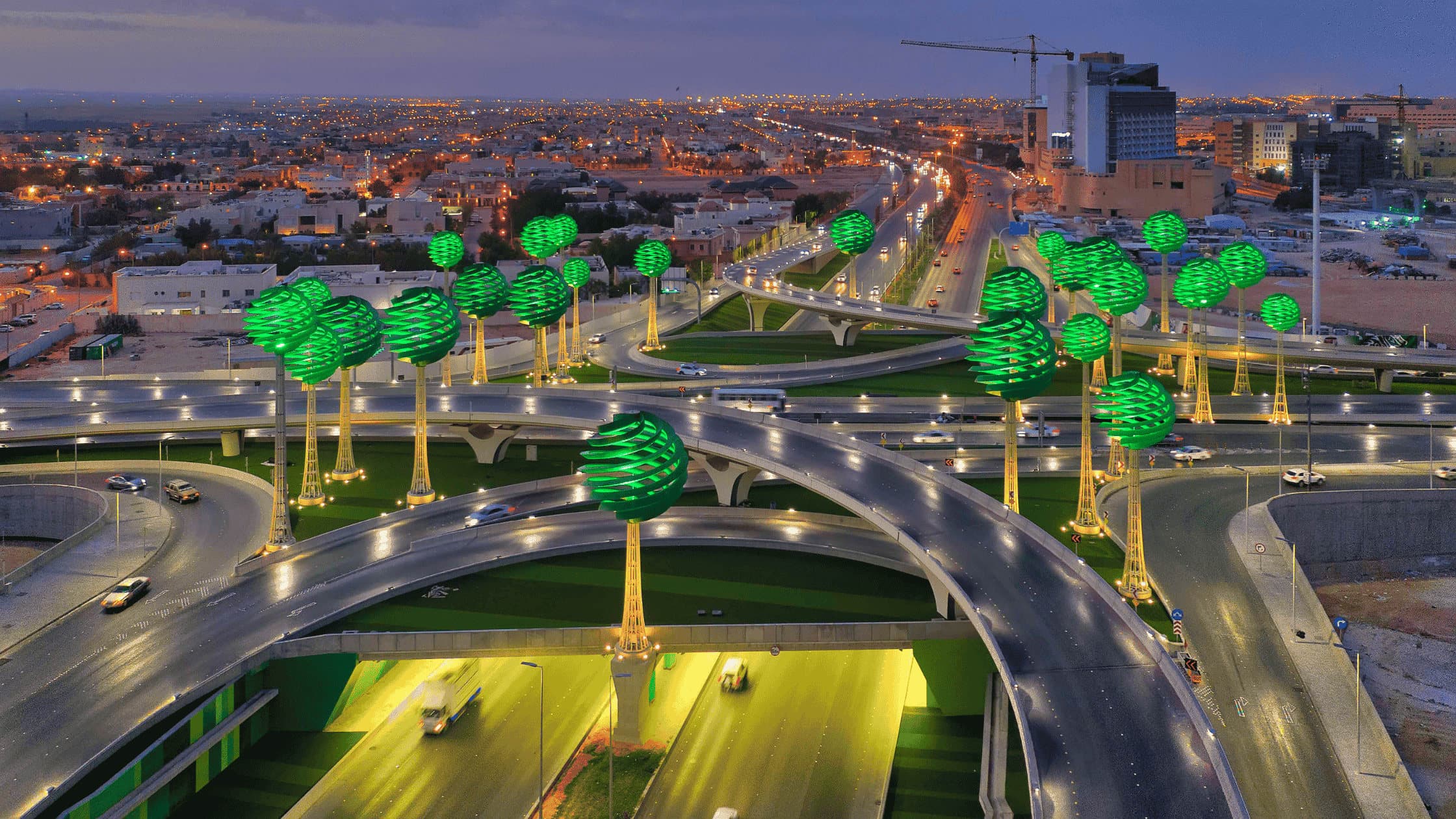
Saudi Vision 2030 real estate reform has changed almost every part of the Kingdom's property market. Since the plan was launched in 2016, homeownership among Saudi families has risen from 47% to more than 66%. New regulators and digital platforms now govern sales and leases, and foreigners can buy property in designated zones. In short, Vision 2030 has turned real estate from a largely informal, land-driven market into a regulated, data-led sector built around housing access, tourism, urban quality of life and foreign investment.
This guide explains:
the housing targets and how far the Kingdom has come
the main laws and regulators
the opening to foreign buyers
the giga-projects and quality-of-life schemes reshaping cities
what market data shows in 2026
financing reforms
the cities that benefit most
the risks buyers and investors should weigh
Saudi Vision 2030 Real Estate at a Glance
Under Vision 2030, Saudi Arabia aims to raise homeownership among Saudi families to 70% by 2030. The plan expands housing finance, regulates the market through REGA and digital platforms, opens property ownership to foreigners and builds giga-projects that create new tourism and residential destinations.
Area | Before Vision 2030 | Position in 2026 |
|---|---|---|
Saudi homeownership | 47% (2016) | 66.24% (end of 2025); target 70% by 2030 |
Market regulator | No dedicated real estate authority | Real Estate General Authority (REGA), established 2017 |
Tax on property sales | VAT regime from 2018 | 5% Real Estate Transaction Tax since October 2020; sales VAT-exempt |
Foreign ownership | Limited and permit-based | Law of Real Estate Ownership by Non-Saudis in force since 22 January 2026 |
Leasing | Largely unregistered | Lease registration through Ejar; Riyadh rent freeze since September 2025 |
Mortgage market | Small, limited products | Expanded bank and finance-company lending, supported by a secondary mortgage market |
Urban development | Traditional low-rise expansion | Giga-projects, master-planned communities and transit-oriented districts |
Why Real Estate Sits at the Heart of Vision 2030
Vision 2030 is Saudi Arabia's plan to reduce dependence on oil and build a diversified economy. Real estate touches nearly every part of that plan, from housing families and attracting tourists to hosting international companies and major events.
The strategy is delivered through dedicated programmes:
The Housing Program focuses on homeownership and housing supply.
The Quality of Life Program supports parks, entertainment and liveable cities.
The Public Investment Fund (PIF) backs large developments and developers such as ROSHN, New Murabba and Diriyah.
Property also matters because it drives activity across construction, materials, finance, retail and hospitality. More private-sector housing supply, more mortgages and more transactions all support non-oil growth, which is the central economic goal of the Vision.
This is why reforms have moved on several fronts at once. New laws, new financing tools, new platforms and new supply have been introduced together, not one at a time.
The Housing Program: From 47% to 66% Homeownership
Housing access has been the most measurable success of the Vision so far. According to the Housing Program's annual report, Saudi homeownership reached 65.4% by the end of 2024, beating the 2025 target of 65% a year early. The Minister of Municipalities and Housing later reported a rate of 66.24% by the end of 2025, leaving a gap of less than four percentage points to the 70% target.
Several tools drove this progress:
Sakani. The national housing support platform, launched in 2017, gives eligible citizens access to subsidised loans, ready homes, off-plan units and residential land.
Real Estate Development Fund (REDF) support. Eligible first-time buyers can receive profit subsidies on home loans and down payment assistance.
National Housing Company (NHC). The NHC partners with private developers to deliver large residential communities at scale.
Off-plan sales regulation. REGA's rules for off-plan projects, including escrow accounts for buyer payments, made buying before completion safer.
RETT relief for first homes. Eligible Saudi first-time buyers can have the transaction tax covered on the first SAR 1 million of the purchase price.
You can explore current state-supported schemes in our guide to government housing projects in Saudi Arabia.
Progress has not been even across the Kingdom. Ownership rates tend to be lower in Riyadh, where prices are highest, than in smaller regions. This is one reason policymakers have focused recent measures on the capital's land and rental markets.
A New Regulatory Framework for Property
Before 2016, much of the Saudi property market ran on informal practices, with limited data, few standard contracts and little protection for off-plan buyers or tenants. Vision 2030 introduced a layered system of regulators, platforms and taxes.
REGA and digital platforms
The Real Estate General Authority, created in 2017, regulates brokers, developers, off-plan sales and property management. Licensing for brokers, standard contracts and digital platforms has made transactions far more transparent.
Leases are now registered through Ejar, which creates an official record of rent and contract terms. The Real Estate Registry is building a national record of property titles to reduce disputes and speed up transfers.
The Real Estate Transaction Tax
In October 2020, Saudi Arabia replaced VAT on property sales with a 5% Real Estate Transaction Tax (RETT). Property sales are now exempt from VAT, while commercial leases generally still carry 15% VAT. Our guide to real estate taxes in Saudi Arabia explains current rates and exemptions.
White Land Fees
White Land Fees encourage owners to develop or sell idle urban land instead of holding it for speculation. Updated regulations raised the maximum fee to 10% of land value a year in the highest-priority areas. In 2026, a second phase extended the fees to Makkah, Jeddah and the Dammam metropolitan area.
Rent regulation in Riyadh
Housing affordability in the capital has become a policy priority. Since 25 September 2025, a five-year rent freeze has applied to residential and commercial leases within Riyadh's urban boundary. Leases across the Kingdom now renew automatically unless either party gives notice.
Land supply in north Riyadh
In March 2025, a directive released 81.48 square kilometres of land for development in north Riyadh. Developed plots are to be offered to eligible citizens at no more than SAR 1,500 per square metre.
Together with White Land Fees and the rent freeze, these measures show a clear shift from stimulating demand to managing affordability.
Opening the Market to Foreign Buyers
The biggest change for international investors came in 2026. The Law of Real Estate Ownership by Non-Saudis came into force on 22 January 2026, allowing foreign individuals and companies to own property through REGA's Saudi Properties portal.
Earlier online content often described this as "100% foreign ownership" everywhere. That is not accurate. Ownership is tied to specific zones and conditions:
Designated zones. Non-Saudis can own property in zones approved by the Cabinet in June 2026, including major districts and projects in Riyadh and Jeddah.
Residents. Resident foreigners may also own one home for personal use outside designated zones, except in Makkah and Madinah.
Holy cities. Ownership in Makkah and Madinah is limited to Muslim individuals and Saudi companies, within approved zones.
Exit fee. Non-Saudis pay a 2% disposition fee when they sell in Riyadh, Jeddah, Makkah and Madinah.
For the full process, see our guides to buying property in Saudi Arabia as a foreigner and buying property in Makkah and Madinah.
Residency through property
Vision 2030 also linked property to long-term residency. Under the Premium Residency program, the Real Estate Owner route requires qualifying residential property worth at least SAR 4 million, free of mortgages, plus a separate application. Our guide to Premium Residency in Saudi Arabia explains the conditions.
Indirect investment
Foreign investors who do not want to own property directly can invest through listed real estate companies and regulated funds. Since January 2025, foreign investors have also been able to buy shares in Saudi-listed companies that own property in Makkah and Madinah, subject to ownership limits.
Giga-Projects and Mega-Developments Reshaping Saudi Cities
The most visible part of Saudi Vision 2030 real estate is the pipeline of giga-projects and large master-planned communities. These projects aim to create new tourism destinations, business districts and neighbourhoods rather than simply adding houses.
Project | Location | Focus |
|---|---|---|
NEOM | Tabuk Province, northwest | New region with residential, tourism and industrial zones |
The Red Sea | Red Sea coast | Luxury tourism across islands and coastal sites |
Diriyah | Riyadh | Heritage-led mixed-use destination around the historic At-Turaif district |
Qiddiya | Near Riyadh | Entertainment, sports and culture city |
New Murabba | Riyadh | New downtown district built around a landmark cube |
ROSHN communities | Riyadh, Jeddah and other cities | Large integrated residential neighbourhoods |
Delivery and re-phasing
Some projects are already operating. The first resorts at The Red Sea destination began welcoming guests in 2023, and parts of Diriyah and several ROSHN communities have been delivered.
Others, including large parts of NEOM, remain long-term plans. Timelines for several giga-projects have been revised or phased as priorities shift towards developments linked to Expo 2030 and the 2034 FIFA World Cup. Buyers should look at delivery evidence, not launch announcements alone.
Why giga-projects matter to buyers
Large projects can lift nearby land values, attract employers and create new rental demand. They also concentrate new supply, and many of them are now within designated foreign ownership zones. Our coverage of the New Murabba development looks at one of the capital's biggest schemes in more detail.
Mixed-Use, Sustainability and Quality-of-Life Projects
Beyond giga-projects, Vision 2030 is changing how everyday neighbourhoods are planned. The focus has shifted from single-use housing estates towards walkable, mixed-use districts with parks, transport and services close to home.
Mixed-use business districts
The King Abdullah Financial District (KAFD) in Riyadh is the clearest example. It combines offices, residences, retail and leisure in one district connected to the metro. Similar mixed-use thinking now shapes many new projects in Riyadh and Jeddah, where developers pair homes with schools, clinics and shops to reduce commuting.
Green space and liveability
The Quality of Life Program supports large public projects such as King Salman Park in Riyadh, planned as one of the world's largest urban parks, and Green Riyadh, a long-term tree-planting and greening programme. Parks, pedestrian routes and cooler streets can make surrounding neighbourhoods more attractive to families and tenants.
Sustainability standards
Energy efficiency and sustainable design are increasingly part of project planning, especially in large master-planned communities and tourism destinations. For buyers, better building standards can mean lower running costs, although specifications vary widely between developers. Ask for details on insulation, cooling efficiency and building certification before buying.
Luxury and gated communities
Demand for high-end housing has also grown in established areas such as Riyadh's Diplomatic Quarter and Jeddah's Al Rawdah, along with new gated communities aimed at senior professionals and expatriates. The premium segment tends to follow employment and infrastructure, which is why it has concentrated in the two largest cities.
How the Market Has Responded: Prices and Transactions
Housing is now the backbone of Saudi property activity. In the first half of 2025, the Kingdom recorded about 93,700 residential transactions worth SAR 77.5 billion, with housing capturing roughly 63% of total real estate transaction value.
City trends diverged:
Riyadh transaction volumes fell as affordability tightened.
Jeddah's residential transaction value rose 28%.
Madinah's residential transaction value rose 49%.
Official price data for 2026 shows a market still growing, but more selectively. In the second quarter of 2026, the national real estate price index rose 1.3% year on year, with clear differences between segments and regions.
Indicator (Q2 2026) | Annual change |
|---|---|
National real estate price index | +1.3% |
Residential prices | +2.6% |
Residential land | +6.3% |
Apartments | +1.1% |
Villas | −9.7% |
Commercial property | −3.2% |
Riyadh Region | +4.2% |
Makkah Region (including Jeddah) | +0.4% |
The pattern reflects Vision 2030 priorities. Land and apartments in growth areas remain in demand, while villas and commercial property have softened. Riyadh continues to lead, and other regions grow more slowly. For the full quarterly picture, see our Q2 2026 price index report.
Mortgage and Financing Reforms
Homeownership growth would not have been possible without deeper housing finance. Several changes widened access to mortgages:
Higher loan-to-value limits. Saudi citizens buying a first home can borrow up to 90% of the property's value, reducing the deposit needed.
Saudi Real Estate Refinance Company (SRC). Established by PIF in 2017, SRC buys mortgages from lenders. This frees capital for new lending and supports long-term fixed-rate products.
Subsidised financing. Eligible buyers receive profit subsidies and down payment support through REDF and Sakani.
More lenders and products. Banks and licensed finance companies offer Islamic and conventional-style home finance, including options for some resident expatriates.
Stronger mortgage access has also raised questions about affordability, especially in Riyadh, where prices climbed quickly. For current lending rules and eligibility, read our guide to real estate financing in Saudi Arabia.
Which Cities Benefit Most
The impact of Saudi Vision 2030 real estate reforms is uneven, and each major market has its own drivers.
Riyadh. The main beneficiary, driven by regional headquarters, the metro, giga-projects and Expo 2030. It also faces the strictest rent and land controls. See our guide to real estate investment in Riyadh.
Jeddah. A coastal, trade and tourism hub with lower entry prices, waterfront regeneration and growing master-planned communities.
Makkah and Madinah. Pilgrimage and hospitality drive demand, and foreign Muslim buyers can now own property in approved zones.
Eastern Province. Dammam, Khobar and Dhahran are linked to energy, industry and logistics, with steady family and corporate demand.
NEOM and the Red Sea coast. New destinations focused on tourism and lifestyle living, with limited resale history so far.
If you are deciding between the two largest markets, our Riyadh vs Jeddah comparison sets out prices, rents and rules side by side.
Opportunities and Risks for Buyers and Investors
Opportunities:
A clearer, more regulated market with registered leases, licensed brokers and escrow-protected off-plan sales.
Direct foreign ownership in designated zones for the first time.
Long-term demand from population growth, rising homeownership and new employers.
New districts linked to transport, tourism, parks and major events.
Risks and considerations:
Policy intervention. Rent freezes, land releases and fees can change the returns on existing assets quickly.
Project delivery. Giga-project timelines have shifted, and off-plan units can face delays.
Affordability. High prices in Riyadh have already slowed transaction volumes.
Segment divergence. Villas and commercial property fell in value nationally in 2026 even as land rose.
Exit costs and liquidity. Foreign buyers need to budget for the 2% disposition fee and consider resale depth in newer areas.
Common Mistakes to Avoid
Treating announcements as delivery. In Saudi Vision 2030 real estate, a launch event is not the same as a finished district. Check construction progress and handover records.
Believing "100% ownership everywhere" claims. Foreign ownership depends on zones, residency and city-specific rules.
Ignoring regulation. Rent controls, White Land Fees and zone rules can transform the numbers behind an investment.
Assuming every city behaves like Riyadh. Regional markets move at different speeds.
Relying on old data. Prices, rules and ownership conditions have changed significantly since 2024.
Skipping due diligence. Verify titles, licences, escrow accounts and zone status before paying.
What to Expect Between Now and 2030
The Kingdom is in the final stretch of the Vision's timeline, and several milestones will shape the market:
Homeownership target. Closing the gap to 70% will likely keep housing support, supply programmes and financing high on the agenda.
Expo 2030 in Riyadh and the 2034 FIFA World Cup will focus investment on transport, hospitality and event-linked districts.
Foreign ownership. Zones may be expanded or refined as REGA evaluates demand from foreign buyers.
Affordability measures. Policies such as the Riyadh rent freeze and White Land Fees may evolve or extend to other cities.
Data and transparency. Wider use of the Real Estate Registry and official price indices should make pricing clearer for buyers.
None of these outcomes is guaranteed. Follow official announcements and base decisions on current rules and verified market data.
Conclusion
Saudi Vision 2030 real estate reform has transformed the Kingdom's property market in less than a decade. Homeownership has climbed from 47% to over 66%, new regulators and platforms have brought transparency, and foreign buyers can now own property in designated zones. Giga-projects, mixed-use districts and green spaces are reshaping Riyadh, Jeddah and the coast.
The market is also more carefully managed than before, with rent controls, land releases and fees designed to protect affordability. Buyers and investors who follow the rules, verify project delivery and use current data are best placed to benefit. This guide is general information, not legal or financial advice, so consult a licensed adviser before making property decisions.
Which property type & region do you prefer?
Select property type and preferred city in Saudi Arabia.
Frequently Asked Questions
Vision 2030 aims to raise homeownership among Saudi families to 70% by 2030. The rate rose from 47% in 2016 to 65.4% by the end of 2024, beating the 2025 interim target of 65%, and reached 66.24% by the end of 2025, according to the Minister of Municipalities and Housing. The Housing Program, Sakani and subsidised financing drive this goal.
Vision 2030 has created a regulated, data-led market. REGA licenses brokers and regulates off-plan sales, leases are registered through Ejar, property sales carry a 5% transaction tax instead of VAT, and White Land Fees discourage land hoarding. Foreigners can own property in designated zones, and giga-projects are creating new districts and destinations.
Yes. The Law of Real Estate Ownership by Non-Saudis took effect on 22 January 2026. Foreign individuals and companies can own property in designated zones approved in June 2026, and residents may also own one home for personal use outside those zones. Makkah and Madinah have stricter rules, and a 2% fee applies when non-Saudis sell in major cities.
The best-known projects include NEOM in the northwest, The Red Sea coastal tourism destination, Diriyah and New Murabba in Riyadh, Qiddiya near Riyadh, and ROSHN's integrated communities in several cities. Some are already welcoming residents or visitors, while others have been re-phased, so buyers should check actual delivery progress before committing.
Riyadh benefits most, thanks to regional headquarters, the metro, major developments and Expo 2030. It posted the strongest official price growth in 2026, with Riyadh Region up 4.2% year on year. Jeddah, Makkah, Madinah and the Eastern Province also benefit, each driven by tourism, pilgrimage, trade or industry.
Overall, yes, but selectively. The national real estate price index rose 1.3% year on year in the second quarter of 2026, with residential land up 6.3% and apartments up 1.1%. Villa prices fell 9.7% and commercial property fell 3.2%, so performance depends heavily on location and property type.
The Real Estate Transaction Tax is a 5% tax on the value of real estate transactions, introduced in October 2020 to replace VAT on property sales. Property sales are now VAT-exempt. Eligible Saudi first-time buyers can have the tax covered on the first SAR 1 million of the price, and other exemptions apply in specific cases.
Not automatically. Under the Premium Residency program, the Real Estate Owner route requires qualifying residential property worth at least SAR 4 million, free of mortgages and valued by an accredited valuer, plus a separate application and approval. Buying a cheaper property does not qualify on its own.
Sustainability shapes planning more than ever. The Quality of Life Program supports large green projects such as King Salman Park and Green Riyadh, while new master-planned communities and tourism destinations increasingly include energy-efficient design. Standards still vary between developers, so buyers should ask for specific details on insulation, cooling efficiency and certification before buying.
It depends on your goals, budget and time horizon. The market is more regulated and transparent than ever, and foreign ownership is now possible in designated zones. However, rent controls, new land supply and softer villa and commercial prices mean returns are less predictable than headlines suggest. Focus on location, delivery evidence and total costs, and seek licensed advice.
