
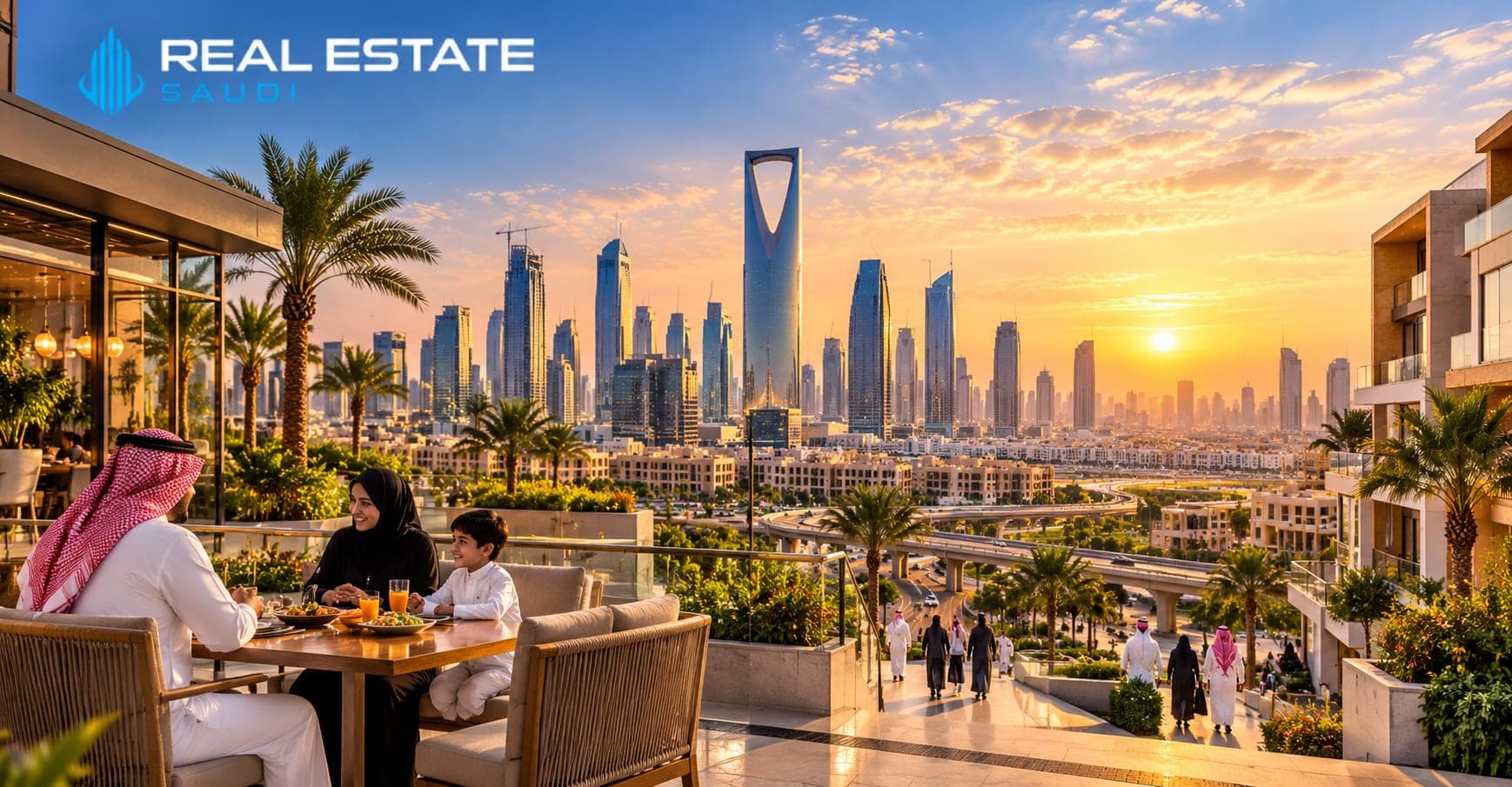
Real estate investment in Mecca and Medina is driven by one of the most reliable sources of demand anywhere in the world: millions of pilgrims who travel to the two holy cities every year for Hajj and Umrah. That demand supports hotels, serviced apartments, retail and housing around the Grand Mosque in Makkah and the Prophet’s Mosque in Madinah.
The short answer: opportunities are real, but access is tightly controlled. Since January 2026, Muslim foreign individuals can own property directly in approved zones of the two cities, while other foreign investors can gain exposure through listed companies and regulated funds. Returns depend heavily on location, seasonality and licensing, and none are guaranteed.
This guide explains:
what drives demand
who can invest and how
the main property types
the giga-projects reshaping both cities
costs and taxes
the step-by-step process
the risks to weigh before committing money
Real Estate Investment in Mecca and Medina at a Glance
Topic | Position in 2026 |
|---|---|
Main demand driver | Hajj, Umrah and year-round visits to the two holy mosques |
Hajj 2026 | 1,707,301 pilgrims, including over 1.5 million from abroad |
Direct foreign ownership | Muslim individuals in approved zones only |
Resident one-home rule | Does not apply in Makkah or Madinah |
Indirect investment | Shares of listed companies owning property in the two cities, plus regulated funds |
Transaction tax | 5% Real Estate Transaction Tax |
Non-Saudi exit fee | 2% on disposals in Makkah and Madinah |
Key projects | King Salman Gate, Masar Destination, Jabal Omar, Rua Al Madinah |
Why Religious Tourism Drives Property Demand
Few property markets have demand as predictable as the holy cities. Pilgrims need beds, food, transport and shopping, and they want to stay as close as possible to the two mosques. That creates intense, repeat demand for a limited amount of land in the central zones.
Hajj
Hajj takes place once a year over a few days, but it concentrates enormous demand in a short period. According to official statistics, 1,707,301 pilgrims performed Hajj in 2026, of whom 1,546,655 came from outside the Kingdom. Hotels and apartments near the Haram are typically booked well in advance for the season.
Umrah
Umrah is the bigger story for investors, because it continues throughout the year. Official data showed 20.66 million Umrah performers in the first half of 2025, with the first quarter alone exceeding 15 million thanks to Ramadan. Domestic pilgrims made up the majority, but international numbers have grown as visa rules have become easier.
Visits to Madinah
Most international pilgrims also visit Madinah, either before or after Makkah. This gives Madinah steady hotel and apartment demand, often with longer stays and a calmer pattern than Makkah.
Vision 2030 and the Pilgrim Experience Program
Saudi Vision 2030 aims to welcome far more Umrah pilgrims by the end of the decade through the Pilgrim Experience Program. The programme focuses on easier visas, better transport, more accommodation and improved services. Infrastructure such as the Haramain High-Speed Railway, which links Makkah, Jeddah and Madinah, has already made it easier for visitors to move between the two cities.
Who Can Invest in Makkah and Madinah?
Ownership rules in the two holy cities are stricter than anywhere else in Saudi Arabia.
Saudi citizens and Saudi companies
Saudi citizens and Saudi companies can own and develop property in Makkah and Madinah, subject to planning, licensing and registration rules. Many of the large hotels and mixed-use towers near the Haram are owned by Saudi companies, funds or developers.
Muslim foreign individuals
The Law of Real Estate Ownership by Non-Saudis took effect on 22 January 2026. Under the new system, Muslim individuals can acquire permitted real estate rights in approved zones of Makkah and Madinah through REGA’s Saudi Properties portal. The zones approved by the Cabinet in June 2026 include specific areas in both cities.
Each zone can set its own conditions, including which rights are available (full ownership or usufruct), ownership limits and duration. A property is only eligible if it sits inside an approved zone and is registered.
Resident foreigners
Elsewhere in the Kingdom, a legal resident may own one home for personal use outside designated zones. This exception does not apply in Makkah or Madinah, so residents must use the approved-zone route or indirect investment there.
Foreign companies
Foreign companies face the strictest limits in the holy cities. Most foreign corporate exposure comes through listed companies, licensed funds or partnerships with Saudi entities rather than direct ownership.
For the full legal framework, see our guide to the Law of Real Estate Ownership by Non-Saudis.
Indirect Investment: Listed Companies and Funds
For many foreign investors, the most practical route is the stock market. In January 2025, the Capital Market Authority allowed foreign investors to buy shares in listed companies that own property in Makkah and Madinah. Total foreign ownership is capped at 49% of a company’s shares, with an exception for strategic investors.
Indirect investment has several advantages:
Lower entry cost: you can invest with far less capital than buying a hotel or apartment.
Liquidity: listed shares can be sold on the Saudi Exchange, unlike property.
Diversification: listed developers and hospitality companies often hold several assets.
No eligibility test: non-Muslim foreign investors can use this route.
The trade-off is that share prices move with the wider market, and you do not control the underlying property. Review each company’s financial statements, debt levels and project pipeline. Also consider licensed real estate funds and REITs whose holdings include hospitality or retail assets in the holy cities.
Main Property Types for Investors
Property type | Main demand source | Key considerations |
|---|---|---|
Hotels | Hajj, Umrah and Ramadan visitors | High capital cost, operator agreements, tourism licensing |
Serviced and hotel apartments | Families and longer Umrah stays | Seasonality, management fees, licensing |
Furnished apartments | Pilgrims, workers and residents | Location near transport, occupancy outside peak seasons |
Retail and food outlets | Foot traffic around the mosques | Lease terms, rent levels in prime towers |
Residential housing | Local population and workers | Lower seasonality, lower yields than hospitality |
Land | Long-term development | White Land Fees, planning rules, development risk |
Hotels and hospitality
Hotels close to the Grand Mosque and the Prophet’s Mosque are the flagship asset class, often operated by international brands under management agreements. They require large capital and professional operators, so most are owned by companies and funds. Browse hotels for sale in Makkah and hotels for sale in Madinah to see what reaches the market.
Serviced and furnished apartments
Serviced apartments appeal to families and groups who want more space and a kitchen. They can be run as licensed hospitality units or let on longer leases. Our analysis of furnished apartments in Makkah as an investment covers the pros and cons in more detail. Our guide to hotel apartment investment in Saudi Arabia explains how operating models work.
Retail and commercial units
Retail in the towers and malls around the Haram benefits from constant foot traffic. Rents are high in the most central locations, and lease terms are often set by the tower owner or operator.
Residential homes
Both cities also have large resident populations who need ordinary housing. Residential property is less seasonal than hospitality but usually produces lower returns. Our guide to apartment prices in Mecca gives current price context.
Projects Reshaping Makkah and Madinah
King Salman Gate (Makkah)
On 15 October 2025, the Crown Prince announced the King Salman Gate project next to the Grand Mosque. Developed by RUA AlHaram AlMakki, a PIF company, it is planned to cover up to 12 million square metres of gross floor area. The mixed-use project includes residential, hospitality, commercial and cultural space and around 900,000 indoor and outdoor prayer spaces. It is expected to create more than 300,000 jobs by 2036.
Masar Destination (Makkah)
Masar is a large mixed-use development west of the Grand Mosque. It combines hotels, residences, retail and a pedestrian boulevard leading towards the Haram, and is one of the largest new supply pipelines in central Makkah.
Jabal Omar (Makkah)
Jabal Omar is an established hotel, residential and retail district next to the Grand Mosque, developed by a listed Saudi company. It shows how integrated hospitality towers near the Haram operate. See the developer profile for Jabal Omar.
Rua Al Madinah (Madinah)
Rua Al Madinah is a PIF-backed project east of the Prophet’s Mosque, adding hotels, residential and commercial space and public areas. It will significantly expand accommodation capacity close to the mosque. Our developer page on Rua Al Madinah has more detail.
What new supply means for investors
Large new projects expand capacity, upgrade infrastructure and can lift values in surrounding districts. They also add competition for existing hotels and apartments. Investors should study the delivery timelines of new supply before buying older stock nearby.
Market Context in 2026
Prices in the holy cities move differently from Riyadh. Official data for the second quarter of 2026 showed real estate prices in Makkah Region, which includes Jeddah and Makkah, up 0.4% year on year, compared with 4.2% in Riyadh Region. For the full quarterly data, see our Q2 2026 price index report.
Madinah has shown strong activity. Industry research recorded a 49% rise in Madinah’s residential transaction value in the first half of 2025, one of the fastest increases among major Saudi cities.
Two further points matter for investors:
White Land Fees. In 2026, a second phase of White Land Fees extended to Makkah, adding a holding cost for undeveloped urban land.
Registration. The Real Estate Registry is rolling out property-based registration in both cities, making titles easier to verify.
For deeper city analysis, read our guides to real estate investment in Mecca and real estate investment in Madinah.
Costs, Taxes and Fees
Cost | Rate or rule | Notes |
|---|---|---|
Real Estate Transaction Tax | 5% of the transaction value | Applies to covered sales and transfers |
VAT on property sales | Exempt | Sales carry RETT instead |
VAT on hotel and commercial income | 15% | Applies to taxable supplies such as hotel stays and commercial rent |
Non-Saudi disposition fee | 2% | Charged when non-Saudis dispose of property in Makkah and Madinah |
Management and operator fees | Agreed by contract | Significant for hotels and serviced apartments |
Licensing | As required | Hospitality use needs the relevant tourism licence |
White Land Fees | Up to 10% of land value a year | Undeveloped land in designated areas |
The implementing regulations for foreign ownership set the non-Saudi disposition fee at 2% in Riyadh, Makkah, Madinah and Jeddah. This is separate from RETT and applies when a non-Saudi sells or otherwise disposes of a property right.
Example: on a SAR 2,000,000 apartment, RETT would be SAR 100,000 unless an exemption applies. If a non-Saudi owner later sold at the same price, the 2% fee would add SAR 40,000.
Our guide to real estate taxes in Saudi Arabia explains each charge in detail.
How to Invest: Step by Step
For a Muslim foreign individual buying directly
Confirm eligibility. Make sure you qualify as a Muslim individual under the rules and understand which rights you can acquire.
Set up identity and banking. Non-residents need a Saudi digital identity, a Saudi bank account and a Saudi mobile number before applying.
Choose a property in an approved zone. Check the exact plot or unit on the official zone map.
Carry out due diligence. Verify the title, the seller’s authority, the broker’s FAL licence and, for off-plan units, the project licence and escrow account.
Apply through Saudi Properties. Submit the application through REGA’s portal.
Sign and pay electronically. All payments must go through approved electronic channels.
Register the title. Ownership becomes effective once registered in the Real Estate Registry.
Our step-by-step guide for foreigners buying in Makkah and Madinah walks through each stage in more detail.
For investors using listed shares or funds
Open an account with a licensed brokerage that gives access to the Saudi Exchange.
Research listed developers and hospitality companies with assets in Makkah and Madinah.
Review annual reports, occupancy data, debt and project pipelines.
Check foreign ownership limits for each company.
Build a diversified position rather than relying on a single asset or company.
Makkah vs Madinah: Comparing the Two Markets
Both holy cities rely on pilgrims, but their property markets behave differently. Real estate investment in Mecca and Medina works best when you match the city to your goals.
Factor | Makkah | Madinah |
|---|---|---|
Demand pattern | Very sharp peaks in Ramadan and Hajj | Steadier visits throughout the year |
Typical stay | Shorter, focused on rituals | Often longer and more relaxed |
Central supply | Dense hotel towers around the Grand Mosque | Hotels and apartments around the Prophet’s Mosque |
New pipeline | King Salman Gate, Masar, Jabal Omar | Rua Al Madinah |
Resident market | Large local population and service workers | Growing population, strong recent transaction activity |
Makkah offers the highest-profile hospitality assets and the strongest peak-season pricing, but it also faces the largest new supply and the most extreme seasonality. Madinah tends to see more even demand across the year, which can make income more predictable.
For many investors, the decision comes down to risk appetite. Investors chasing peak-season performance often look at central Makkah. Those who value steadier occupancy may prefer Madinah, or a combination of both through listed companies with assets in each city.
Documents You Will Need
Investor type | Typical documents |
|---|---|
Muslim foreign individual (resident) | Passport, Iqama, proof of eligibility as required by the portal, Saudi bank account |
Muslim foreign individual (non-resident) | Passport, Saudi digital identity, Saudi bank account, Saudi mobile number |
Saudi company | Commercial registration, authorised signatory documents, company bank account |
Listed-share investor | Brokerage account documents, identity verification as required by the broker |
All direct buyers | Title deed details, sale contract, proof of funds, licences for off-plan or hospitality units |
Requirements can change, so always check the current checklist on the Saudi Properties portal or with your broker before starting.
Advantages and Risks
Advantages:
Year-round demand from Umrah, with peaks in Ramadan and Hajj
Strong government investment in transport and capacity
New legal routes for Muslim foreign individuals and listed-share investors
Limited central land, which supports long-term interest in prime locations
Risks and considerations:
Seasonality. Occupancy and rates can fall sharply outside peak periods.
New supply. Large projects such as King Salman Gate and Rua Al Madinah will add significant capacity.
Regulation. Visa policy, pilgrim quotas, licensing and ownership rules can change.
Expropriation. Land around the holy mosques has historically been acquired for expansion projects, with compensation determined by the authorities.
Liquidity. Resale markets for individual units are smaller and more specialised than in Riyadh or Jeddah.
Operating costs. Management fees, staff, maintenance and licensing reduce net returns.
Common Mistakes to Avoid
Relying on promised yields. Real estate investment in Mecca and Medina is often marketed with high return figures that are not backed by verified data. Ask for audited occupancy and income records.
Ignoring eligibility. Not every foreign buyer can own property in the holy cities, and the resident one-home exception does not apply there.
Buying outside approved zones. Check the official zone map for the exact unit.
Underestimating seasonality. Model income using realistic off-peak occupancy, not just Ramadan and Hajj.
Forgetting exit costs. Include RETT, the 2% disposition fee and operator charges in your calculations.
Skipping title checks. Verify ownership through official channels before paying. Our guide on how to verify property ownership before buying explains the checks.
Practical Tips
Focus on walking distance to the mosques and access to transport, as these drive demand most strongly.
Compare total costs, including licensing and management, not just the purchase price.
Choose experienced, licensed operators for hotels and serviced apartments.
Diversify between the two cities, since Madinah and Makkah have different demand patterns.
For listed shares, review several years of results rather than one strong season.
Take independent legal and tax advice, particularly as a foreign investor.
Who This Type of Investment Suits
Property in the holy cities is not right for every investor. It tends to suit:
Muslim investors with a long horizon who want direct ownership in an approved zone and can accept seasonal income.
Investors seeking exposure without operating property, who prefer listed shares or regulated funds.
Families who visit regularly and want a home they can use for part of the year and let at other times, subject to licensing.
Experienced hospitality investors who understand operator agreements, occupancy cycles and maintenance costs.
It is less suitable for buyers who need stable monthly income, quick resale or high leverage. If you depend on rental income to cover financing, model the quieter months carefully before committing.
Outlook for 2026 and Beyond
Pilgrim numbers are expected to keep growing as visa processes improve, transport links expand and new capacity opens. The 2026 ownership law and the 2025 opening of listed companies to foreign investors have made the market more accessible than ever before.
At the same time, giga-projects will add large amounts of new supply, and regulation in the holy cities will remain tight. Real estate investment in Mecca and Medina is therefore best approached as a long-term, carefully researched position rather than a quick trade.
Conclusion
Real estate investment in Mecca and Medina is built on unique and lasting demand from Hajj, Umrah and visits to the holy mosques. Since 2026, Muslim foreign individuals can own property in approved zones, and all foreign investors can gain exposure through listed companies and regulated funds.
The opportunity is real, but so are the risks: seasonality, new supply, strict eligibility rules and exit costs. Verify every claim, model realistic income and use official channels at every step. This guide is general information, not legal or financial advice, so consult a licensed adviser before investing.
Which property type & region do you prefer?
Select property type and preferred city in Saudi Arabia.
Frequently Asked Questions
Only in limited cases. Since 22 January 2026, Muslim foreign individuals can acquire permitted property rights in approved zones of Makkah and Madinah through REGA’s Saudi Properties portal. Non-Muslim foreigners cannot own property directly in the two cities, but they can invest indirectly through listed companies and regulated funds.
No. Legal residents may own one home for personal use outside designated zones elsewhere in Saudi Arabia, but this exception does not apply in Makkah or Madinah. Residents who qualify must buy within an approved zone, or invest indirectly through the stock market.
Since January 2025, foreign investors can buy shares and convertible debt instruments of Saudi-listed companies that own property in Makkah and Madinah. Total foreign ownership of each company is capped at 49%, with an exception for strategic investors. Licensed real estate funds are another indirect route.
Demand comes mainly from pilgrims. Hajj 2026 drew 1,707,301 pilgrims, and Umrah continues all year, with more than 20 million performers in the first half of 2025 alone. Pilgrims need hotels, apartments, food and retail close to the two holy mosques, where land is limited.
There is no single best option. Hotels near the Grand Mosque attract the strongest demand but need large capital and professional operators. Serviced and furnished apartments offer a smaller entry point but face seasonality. Residential housing is steadier but usually yields less. The right choice depends on your budget, eligibility and risk tolerance.
Property sales carry the 5% Real Estate Transaction Tax and are exempt from VAT. Hotel stays and commercial rents are generally subject to 15% VAT. Non-Saudi owners also pay a 2% disposition fee when they sell in Makkah or Madinah. Undeveloped land may be subject to White Land Fees.
King Salman Gate is a mixed-use project next to the Grand Mosque in Makkah, announced on 15 October 2025. It is developed by RUA AlHaram AlMakki, a PIF company, and is planned to cover up to 12 million square metres of floor area. It includes around 900,000 prayer spaces and is expected to create over 300,000 jobs by 2036.
No. Income depends on location, occupancy, seasonality, operator performance and costs, and it can fall sharply outside Ramadan and Hajj. Be cautious of anyone promising fixed yields. Ask for audited income and occupancy records before investing, and model off-peak months realistically.
Each suits a different investor. Makkah has the strongest peak-season demand and the most high-profile hospitality assets, but also sharp seasonality and large new supply. Madinah tends to have steadier demand through the year, and its residential transaction value rose 49% in the first half of 2025.
Use the official zone map on REGA’s Saudi Properties portal and check the exact plot or unit, not just the district. Each zone can set its own rules on rights, limits and duration. Also verify the title, the seller’s authority and the broker’s licence before paying anything.
