
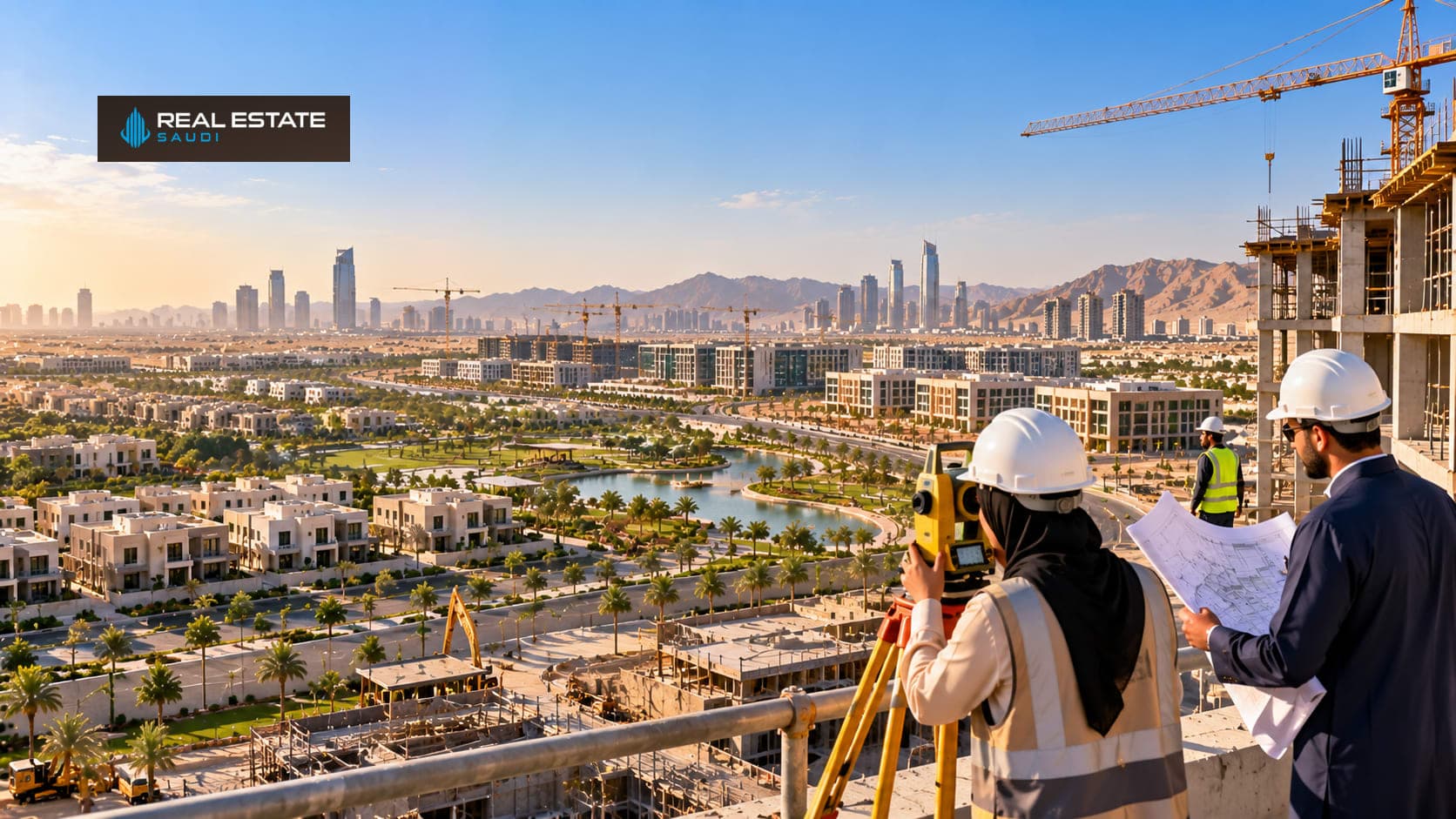
Saudi Arabia's property development industry includes national housing builders, publicly listed developers, heritage-led master planners and companies creating luxury tourism destinations. The leading Real Estate Developers in Saudi Arabia are not interchangeable: ROSHN and NHC focus heavily on integrated residential communities, Red Sea Global specializes in tourism-led destinations, Diriyah Company combines cultural regeneration with residences, Dar Al Arkan develops a broad property portfolio, and Jabal Omar concentrates on hospitality-led urban development in Makkah.
For 2026, this guide compares six prominent organizations, explains the projects associated with them and identifies the documents buyers should examine before purchasing a unit. The selection is editorial rather than a verified ranking by revenue, customer satisfaction or construction completion. A developer's scale matters, but the legal status, delivery stage and suitability of an individual property matter more.
Top 6 Developers at a Glance
Developer | Main specialization | Representative locations or projects |
|---|---|---|
ROSHN Group | Integrated residential communities and mixed-use destinations | SEDRA, WAREFA, ALAROUS |
Red Sea Global | Regenerative tourism, hospitality and branded residences | The Red Sea, AMAALA |
Diriyah Company | Heritage-led mixed-use development | Diriyah, Wadi Safar |
Dar Al Arkan | Residential, commercial and luxury development | Shams Ar Riyadh, Jeddah and Madinah projects |
National Housing Company (NHC) | Large residential destinations and housing delivery | Khuzam, Al-Fursan, Sadayem |
Jabal Omar Development Company | Hospitality, retail and mixed-use property | Jabal Omar Destination, Makkah |
These names represent different ownership structures and customer groups. Some sell homes directly through specific project channels; others primarily deliver destinations or serve corporate investors. A buyer should first identify the project entity and whether the advertised asset is actually available for purchase.
Which property type & region do you prefer?
Select property type and preferred city in Saudi Arabia.
How Were These Real Estate Developers in Saudi Arabia Selected?
The shortlist emphasizes documented projects, visible operating or development activity, national relevance and variety of real estate products. It covers public-investment-backed organizations alongside listed private-sector developers, giving readers a more useful comparison than a list of residential sales offices alone.
No universal public dataset establishes which company provides the best after-sales service or strongest investment return. The order below should therefore not be interpreted as a credit rating or an endorsement of every project. Company announcements can document a launch, financing agreement or opening, but they cannot independently establish the current condition of a particular apartment or the price a future buyer will pay.
1. ROSHN Group: Integrated Residential Communities
ROSHN Group, a Public Investment Fund company, is widely associated with large master-planned communities containing homes, green space and everyday amenities. The group is relevant to buyers seeking planned neighborhoods rather than individual towers standing apart from surrounding infrastructure. Its portfolio includes SEDRA and WAREFA in Riyadh, ALAROUS in Jeddah and other developments in Saudi regions.
The Public Investment Fund's ROSHN Group profile describes a development portfolio exceeding 200 million square meters and an ambition to deliver more than 400,000 homes across multiple regions. These figures describe portfolio scale and plans, not an assertion that every proposed home has already been handed over.
SEDRA in northern Riyadh illustrates the company's approach: housing is planned alongside schools, mosques, shops, parks and local circulation routes. Buyers can explore the ROSHN developer profile and Saudi projects for orientation, then confirm the exact phase, unit specification and sales entity using project documents.
Who should consider ROSHN? Households prioritizing a planned residential environment, public spaces and the convenience of facilities near home. Investors should assess actual resale transactions, service charges and population occupancy rather than assuming that a large master plan automatically guarantees rental demand.
The most important question is what has been delivered in the specific phase. A school appearing in a master plan may not be operating on the day a family moves in. Confirm completion dates for roads, landscaping, community facilities and utility connections independently.
2. Red Sea Global: Tourism and Coastal Luxury Development
Red Sea Global (RSG), another PIF company, develops tourism-oriented destinations that include hospitality, infrastructure, experiences and residential components. Its portfolio is distinct from conventional suburban housing: guests, hotel operators, branded residences and environmental management all influence how these properties work.
The Red Sea began receiving guests in 2023. AMAALA reached a new operational milestone in June 2026 when Four Seasons Resort and Residences AMAALA welcomed its first guests. A September 2026 Red Sea Global announcement on Equinox Resort AMAALA described an operating resort with 128 rooms and suites alongside 21 branded residences. Other parts of the destination remain subject to their respective delivery schedules.
The Red Sea Global developer and project guide is useful for understanding the wider portfolio. However, a hotel opening is not proof that every branded residence is available for sale, legally eligible for a particular buyer, or subject to the same management arrangements.
Who should consider Red Sea Global? Buyers and institutional investors researching premium coastal property, hospitality partnerships and distinctive branded residential products. These assets may involve service agreements, furnishing requirements, access arrangements and operating charges that differ sharply from ordinary apartments.
Ask whether the proposed interest is freehold ownership, a qualifying real right, a lease or another contractual arrangement. Evaluate environmental and infrastructure commitments alongside actual delivered facilities, not only sustainability language or architectural renderings.
3. Diriyah Company: Heritage-Led Urban Development
Diriyah Company develops a cultural, residential and commercial destination centered on the historic Diriyah area northwest of central Riyadh. The project is associated with At-Turaif, a UNESCO World Heritage Site, while broader development includes hospitality, shopping, residences and leisure amenities. Its architectural direction emphasizes a relationship with Saudi heritage rather than an interchangeable high-rise skyline.
In August 2026, Diriyah Company announced a SAR 2 billion financing agreement with Arab National Bank for branded residential developments in Diriyah and Wadi Safar. The company identified the broader Diriyah and Wadi Safar masterplans as approximately 14 and 62 square kilometers respectively. Financing supports development plans; it is not evidence that every financed residence has been completed or released for sale.
Readers can consult the Diriyah Company development overview to understand the nature of the destination. For an individual property, buyers must examine the phase, permitted use, operating arrangements and contractual delivery commitments.
Who should consider Diriyah? Buyers researching distinctive luxury residences and investors studying hospitality, retail or cultural destinations in the Riyadh region. Such investments demand careful analysis of timing because footfall and property demand depend partly on the progressive opening of nearby facilities.
A heritage setting may also introduce design controls or operating considerations. Obtain written confirmation of property use, alteration rights, shared services and any obligations connected to the development before signing.
4. Dar Al Arkan: Established Residential and Luxury Projects
Dar Al Arkan is an established Saudi property developer with residential, commercial and investment activities. Compared with destination-specific master developers, its portfolio encompasses different cities and property formats, from villas and conventional communities to luxury and branded developments.
The company's official Saudi real estate portfolio identifies projects in Riyadh, Jeddah, Makkah, Madinah and Qassim. Examples include Shams Ar Riyadh, Jeddah developments and residential projects near the holy cities. The mix illustrates why buyers should not assume that every property marketed under a well-known corporate group has the same developer, construction stage or contractual terms.
For readers researching the company's national position, the Dar Al Arkan developer overview provides additional project context. More detailed decisions require examination of the named development, not only the reputation of the parent brand.
Who should consider Dar Al Arkan? Buyers seeking a range of residential products and investors investigating high-end projects in established Saudi markets. Property specifications, community management and purchase contracts can vary substantially between developments and subsidiaries.
If a development uses an international design or hospitality brand, check what that branding actually provides. Branding alone does not establish a guaranteed rental program, hotel service or resale premium. Ask whether there are mandatory furniture packages, recurring brand fees, restrictions on letting and deadlines for delivering advertised facilities.
5. National Housing Company: Residential Destinations at Scale
National Housing Company (NHC) plays a major role in residential development and housing-sector delivery. Its destination model combines housing with parks, services and neighborhood planning across several Saudi regions. The company is closely connected with the Kingdom's broader housing objectives, although individual unit eligibility and financing arrangements must be assessed separately.
NHC's published destination portfolio includes Khuzam and Al-Fursan in Riyadh, Sadayem in Jeddah, and developments across the Eastern Province, Madinah and other areas. These destinations offer different mixes of villas, townhouses, apartments and residential facilities. A family comparing them should examine actual availability and handover timing rather than rely on an overall national housing target.
The NHC developer and residential destinations profile introduces the company and its approach. At project level, buyers should confirm whether an offering is an NHC-developed unit, a partner developer's home or a product distributed through a separate platform.
Who should consider NHC? Saudi households evaluating planned communities and practical owner-occupied housing, along with eligible purchasers comparing products from participating developers. Some housing support arrangements are specific to the applicant and cannot be inferred from the developer's identity.
Look closely at the completed road network, school provision, district services and maintenance obligations. A comparatively attractive purchase price is less useful if essential infrastructure or daily services are scheduled well after handover.
6. Jabal Omar Development Company: Makkah Hospitality and Mixed Use
Jabal Omar Development Company is a listed Saudi developer focused on a major mixed-use destination adjoining the Grand Mosque in Makkah. Its business model differs from suburban housebuilding because hotels, retail premises, visitor flows and operational partnerships are central to the project.
A September 2026 company update on Sofitel Jabal Omar reported preparations for a phased opening planned for Q4 2026. The update described 1,141 rooms and suites in four towers and identified the earlier opening of Rotana Jabal Omar. The Sofitel schedule is a stated target, not confirmation that every tower was already operating when the announcement appeared.
The Jabal Omar developer profile explains the project's place in the Makkah property landscape. Residential interests near the Grand Mosque must be evaluated separately from hotel investment, and non-Saudi property rights in Makkah require special legal consideration.
Who should consider Jabal Omar? Institutional investors, commercial partners and property researchers interested in high-density religious tourism and related retail or hospitality. A standard family-home buyer may find this model less directly relevant.
Before relying on hotel revenue forecasts, verify the legal investment structure, actual operating agreements, occupancy evidence, financing obligations and limitations on the rights being offered. Room counts and destination size cannot be converted automatically into returns for an individual investor.
What is your approximate budget?
Narrow down property options based on your target budget.
Comparing Real Estate Developers in Saudi Arabia by Buyer Need
The best developer depends on the asset and your objective. For a household wanting a planned community, ROSHN and NHC are the most natural starting points in this shortlist. For destination-led luxury, Red Sea Global and Diriyah offer different coastal and heritage settings. Dar Al Arkan spans several property types, while Jabal Omar is concentrated in Makkah's hospitality ecosystem.
Avoid comparing an off-plan villa, a branded residence and a hotel-related investment using headline price alone. Each has different operating costs, legal rights and potential resale markets. The broader Saudi mega-projects and development guide can help contextualize national destinations, but project-specific documentation always takes priority.
What Real Estate Developers in Saudi Arabia Must Do for Off-Plan Sales
Off-plan sales are regulated. The Real Estate General Authority administers the relevant developer qualification and project licensing system. Its official off-plan sales and lease platform explains requirements including approved plans, project documents and escrow arrangements with a licensed Saudi bank.
Qualification of a developer is not the same as a license for every individual project. Before paying, identify the precise project authorization, escrow account instructions, seller entity and applicable marketing approval. The rules also distinguish a marketing license from a full off-plan sales project license; special conditions govern reservation amounts collected under marketing authorization.
The buyer's contract should specify the unit, approved specifications, stage payments, scheduled handover, remedies for delays and the treatment of material changes. Review the advantages and risks of off-plan property investment alongside the actual contract, rather than interpreting an attractive payment schedule as proof of a low-risk purchase.
Can Foreign Investors Buy From These Developers in 2026?
Saudi Arabia's updated non-Saudi ownership framework took effect on 22 January 2026. It allows eligible non-Saudi individuals and entities to acquire specified property rights under rules addressing geographical areas, buyer categories and registration. Eligibility is not universal: Makkah and Madinah have particular restrictions, and company acquisitions may be governed by different provisions from individual purchases.
A multinational developer's marketing campaign does not override these laws. Foreign buyers should verify that the specific property is within a permitted area, determine whether the right offered is ownership or another legal interest, and complete the relevant registration route. Seek qualified Saudi legal advice for complex company structures, financing or holy-city assets. This article is general information, not legal or investment advice.
How to Compare Price, Quality and Financial Exposure
There is no defensible national price list for all six developers. Projects differ by city, floor area, delivery date, brand, amenities and what is included in the contract. A developer may quote a starting price for a unit type that is no longer available, while an advertised rental yield may omit expenses.
Prepare a complete acquisition budget: contract price, applicable taxes and fees, financing expenses, service charges, furnishing, insurance, maintenance and a contingency allowance. For a rental investment, test net income after reasonable vacancy and operating costs. Compare resale evidence for similar properties, preferably completed transactions rather than asking prices.
For off-plan homes, evaluate the financial effect of a delayed handover. Buyers carrying rent and loan repayments simultaneously face a different exposure from purchasers who can comfortably wait. No developer name can remove that risk.
A Practical Due-Diligence Process Before Booking
First, verify the legal counterparty. The brand in an advertisement may differ from the subsidiary or project company that signs the sales agreement. Match commercial records, names on invoices and account details.
Second, confirm what exists. Visit the site or request dated independent evidence. Separate completed roads, open amenities and occupied buildings from plans and renderings.
Third, inspect permissions and title. Request the appropriate ownership evidence, project license and approved plan. For off-plan units, confirm the designated escrow account and authorized marketing status.
Fourth, compare similar transactions. Examine recent sales, finish quality, usable area, parking allocation and recurring charges. Ask for explanations when a unit costs substantially more than nearby alternatives.
Fifth, read the contract before transferring funds. Verify unit identification, payment milestones, defect procedures, cancellation conditions and delivery obligations. Obtain independent professional support when the investment warrants it.
Finally, document handover. Inspect finishes, test building systems, record defects and obtain warranties, service-charge schedules, utility information and management contacts. These records can prevent costly disagreements after completion.
Common Mistakes When Comparing Major Developers
A frequent mistake is confusing a destination announcement with unit availability. A resort may welcome guests while separate residences remain unfinished. Similarly, a master developer may control infrastructure while a partner constructs the actual home; buyers should know which party is accountable for defects and handover.
Another problem is relying on headline totals. Planned homes, announced capital expenditure and projected hotel rooms describe scale, not assured delivery or future financial performance. Distinguish published targets from completed assets and dates from unsourced marketing claims.
Finally, do not treat a company's presence on a shortlist as a guarantee of quality. Review independent inspections, management charges and the specific contract even when the developer is prominent or government-backed.
How would you like to be contacted?
Choose your preferred channel for a private consultation.
The 2026 Outlook for Saudi Property Development
Saudi housing initiatives, destination development and tourism infrastructure continue to shape the pipeline. The market nevertheless varies by city and asset type. Riyadh's integrated residential communities, Jeddah's coastal housing, Red Sea resorts and Makkah's hospitality district respond to different demand drivers.
To judge Real Estate Developers in Saudi Arabia fairly, watch three indicators rather than broad predictions: actual construction handovers, completed transactions in comparable locations, and operational openings that generate sustained activity. Changes in financing, regulation or service costs can also affect affordability. Investors should revisit assumptions when new supply enters the market instead of assuming all Vision 2030-related assets will appreciate at the same pace.
Conclusion
Among the Real Estate Developers in Saudi Arabia reviewed here, ROSHN and NHC are particularly relevant to planned residential neighborhoods, Red Sea Global to luxury coastal tourism, Diriyah Company to heritage-led destinations, Dar Al Arkan to varied residential development and Jabal Omar to Makkah hospitality property.
The right choice begins with a suitable project, not the biggest name. Verify the legal selling entity, construction stage, project approval, payment arrangements and total ownership cost before committing. The strongest development opportunity is one whose documents, physical condition and financial assumptions withstand careful independent examination.
Talk to Our Real Estate Experts
Get real-time insights on investment options, commercial properties, and market guidelines.
Frequently Asked Questions
Six prominent developers are ROSHN Group, Red Sea Global, Diriyah Company, Dar Al Arkan, National Housing Company and Jabal Omar Development Company. Each specializes in different development models, including planned residential communities, luxury tourism, heritage destinations and mixed-use hospitality. They are selected for their documented activities and national significance, not ranked by audited sales or customer satisfaction. Buyers should compare specific projects before deciding.
ROSHN Group is a Public Investment Fund company and plays an important role in developing integrated communities across Saudi Arabia. Its projects include SEDRA, WAREFA and ALAROUS. PIF ownership supports its position within the national development landscape, but prospective buyers must still verify the sales entity, project licenses, construction progress and contractual protections for the particular property.
ROSHN Group is a PIF-backed developer known for integrated communities and mixed-use destinations. National Housing Company focuses heavily on residential destinations, housing-sector development and partnerships supporting housing delivery. Both can be relevant to family housing, but their projects may have different designs, eligibility requirements, sales channels and completion schedules. The better option depends on the buyer's location, budget and preferred property.
Red Sea Global develops destinations that include branded residential components alongside luxury resorts and hospitality infrastructure. Whether a specific residence is currently available, and what legal ownership rights are offered, requires confirmation through authorized sales documentation. Buyers should examine management fees, furnishing obligations, access rights and eligibility rules, particularly if the property is linked to a hotel operator.
Diriyah includes developments at different stages of construction and operation. A financing agreement or project launch does not establish that every residential component has reached completion. Buyers should check the individual phase, construction status, handover schedule and availability directly with the authorized project representative. Facilities shown on a destination master plan may open at different times.
Yes. Dar Al Arkan is a Saudi property development company listed on the Saudi stock market. Its development portfolio spans multiple cities and residential formats, including conventional communities and luxury projects. Being publicly listed does not guarantee that every project will deliver a particular investment return. Buyers should examine the project-specific contractual entity, construction status and costs.
Jabal Omar Development Company specializes in large-scale mixed-use development around the Grand Mosque in Makkah. Its flagship destination includes hotels, retail components and residential elements. It is particularly relevant to hospitality and commercial property research. Prospective investors should verify the precise asset, operating agreements and ownership eligibility instead of assuming that hotel-room capacity directly translates into personal investment income.
Buyers can review the project's regulatory status through the Real Estate General Authority and its off-plan sales and lease services. Request the exact project license, developer identity, approved plans, payment arrangements and authorized escrow details. A developer's general registration does not replace verification of the specific project. Independent legal advice may be appropriate for large or complex purchases.
Eligible foreign buyers may acquire certain property rights under Saudi Arabia's updated non-Saudi ownership framework, effective from 22 January 2026. Eligibility depends on the buyer category, geographical area, permitted rights and registration requirements. Makkah and Madinah have special restrictions. International marketing does not automatically mean that every property is available to every foreign buyer.
Request the seller's registered identity, evidence of ownership or development authority, applicable project license, approved unit plans and complete purchase agreement. For off-plan property, verify payment milestones, escrow instructions, handover dates and remedies for delays. Review service charges, warranties, cancellation clauses and property-use restrictions. Independent legal and technical checks can help identify significant risks before a deposit is paid.
