
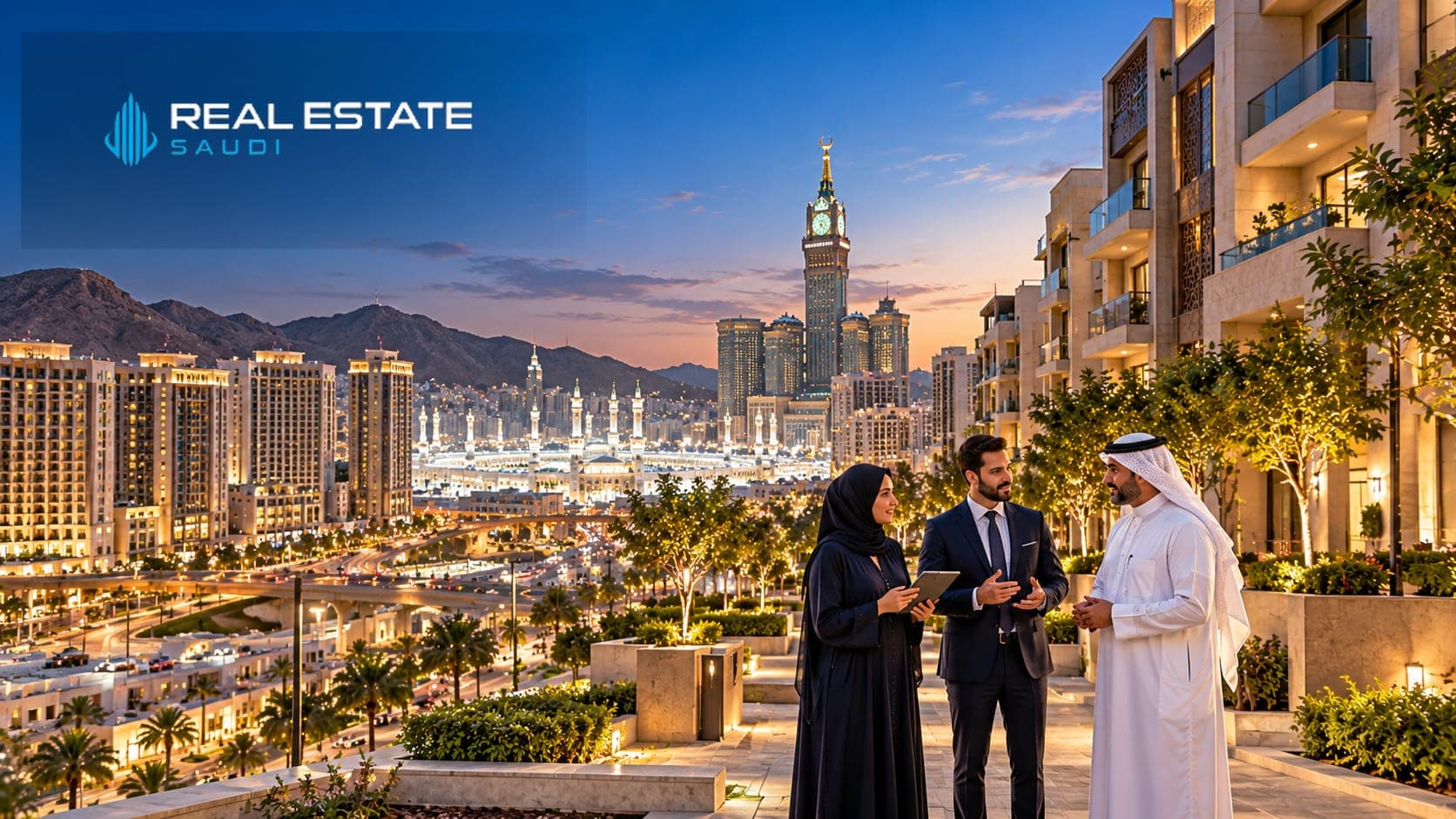
Real Estate Investment in Mecca offers opportunities across residential apartments, family villas, hotels, serviced accommodation, commercial premises and regulated development projects. In 2026, areas worth researching include Al Aziziyah, Ajyad, Jabal Omar, Al Awali, Al Naseem, Al Shawqiyyah, Al Rusaifah and Al Misfalah. However, the best investment depends on the property’s legal ownership structure, location, tenant demand, acquisition price and operating expenses.
Mecca, officially Makkah Al-Mukarramah, is Saudi Arabia’s holiest city and an important destination for Hajj and Umrah pilgrims. Alongside its visitor economy, the city has a substantial permanent population requiring housing, schools, healthcare and commercial services.
This combination creates different property investment opportunities. Hotels near Masjid Al-Haram operate differently from conventional family apartments in suburban neighborhoods. Similarly, developing residential communities involve different risks from established central properties.
This guide examines Mecca’s investment locations, residential and hospitality opportunities, foreign ownership restrictions, property costs, rental potential and investment procedures relevant to 2026.
Real Estate Investment in Mecca: 2026 Market Overview
Mecca has a distinctive property market shaped by its religious importance, permanent residential population and substantial visitor activity.
The areas surrounding Masjid Al-Haram contain hotels, mixed-use buildings, commercial premises and different forms of managed accommodation. Neighborhoods farther from the central area provide conventional residential properties for families and working professionals.
These two markets should not be assessed using identical investment assumptions.
Hospitality properties depend on room rates, occupancy patterns, licensing and operating costs. Residential rental properties depend on household affordability, location, maintenance and tenant demand.
Investors also need to consider the differences between direct property ownership, participation in a company, regulated investment funds and contractual accommodation rights.
The wider Makkah real estate market and property area guide provides additional context for understanding residential and commercial opportunities across the city.
A successful investment strategy begins by identifying the permitted property rights and the actual source of expected income.
Why Mecca Attracts Real Estate Investors
Mecca attracts investment interest because it combines a permanent urban economy with demand connected to religious travel.
Visitors require accommodation, transport, food services and retail facilities. Residents need long-term homes, employment premises and everyday community infrastructure.
Hajj and Umrah accommodation
Pilgrim travel creates opportunities for licensed hospitality operators and property owners serving accommodation providers.
However, demand is not uniform throughout the year. Occupancy, average room rates and operating restrictions can vary significantly.
Residential housing
Family apartments and villas support a different investment strategy based on longer-term accommodation requirements.
These properties may offer more predictable lease arrangements than visitor accommodation, although vacancies and maintenance expenses remain possible.
Urban development
Saudi Arabia’s official Vision 2030 development programme includes objectives involving tourism, infrastructure, housing and quality of life.
Major development initiatives provide important context, but they do not guarantee capital appreciation or rental returns for individual properties.
Investors should distinguish national development objectives from measurable property-level financial performance.
ما نوع العقار والمنطقة المناسبة؟
اختر نوع العقار والمدينة المستهدفة لاستعراض أنسب الخيارات.
Best Areas to Invest in Mecca in 2026
Choosing an investment neighborhood requires understanding how different parts of Mecca serve residents, visitors and businesses.
Area | Potential Property Type | Main Investment Consideration |
|---|---|---|
Ajyad | Hotels and managed accommodation | Central location and high costs |
Jabal Omar | Hospitality and premium residences | Ownership arrangements |
Al Aziziyah | Apartments and pilgrim accommodation | Seasonal demand |
Al Awali | Villas and family apartments | Long-term residential market |
Al Naseem | Residential apartments and villas | Accessibility and maintenance |
Al Shawqiyyah | Conventional family housing | Rental affordability |
Al Rusaifah | Apartments and mixed urban property | Transport connections |
Al Misfalah | Hospitality-related buildings | Licensing and congestion |
Al Shara'i | Residential properties | Distance from central areas |
Batha Quraysh | Apartments and family accommodation | Property-specific demand |
This comparison is an editorial shortlist rather than an official ranking of investment performance.
For detailed lifestyle and neighborhood characteristics, investors can explore the best residential areas in Mecca for living and property ownership.
1. Ajyad: Central Hospitality and Premium Property
Ajyad occupies an important position within central Mecca near Masjid Al-Haram.
The area contains hotels and high-rise accommodation serving visitors seeking convenient access to the Grand Mosque.
Investment opportunities
Potential opportunities may involve hospitality assets, managed accommodation and qualifying commercial property interests.
However, investors must distinguish ownership of a residential unit from participation in a hotel operation.
Financial considerations
Central properties can require substantial capital, while management arrangements may affect the income available to investors.
High advertised room rates do not necessarily translate into attractive net returns after operational expenses.
Property verification
Buyers should confirm permitted use, legal ownership, building condition and contractual management obligations.
Ajyad may interest sophisticated investors pursuing central hospitality exposure, but it requires careful legal and financial due diligence.
2. Jabal Omar: Premium Mixed-Use Development
Jabal Omar is a prominent development area associated with hospitality and mixed-use property near Masjid Al-Haram.
Its investment relevance comes from high-rise hotels, managed residential accommodation and supporting commercial facilities.
Hospitality assets
Hotels and branded accommodation may attract investors seeking exposure to the pilgrimage economy.
However, management agreements, operating costs and ownership structures vary.
Residential interests
Some accommodation products may be marketed as serviced residences.
Buyers should establish whether they are acquiring conventional ownership, contractual usage rights or another regulated interest.
Long-term considerations
The Jabal Omar developer and premium Makkah property profile provides context for understanding the development’s property characteristics.
Investors should independently verify unit availability, ownership permissions and financial projections.
A prominent location should not replace detailed contract review.
3. Al Aziziyah: Residential and Pilgrim Accommodation
Al Aziziyah is one of Mecca’s established urban districts, with residential buildings and commercial activity.
Its housing environment may serve permanent residents, workers and certain visitor-related accommodation requirements.
Residential opportunities
Apartments may appeal to households seeking conventional accommodation within the city.
Property condition, parking and surrounding services influence attractiveness to tenants.
Hospitality considerations
Some buildings may be suited to approved accommodation operations, depending on their classification and licensing.
Investors should not assume that a conventional apartment can automatically operate as a pilgrim hotel or short-term rental.
Risk assessment
Traffic congestion and seasonal changes in visitor activity can influence property operations.
Al Aziziyah may accommodate different investment strategies, but the selected building’s legal use and financial performance must be verified separately.
4. Al Awali: Family Villas and Residential Housing
Al Awali is a residential neighborhood worth considering for investors interested in conventional family accommodation.
The district offers different housing types, including apartments and villas.
Family rental opportunities
Larger homes may attract households requiring additional bedrooms, parking and living space.
Apartments can serve different household budgets depending on location and specifications.
Property quality
Villas require examination of structural condition, electrical systems, waterproofing and maintenance history.
Larger residences may create substantial ongoing repair obligations.
Tenant demand
Investors should compare achievable rent with local household affordability rather than rely on advertised asking prices alone.
Al Awali can be relevant to long-term residential strategies where the acquisition cost is justified by actual tenant requirements and comparable property evidence.
5. Al Naseem: Residential Property Options
Al Naseem offers another area for investigating apartments and family homes within Mecca.
Its residential properties can vary in age, layout and building standards.
Apartments
Smaller units may serve individuals and couples, while larger apartments can accommodate families.
The availability of parking, reliable air-conditioning and nearby services can influence tenant satisfaction.
Investment evaluation
Investors should compare completed transactions and rental listings for similar properties.
Maintenance charges and expected repair expenses should be included in the financial assessment.
Location considerations
Transport convenience differs according to the actual property address.
Al Naseem may suit conventional residential investment, but profitability is determined by purchase price and sustainable rental income rather than neighborhood popularity alone.
6. Al Shawqiyyah: Established Family Accommodation
Al Shawqiyyah is a residential district relevant to buyers considering long-term housing investments.
Its market includes accommodation serving families and working residents.
Rental housing
Apartments and houses should be assessed according to floor area, room layout, construction condition and available facilities.
A practical property may be more attractive to tenants than a larger home with inconvenient access.
Neighborhood services
Schools, healthcare facilities and supermarkets influence residential convenience.
Investors should examine actual walking and driving distances.
Financial performance
The strongest investment is not necessarily the property with the lowest asking price.
Renovation, vacancy and transport-related disadvantages may undermine apparent savings.
Al Shawqiyyah may provide suitable opportunities where the property meets genuine household demand.
7. Al Rusaifah: Transport and Residential Accessibility
Al Rusaifah is worth considering for residential investment research because accessibility can influence tenant preferences.
Properties located near useful transport connections may appeal to households travelling regularly across the city.
Residential demand
Apartments can serve families and employees who value practical commuting routes.
However, rental demand should be assessed using reliable local evidence.
Infrastructure considerations
Street-level congestion, parking and access roads affect tenant convenience.
A nearby transport facility does not automatically guarantee quiet surroundings or short journey times.
Investment suitability
Buyers should investigate the building’s condition, legal classification and available services.
Al Rusaifah may suit investors prioritising conventional residential accommodation and transport access, depending on the specific property's location.
8. Al Misfalah: Central Urban Property
Al Misfalah lies within Mecca’s established urban environment and may interest buyers researching accommodation-related properties.
Its proximity to central destinations can influence visitor and commercial demand.
Hospitality potential
Approved accommodation establishments may benefit from access to pilgrimage-related destinations.
However, the actual operating licence and permitted building use are essential considerations.
Existing buildings
Some older properties may require improvements to safety systems, lifts, electrical installations and accessibility.
Renovation costs can be substantial.
Investment risk
Congestion, service access and limited parking may affect operations.
Investors should not use unverified claims about walking times or occupancy rates when evaluating property values.
Al Misfalah requires careful technical assessment, particularly for older commercial or hospitality buildings.
9. Al Shara'i and Batha Quraysh: Residential Alternatives
Properties outside central Mecca may appeal to investors seeking conventional rental housing rather than hospitality exposure.
Al Shara'i
Al Shara'i offers residential environments that may suit families seeking accommodation away from the immediate central area.
Investors should assess schools, road access, construction quality and achievable rent.
Batha Quraysh
Batha Quraysh contains residential properties with different layouts and building standards.
Apartment investors should examine shared maintenance, parking and the surrounding infrastructure.
Comparing these locations
Outer residential districts may involve different acquisition costs from premium central properties.
However, lower prices do not automatically mean superior investment returns.
Tenant affordability, vacancy allowances and resale demand remain essential factors.
Types of Property Investments Available in Mecca
Real Estate Investment in Mecca includes several asset categories, each requiring a different financial and legal evaluation.
Residential apartments
Apartments can generate income through conventional leases when the property is legally available for the intended buyer.
Family villas
Villas may attract longer-term family tenants but typically involve greater maintenance responsibilities.
Hotels and serviced accommodation
Hospitality property depends on operating licences, visitor demand, management expertise and revenue after expenses.
Commercial premises
Retail and office buildings serve different business requirements from residential homes.
Off-plan developments
Properties purchased before completion can involve construction, delivery and financing risks.
Investors must establish which property rights they can legally acquire before comparing the expected financial returns of different asset classes.
حدد ميزانيتك الاستثمارية
حدد ميزانيتك التقديرية لنقوم بتضييق خيارات العروض.
Hajj and Umrah Demand: What Investors Should Understand
Pilgrimage is a defining feature of Mecca’s accommodation market, but visitor demand should not be confused with guaranteed revenue.
Seasonal patterns
Hajj involves a concentrated annual period, while Umrah activity follows different patterns throughout the year.
Accommodation prices and occupancy may change accordingly.
Operating expenses
Hospitality properties require staffing, cleaning, utilities, maintenance, booking administration and potentially substantial management fees.
Location differences
Properties close to Masjid Al-Haram may command different rates from accommodation served by shuttle transportation.
However, distance alone is insufficient to predict profitability.
The broader religious tourism property investment outlook for Mecca and Madinah provides additional context for visitor-driven real estate opportunities.
Investors should review actual operating statements rather than extrapolate annual income from peak-season prices.
Can Foreigners Buy Property in Mecca in 2026?
Foreign property ownership in Mecca is subject to special restrictions.
Saudi Arabia’s updated Law of Real Estate Ownership by Non-Saudis entered into force in January 2026.
The official Real Estate General Authority law governing ownership by non-Saudis establishes provisions for ownership and other real estate rights in Makkah and Madinah.
Muslim individual ownership
Under Article 2, the specified right of a non-Saudi individual to acquire qualifying real estate rights within Makkah and Madinah is limited to Muslim natural persons.
Geographical permissions and additional regulatory conditions still apply.
Companies and investment vehicles
Separate provisions apply to qualifying companies, listed entities, investment funds and special purpose entities.
These rules should not be interpreted as unrestricted personal ownership rights for every international investor.
Residency considerations
The general exception allowing certain legally resident non-Saudis to own a residential property outside designated geographical areas does not apply in Makkah and Madinah.
Investors must verify the exact property and applicant category before committing funds.
How Foreign Buyers Apply Under the New System
The REGA announcement implementing the 2026 non-Saudi ownership system explains the official application framework.
Identify the investor category
Applicants should determine whether they are investing as individuals, companies or through regulated structures.
Confirm geographic eligibility
The precise property location must fall within permissions applicable to the proposed ownership arrangement.
Prepare documentation
Requirements depend on the applicant’s legal status and the nature of the proposed transaction.
Residents may use their recognised residency identification, while overseas applicants may need additional identification procedures.
Obtain professional advice
Legal review is especially important for complex corporate structures and accommodation-related ownership rights.
Foreign buyers should not rely on historical claims that a standard 99-year lease or timeshare arrangement is universally available in Mecca.
All proposed rights require transaction-specific verification.
How Much Does Property Cost in Mecca?
Property prices vary substantially between central hospitality assets, residential apartments, family houses and commercial buildings.
A single average price cannot accurately represent the entire market.
Central properties
Properties close to the Grand Mosque may involve substantial acquisition costs and specialised ownership arrangements.
Residential districts
Family apartments and villas should be compared according to size, construction condition and local services.
Market valuation
Investors should seek current comparable transaction evidence rather than assume advertised prices reflect completed sales.
Major differences in building condition can materially affect valuation.
Total ownership expenses
A complete investment budget includes acquisition costs, legal review, inspections, financing and expected repairs.
Investors should also retain sufficient reserves for vacancies or unexpected expenditure.
Any estimate of future appreciation should be treated as uncertain.
Real Estate Transaction Tax and Other Costs
Saudi Arabia generally applies a 5% Real Estate Transaction Tax to qualifying property disposals, subject to applicable exemptions.
The official ZATCA Real Estate Transaction Tax Law explains the relevant framework.
Transaction expenses
Buyers may incur professional fees, property valuation charges, inspection costs and financing expenses.
Foreign ownership obligations
Additional fees or regulatory requirements may apply depending on the buyer’s status and legal structure.
Operational expenses
Residential owners should consider maintenance, utilities and property management.
Hotel investors must also budget for staffing, licensing and operating services.
The party responsible for particular costs should be established under the applicable law and transaction contract.
Financial planning must account for these obligations before estimating profitability.
Rental Income and Investment Returns in Mecca
Real Estate Investment in Mecca can generate income through qualifying residential leases or legally operated accommodation businesses.
However, there is no reliable universal rental yield covering every district and property category.
Residential rental income
Annual income depends on achievable rent, tenant retention and occupancy.
Building repairs and management charges reduce the amount retained by the owner.
Hospitality income
Hotels may experience substantial changes in demand throughout the year.
Revenue projections should include lower-occupancy periods and operating expenditure.
Capital appreciation
Future property values are influenced by supply, demand, financing conditions, location and property quality.
Major infrastructure development does not guarantee that every nearby property will rise in value.
Investors should compare net income and potential resale risks rather than rely on advertised gross returns.
Rental Contracts and Property Management
Proper rental administration is important for residential property investment.
Saudi Arabia’s official REGA Ejar rental platform supports qualifying lease documentation and services relating to landlords, tenants and brokers.
Contract requirements
Agreements should clearly identify rent, payment arrangements, duration and maintenance responsibilities.
Tenant management
Landlords need reliable procedures for rent collection, repairs and communication.
Financial reporting
Investors should maintain records of income, vacancies, utilities and maintenance expenses.
Professional property management services for Saudi real estate investors may assist owners who cannot oversee daily operations themselves.
However, professional management is an operating expense and does not eliminate vacancies, repairs or tenant disputes.
Hospitality properties require separate consideration of their applicable operating licences.
Off-Plan Property Investment and Buyer Protection
Off-plan property involves purchasing qualifying rights before a development is completed.
Such projects may offer modern layouts and staged payment arrangements, but they create completion risks.
The Real Estate General Authority's WAFI off-plan sales and leasing platform provides information about project licensing and regulatory oversight.
Developer verification
Buyers should confirm the specific project’s licence and the developer’s legal identity.
Payment protection
Review approved payment arrangements and any relevant escrow requirements.
Completion obligations
Contracts should identify delivery requirements, approved specifications and procedures if delays occur.
Legal ownership
Foreign buyers must separately verify their eligibility to acquire the proposed property right.
Regulatory licensing does not guarantee construction performance or future investment returns.
Financing Property Investment in Mecca
Financing arrangements depend on the applicant, property classification, legal ownership rights and lender requirements.
Conventional residential mortgages and commercial hospitality financing involve different assessments.
Residential lending
Eligible buyers may seek financing based on income, existing obligations and property valuation.
Commercial financing
Hotels and income-producing commercial assets may require more specialised financial analysis.
Repayment risk
Investors should avoid relying entirely on uninterrupted rental income to meet financing obligations.
Interest or financing costs, vacancies and repairs can reduce available cash flow.
Buyers should compare the full cost of borrowing and maintain sufficient financial reserves.
Approval for financing does not replace legal eligibility checks or technical property inspections.
Step-by-Step Guide to Investing in Mecca
A structured purchasing process helps investors evaluate opportunities consistently.
Step 1: Define your investment strategy
Choose between long-term residential leasing, hospitality exposure, commercial property or permitted development investment.
Step 2: Confirm legal eligibility
Establish whether the proposed ownership arrangement is permitted for your applicant category and the property location.
Step 3: Prepare a complete budget
Include acquisition, transaction, financing and operating expenses.
Step 4: Select suitable neighborhoods
Compare location, access, property type and intended customer or tenant demand.
Step 5: Review financial evidence
Examine comparable transactions, rental evidence and realistic costs.
Step 6: Conduct due diligence
Verify ownership documents, legal use, building condition and contractual restrictions.
Step 7: Arrange financing and complete the transaction
Use the applicable official registration and transfer procedures.
The Saudi Arabia property investment guide provides further information about investment planning and risk assessment.
Property Inspection and Ownership Verification
Technical and legal due diligence are especially important when purchasing older buildings or managed accommodation.
Structural condition
Inspect roofs, walls, waterproofing and evidence of deterioration.
Building systems
Review electrical installations, plumbing, fire protection and air-conditioning.
Commercial facilities
Hotels may require detailed examination of lifts, safety systems and operational infrastructure.
Ownership documents
Confirm the seller’s authority, registered property description and any restrictions.
Buyers may consider professional snagging and property inspection services to identify potential defects.
A visually attractive property can still contain expensive technical problems.
Inspection findings should be reviewed before finalising the transaction.
كيف تفضل التواصل معك؟
اختر وسيلة التواصل الأكثر ملاءمة لك لمناقشة فرصك الاستثمارية.
Common Risks and Mistakes Investors Should Avoid
Investors should avoid assuming every property near Masjid Al-Haram is profitable or legally available to foreign purchasers.
Another mistake is treating peak Hajj accommodation rates as representative of annual income.
Unverified promises of guaranteed appreciation or exceptionally high rental yields should be approached cautiously.
Buyers must distinguish ready properties from proposed developments and confirm the exact property rights being offered.
For hospitality assets, operating licences and management expenses deserve particular attention.
Residential investors should examine tenant affordability and expected maintenance.
Finally, insufficient financial reserves can create difficulty during vacancies, construction delays or unexpected repairs.
Mecca Real Estate Market Outlook Beyond 2026
Mecca’s property market will continue to reflect the needs of residents, pilgrims, businesses and regulated development projects.
Central hospitality locations may remain relevant because of their connection to religious travel, while established residential districts serve permanent households.
Development projects may introduce additional accommodation, retail and commercial facilities.
However, new supply may also increase competition.
Investors should assess the construction status of announced projects and avoid treating future completion dates as guaranteed.
Long-term performance will depend on asset quality, acquisition price, legal rights and financial management.
The most suitable investment is therefore one that remains viable under realistic operating and market assumptions.
تحدث معنا عبر قناتك المفضلة
استشارات عقارية مباشرة حول الاستثمار والسوق العقاري في المملكة العربية السعودية.
الأسئلة الشائعة
Mecca offers opportunities across residential apartments, hospitality properties, commercial premises and development-related assets. Its religious importance supports a substantial visitor economy alongside permanent residential demand. However, profitability varies by property, acquisition cost, operating expenses and legal eligibility. Investors should evaluate actual financial evidence rather than assume that every property will appreciate.
Ajyad, Jabal Omar, Al Aziziyah, Al Awali, Al Naseem, Al Shawqiyyah, Al Rusaifah and Al Misfalah are among the locations worth researching. Central districts may suit certain hospitality strategies, while established residential neighborhoods provide different rental opportunities. The best area depends on the investor’s permitted ownership rights and financial objectives.
Foreign property ownership in Mecca is subject to special restrictions under Saudi Arabia’s updated 2026 framework. Specified rights for non-Saudi individual buyers are limited to Muslim natural persons, subject to applicable geographical and regulatory conditions. Certain companies and regulated investment vehicles are covered by separate provisions. Eligibility should be verified before signing agreements or transferring funds.
Direct individual property ownership rights in Mecca are subject to restrictions that differ from those applying elsewhere in Saudi Arabia. The updated law contains separate provisions for qualifying companies, listed entities and regulated investment vehicles. These arrangements should not be assumed equivalent to unrestricted personal ownership. Non-Muslim investors should obtain specialist legal advice before considering any investment structure.
Depending on legal eligibility, investors may consider apartments, villas, hotels, serviced accommodation, commercial premises and licensed off-plan developments. Each asset category involves different management, regulatory and financial requirements. Hospitality investments depend on permitted operating arrangements, while residential properties are generally evaluated according to long-term tenant demand and affordability.
Hotels near Masjid Al-Haram may benefit from demand associated with Hajj and Umrah, but profitability is not guaranteed. Investors must assess acquisition cost, annual occupancy, operating expenses, room rates and management agreements. Peak-season revenue cannot accurately represent an entire year. Legal ownership and operating licences are also important considerations.
Property prices vary significantly by neighborhood, floor area, building age, permitted use and proximity to the Grand Mosque. Central hospitality assets differ substantially from conventional apartments and suburban villas. Investors should use current comparable sales and independently verified valuations rather than rely on a universal market average or unsupported asking-price claims.
Saudi Arabia generally imposes a 5% Real Estate Transaction Tax on qualifying property disposals, subject to statutory exemptions. Other expenses may include legal review, financing, inspections and property management. Additional requirements or fees may apply to particular foreign ownership structures. Investors should establish the applicable obligations before completing the transaction.
Qualifying off-plan developments are regulated through the REGA-supervised WAFI framework. Licensing supports oversight but does not eliminate construction delays, financing risks or changes in specifications. Buyers should verify the individual project’s approval, escrow arrangements, contract terms and completion obligations. Foreign purchasers must also confirm ownership eligibility.
Investors can reduce risk by confirming legal eligibility, reviewing property documents, comparing reliable valuations and obtaining technical inspections. Rental forecasts should account for vacancies, maintenance and management expenses. Hospitality assets require appropriate licensing and operating analysis. Adequate financial reserves and independent professional advice are particularly important for complex transactions.
