
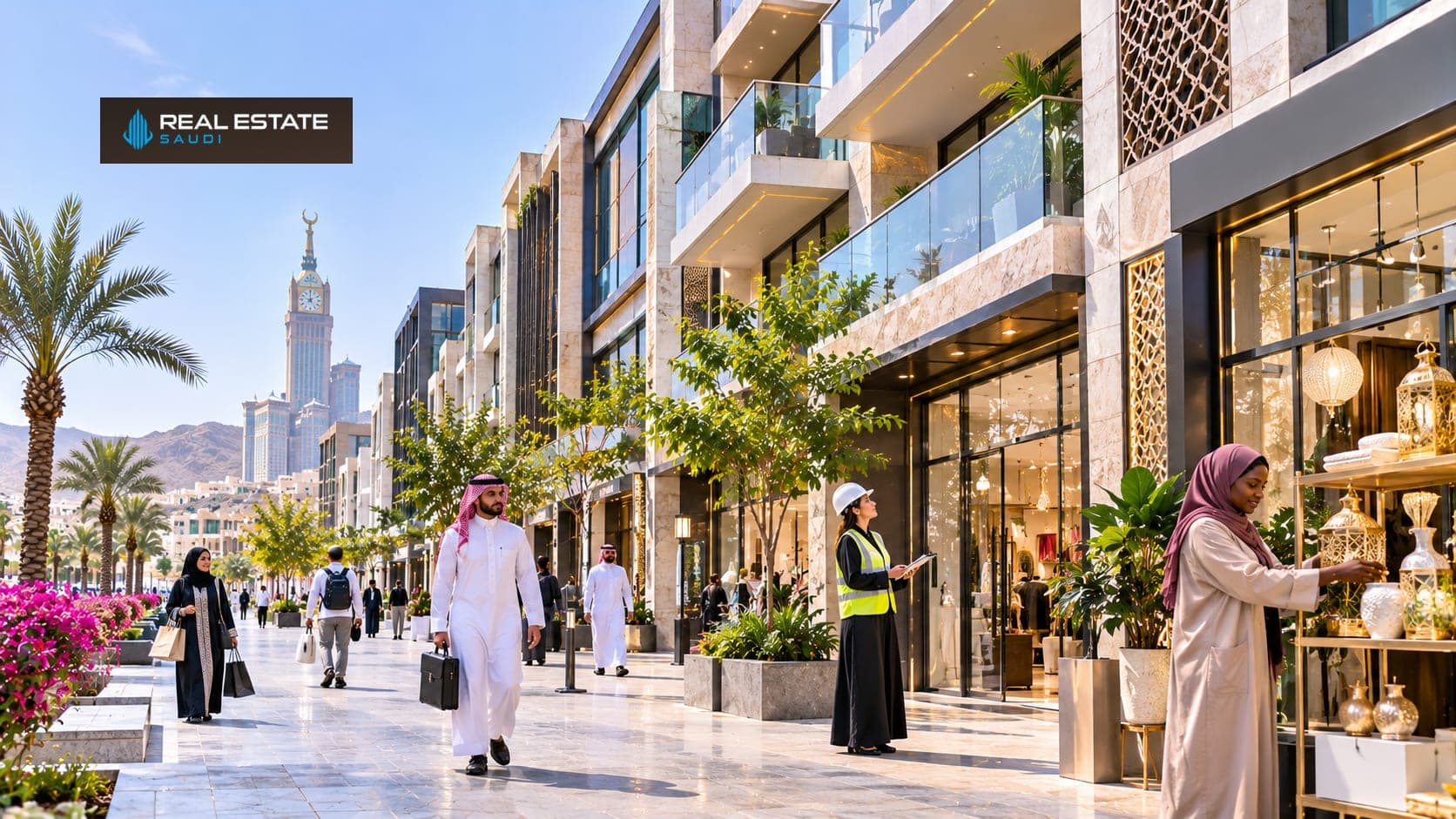
Commercial Real Estate in Mecca covers shops, hotels, serviced accommodation, offices, commercial buildings and mixed-use property serving residents, workers and religious visitors. Its most distinctive demand driver is pilgrimage, but visitor numbers alone do not guarantee that a specific hotel, retail unit or restaurant will earn a strong return. Location, lawful use, operator quality, operating expenses and the terms of ownership can change an investment's performance substantially.
For buyers researching Makkah in 2026, the important choices are what type of asset to acquire, which part of the city serves its customers, whether its licenses are valid and how reliably its income can be verified. This guide compares major property categories and locations, explains the latest non-Saudi ownership rules, and presents a practical method for pricing and due diligence without invented yield or asking-price averages.
Why Does Mecca Attract Commercial Property Investors?
Makkah has a distinctive commercial economy because it serves both its resident population and millions of pilgrims. According to the Saudi Press Agency's 2026 Hajj season briefing, 1,707,301 pilgrims performed Hajj in 1447 AH, including more than 1.5 million arriving internationally. This is an official visitor indicator, not a measurement of room nights, shop turnover or the number of investable properties.
Demand is uneven across the year and between activities. A hotel depends on booking patterns and operating costs, a neighborhood pharmacy depends more on resident households, and an office depends on organizations needing that location. Hajj and Ramadan may create particularly busy periods for selected businesses, but quiet intervals, regulatory restrictions and competing capacity remain relevant.
The strongest case connects an identifiable customer group with lawful premises at a defensible price.
ما نوع العقار والمنطقة المناسبة؟
اختر نوع العقار والمدينة المستهدفة لاستعراض أنسب الخيارات.
What Counts as Commercial Real Estate in Mecca?
Commercial assets range from a single ground-floor shop to a fully operated hotel or an entire building with offices and retail. Each type has its own risk profile. Ownership of the structure is separate from the right to run a regulated business inside it. A property advertised as a hotel is not necessarily licensed for overnight guests, and a ground-floor unit may not be authorized for every food or retail activity.
Investors can begin by reviewing commercial properties offered for sale in Makkah to understand how listings describe different categories. Treat online inventory as an initial search tool; ask the advertiser whether a property remains available and which documents support the description.
A property can also be leased to an operating business rather than operated by its owner. This determines whether the principal risk is tenant credit or business performance.
Retail Shops: Footfall Is Only the Starting Point
Shops near major pedestrian routes may appeal to merchants selling food, clothing, gifts and daily essentials. Yet a passing crowd does not equal paying customers. Customer access, storefront visibility, available loading space, permitted opening arrangements and the concentration of competitors can determine whether a tenant can afford the rent.
The Makkah retail shops for sale listings provide examples of the asset class. For a particular shop, verify frontage width, usable internal area, storage, service connections and which entrances remain accessible during controlled traffic periods.
If the shop has a tenant, obtain the signed lease, rent-payment history, outstanding obligations and permitted-use clauses. Do not capitalize a promotional asking rent as though it were an enforceable cash flow. Vacant units need more conservative analysis because fitting out premises and securing a suitable tenant can take time.
Hotels and Hospitality Property Near the Haram
Hotels represent a different investment from ordinary commercial leases. Performance depends on occupancy, average room rate, distribution costs, staffing, utilities, housekeeping, renovation reserves and the quality of the operating agreement. A highly visible building may still underperform if its rooms are outdated, management is weak or the acquisition price assumes unrealistic peak-season revenue throughout the year.
Review hotels offered for sale in Makkah as a category reference, but confirm the exact building's license, classification, room inventory and operating history. Ask for independently supportable monthly results, not just an annual revenue figure. A buyer should establish whether the transaction includes the business, brand arrangements, furniture and equipment, or only the real estate.
Hospitality is regulated separately from land ownership. The Saudi Ministry of Tourism's accommodation licensing guidance explains that receiving guests, confirming bookings or providing accommodation without the required license is prohibited. It also describes licensing and inspection requirements for different facility categories.
Serviced Apartments and Short-Stay Accommodation
Hotel apartments and serviced units may appear easier to manage than a conventional hotel, but the same financial discipline applies. Owners should establish whether the proposed use qualifies as tourist accommodation, which license is needed and who is responsible for compliance. A normal apartment title cannot automatically be treated as permission for unlicensed short stays.
The site's investment guide to hotel apartments in Saudi Arabia provides broader background. In Makkah, ask how booking demand differs during pilgrimage peaks, school holidays and ordinary weeks. Review housekeeping costs, platform commissions, furniture replacement and utilities before comparing serviced-unit income with a standard annual lease.
If units sit inside a jointly managed building, check whether the governing documents allow the intended activity. Complaints about guest circulation, lifts, parking and noise can have financial consequences even where a unit has attractive photographs.
Office Space and Service-Oriented Commercial Buildings
Offices may serve professional firms, travel-related businesses, property managers and organizations supporting the city's resident economy. This market should not be assumed to behave like Riyadh's corporate office sector. The number of businesses requiring a particular address, the quality of building services and the convenience of access matter more than a general description of urban growth.
Browse commercial offices for sale in Makkah to compare formats, then examine each building's lift capacity, parking, internet infrastructure, power supply, accessibility and permitted use. Small professional tenants may prefer flexible floor plans, while larger occupiers may require more robust management and maintenance arrangements.
A credible investment analysis includes the possibility of vacant space and the cost of adapting it for a new tenant. Review the remaining lease term and responsibility for fitting out and reinstatement. An office rented below its advertised amount may still provide stronger income certainty than an empty high-specification unit.
Mixed-Use Buildings, Restaurants and Local Services
A mixed-use building can combine street-level retail with offices or other permitted spaces above. Diversification across tenants can be helpful, but it also adds management complexity. Different businesses have different requirements for ventilation, waste collection, signage, accessibility and fire safety. One activity may disturb another if the design is poor.
Restaurants and cafés attract interest because of visitor movement, yet kitchens may require significant extraction, drainage, grease-management and safety works. Confirm that the intended food activity can obtain the required permits before valuing the space as a restaurant opportunity. A unit suitable for a low-impact shop may be expensive to adapt for food preparation.
Buildings with multiple tenants need clear allocation of shared maintenance, utilities, common areas and payment responsibilities. Examine the actual occupancy schedule and avoid treating a fully occupied marketing illustration as evidence of completed leases.
Where Are the Main Commercial Areas of Makkah?
The central zone surrounding Al-Masjid Al-Haram is an obvious focus for visitor-oriented retail and accommodation. Other areas, including Al-Aziziyah, routes serving the holy sites, southern residential corridors and established neighborhood centers, may be more suitable for businesses serving local households or particular travel movements.
A district name does not determine investment quality. Road closures, permitted vehicle access, pedestrian routes and the exact position of a unit can change commercial potential dramatically. Visit a proposed location during ordinary working days and during a relevant peak period when feasible. Count the customers who can actually reach the frontage rather than treating map distance as a proxy for sales.
The Mecca real estate market overview supplies wider context for residential and development activity, although its broad market figures cannot establish the value of an individual commercial premises.
The Central Haram Area: Location and Constraints
Retail and hospitality assets close to the Grand Mosque may benefit from accessibility to visitors, but the same geography can create operating constraints. Deliveries, staff transport, loading, parking and crowd management require careful planning. Different buildings can have substantially different entrances and permitted routes despite appearing close together on a map.
Assess the walking distance to the relevant gates, available public transport and the way visitors circulate at different times. A hotel several streets away may provide a better guest experience than a nominally closer property with awkward access. For retail, a ground-floor location with good visibility may have an advantage over upper floors, subject to the use and tenant.
Central land and buildings can involve complex ownership interests or redevelopment considerations. Do not make a substantial offer until boundaries, rights and any project-specific controls have been reviewed independently.
Al-Aziziyah and Routes Toward the Holy Sites
Al-Aziziyah is worth examining for businesses linked to visitor movement and ordinary residential services. Its commercial character is not uniform; proximity to a major road, transport route or concentration of accommodation may matter more than a broad district label. Investigate the target customer, lease duration and actual access to the specific shop or building.
An operator-dependent property should be tested against both pilgrimage and off-peak demand. For example, a restaurant serving visitors may face different staffing and purchasing patterns from a neighborhood convenience store. Review the capacity of service connections and lawful operating hours before negotiating rent or purchase price.
No reliable district-wide commercial yield can be inferred from the existence of pilgrim accommodation nearby. The economic case requires rent or operating statements from directly comparable units and a realistic allowance for vacancy or seasonality.
حدد ميزانيتك الاستثمارية
حدد ميزانيتك التقديرية لنقوم بتضييق خيارات العروض.
Al-Shawqiyah, Al-Kakiyyah and Neighborhood Commerce
Not every commercial investor needs a central pilgrimage location. Southern and southwestern residential districts may present a different proposition: shops and services catering to permanent households, deliveries, local clinics and ordinary businesses. Such uses can be less exposed to seasonal visitor patterns, although demand still depends on actual neighborhood income and competition.
For these areas, focus on the number and accessibility of occupied homes, parking convenience, road design and tenant needs. A modern retail frontage may struggle if it faces a road that pedestrians cannot cross safely. An office may need reliable internet and accessible parking more than an impressive building height.
Compare several streets rather than relying on promotional area descriptions. Confirm the exact zoning and license potential for the activity you intend to host.
Commercial Property Prices: Why Fixed Ranges Are Misleading
The earlier article published broad per-square-metre ranges for shops and offices and set prices for hotels without a dated, verifiable transaction sample. Those numbers should not be reused as current market averages. Central retail, neighborhood shops, an operating hotel and a bare commercial unit cannot be valued by a single formula.
For an owner-occupied commercial property, compare similar completed sales and the cost of making the building suitable for the business. For an income asset, investigate its actual rent, lease duration and operating expenses. For hotels, property value may also reflect the sustainable income of the operating business and the condition of its equipment.
Request the source and date of each comparable, distinguish asking prices from registered transactions and identify the property rights being sold. A professional valuation is advisable when the asset is complex or expensive.
How to Calculate Commercial Real Estate in Mecca Returns
Commercial Real Estate in Mecca should be underwritten using documented income rather than a universal percentage. The earlier claims of 8–12% general returns, 15% for hotels and fixed ranges for retail and offices lack a reliable methodology and should not be used to make an investment decision.
For a leased shop, divide annual contracted rent by the complete acquisition cost to obtain a basic gross yield. Then deduct realistic vacancy, management, repairs, insurance where applicable, service charges and financing to assess net return. For hospitality property, use sustainable operating profit after staff, distribution, utilities, maintenance and replacement reserves, not gross room revenue.
Test lower occupancy, delayed lease-up and higher repairs. Capital appreciation is uncertain and should be analyzed separately from recurring income. A purchase that works only at peak-season prices may leave the investor exposed during less active months.
Commercial Licenses and Approved Property Use
Before committing to a shop or restaurant, establish which business activities are permitted at that location. The Ministry of Municipalities and Housing's Balady commercial-license issuance service describes a digital process for qualifying activities, including relevant municipal and safety requirements.
A commercial title or a previous tenant's license does not automatically authorize a new activity. Restaurants, food outlets, medical premises and other regulated businesses may face additional sector-specific checks. Confirm what the municipality will require and whether improvements are possible under the building's design and ownership rules.
For a tenanted property, review licensing and compliance notices. Budget for fit-out and approvals when acquiring vacant space.
Can Foreigners Own Commercial Property in Makkah in 2026?
Foreign ownership must be assessed carefully. Saudi Arabia's updated non-Saudi ownership law entered into force on 22 January 2026, and subsequent implementing regulations and designated zones added detail in June 2026. Makkah has special restrictions, so a foreign buyer cannot assume that ordinary nationwide property rules authorize acquisition of a shop or hotel anywhere in the holy city.
The Real Estate General Authority's official foreign-ownership framework describes different applicant categories and the Saudi Properties application process. Individual ownership in Makkah is subject to restrictions affecting Muslim natural persons; qualifying Saudi-incorporated companies, funds and other regulated entities can have different legal routes and conditions.
The precise property, geographic zone, investor structure and activity must all be verified. Ownership through a company is not automatically equivalent to direct personal ownership. For further transaction considerations, see the site's guide for foreign purchasers in Makkah and Madinah.
Title Registration, Encumbrances and Building Compliance
A buyer must confirm what legal interest is being transferred. The Saudi Real Estate Registry's official property services include title-document verification, first registration and ownership transfer services, subject to relevant coverage and processes. Check the exact plot or unit identifiers, seller authority, mortgages, easements and rights affecting common areas.
For mixed-use buildings, determine how each floor and tenancy is legally described. A restaurant's access to a loading area or a hotel's rights over adjacent facilities may depend on documents beyond the main title. Request approved plans, occupancy and safety records where applicable, and evidence of outstanding maintenance liabilities.
Independent legal and technical review should occur before a nonrefundable deposit. The existence of a registered property right does not confirm that the proposed commercial activity is licensed or financially viable.
Taxes, Financing and the Full Acquisition Budget
Saudi Arabia generally imposes a 5% Real Estate Transaction Tax on covered property disposals, subject to exemptions and applicable conditions. The Zakat, Tax and Customs Authority's real estate transaction-tax law explains this framework. Buyers must confirm the tax treatment, legal responsibility and any other applicable charges for the particular transaction.
Add financing, valuation, legal review, insurance, repairs and fit-out costs. Depending on transaction structure, operating taxes may require separate treatment. The guide to real estate taxes in Saudi Arabia explains broader obligations beyond the transfer itself.
Commercial lenders can require different documentation from residential mortgage providers. Obtain a written explanation of collateral, repayment conditions, fees and any restrictions on the property's use before relying on a financing offer.
A Step-by-Step Due-Diligence Checklist
Start by defining the business or tenant that will create the property's income. Next, shortlist appropriate districts and inspect their actual access and competition. Request the complete property title, approved use, license status, measured floor area and the operating or lease documents. For hospitality, examine monthly occupancy, rates, payroll, utilities and maintenance rather than relying on a gross revenue claim.
Then commission the necessary valuation, technical and legal checks. Prepare a conservative financial model, including vacancy, refurbishment, financing and the full acquisition costs. Foreign buyers must establish eligibility and geographic permissions before a binding commitment. Finally, put all conditions, included assets, payment stages and possession arrangements into a reviewed contract.
If essential records are missing, resolve the gap before proceeding. A good location cannot compensate for an invalid ownership structure or an operating business that cannot substantiate its income.
كيف تفضل التواصل معك؟
اختر وسيلة التواصل الأكثر ملاءمة لك لمناقشة فرصك الاستثمارية.
Common Mistakes and the Outlook for 2026
A common mistake is equating Hajj numbers with year-round hotel profitability. Another is applying one advertised retail yield to every street near the Grand Mosque. Other errors include buying a building for a use it cannot lawfully support, overlooking fit-out costs, assuming a foreign company has automatic ownership rights and ignoring the expense of replacing aging hotel equipment.
Commercial Real Estate in Mecca will continue to attract interest because of the city's religious significance and resident economy, but future returns will depend on individual assets and changing supply. Investors should monitor completed infrastructure and licensed accommodation capacity rather than assume every announced project has reached operation.
Evidence-based valuations, documented tenant or hotel performance and independently verified permissions provide a more durable basis for decisions than forecasts built around guaranteed appreciation.
Conclusion
Commercial Real Estate in Mecca offers different routes to exposure through retail, hospitality, offices and mixed-use assets. Visitor flows and urban development create reasons to investigate the market, but they do not guarantee a strong return for every property. Location must be tested against customer access, operational needs, condition and the price paid.
For domestic and international investors, the most important steps are to check ownership eligibility, verify licenses and title, assess real income after expenses and budget for tax and maintenance. A carefully documented property with a sustainable commercial use is a better foundation than unsupported yield percentages or promotional asking-price ranges.
تحدث معنا عبر قناتك المفضلة
استشارات عقارية مباشرة حول الاستثمار والسوق العقاري في المملكة العربية السعودية.
الأسئلة الشائعة
It can be worth evaluating where the asset has a defensible purchase price, lawful commercial use and a credible customer or tenant base. Shops, offices and hotels have different income patterns and costs. Makkah's pilgrim flows support commercial activity, but a crowded location does not guarantee profitable operations. Compare real leases, operating records, vacancy assumptions and future maintenance before deciding.
The central area near Al-Masjid Al-Haram may suit visitor-facing retail and hospitality, while Al-Aziziyah and routes serving the holy sites warrant separate investigation. Residential districts such as Al-Shawqiyah and Al-Kakiyyah can be considered for neighborhood services. There is no universal best location. Check the exact property entrance, permitted activity, customers, lease evidence and acquisition cost.
Some eligible investors may acquire qualifying property rights under the 2026 non-Saudi ownership framework, but Makkah has special restrictions. The rules differ for Muslim individual applicants and certain qualifying companies or regulated entities. Geographic zones and legal structure matter. Verify the precise property and investor category through REGA's Saudi Properties process and seek current Saudi legal advice before paying money.
A reliable average needs recent comparable completed transactions, a defined location and a consistent property category. A shop beside a major pedestrian route cannot reasonably be averaged with an office or hotel. Advertised asking prices are not necessarily transaction values. Obtain comparable sale evidence and an independent valuation rather than relying on broad online ranges without a date or methodology.
No universal percentage can be verified for all hotels near the Haram. Profit depends on occupancy, actual room rates, operating costs, distribution fees, staffing, repairs, license compliance and the acquisition price. Peak-season revenue is not annual net income. Request monthly operating statements and model weaker periods, capital expenditure and financing before calculating a likely investment return.
Yes. Tourist accommodation activities require the relevant Ministry of Tourism license before accepting bookings or providing rooms. The license category, classification, building requirements and approved operating period matter. Certain temporary pilgrim-accommodation licenses have seasonal restrictions. Verify the facility's actual license and any municipal or safety requirements rather than assuming property ownership is sufficient permission.
No. They may attract significant foot traffic, but price, permitted access, customer spending, staffing, rent or financing, and competition determine actual profitability. Delivery restrictions and seasonal movements can also affect operations. A moderately priced shop serving reliable local demand might produce stronger net income than a premium-location unit bought at an excessive price.
Request the exact plot and unit identifiers, official ownership or registry records, the seller's authority and any mortgages or other restrictions. Check approved plans, tenancy arrangements, access rights and shared areas. Use the applicable Saudi Real Estate Registry services and obtain independent professional review. The physical building must match the rights and premises described in the sale agreement.
Saudi Arabia generally imposes a 5% Real Estate Transaction Tax on covered transfers, subject to legal exemptions and conditions. An investor may also face valuation, legal, financing, insurance, refurbishment and licensing costs. Ongoing business activities can have separate tax obligations depending on the structure. Confirm the complete transaction and operating tax treatment with ZATCA guidance and qualified advisers.
Verify the permitted use of each unit, actual lease terms, tenant payments, fire safety, service connections, shared expenses and maintenance obligations. A restaurant, hotel apartment and office can require different authorizations, even inside one building. Examine vacant floors and expected fit-out costs. Calculate net income under conservative assumptions and confirm legal eligibility before committing to the acquisition.
