
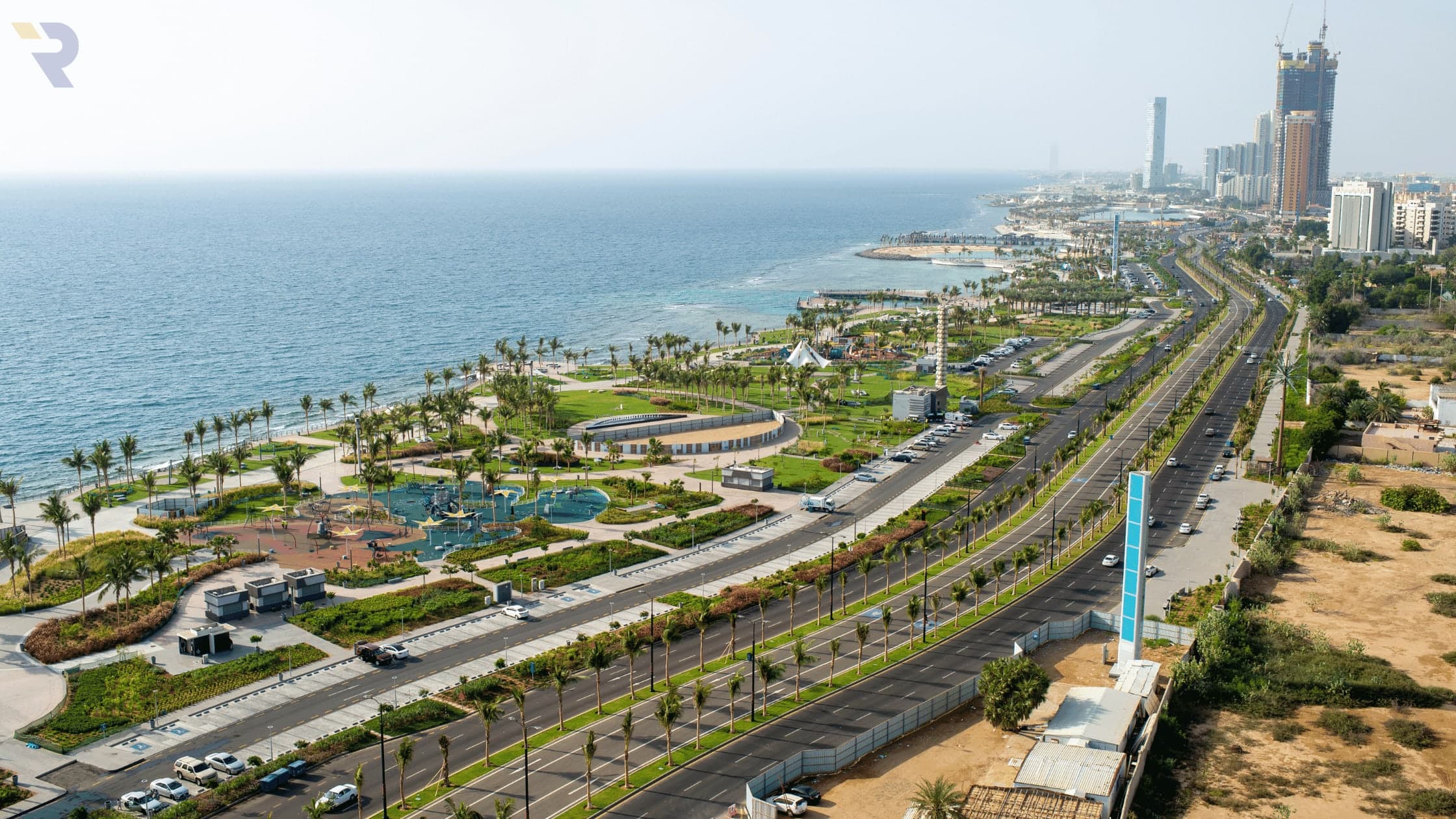
The future of real estate in Saudi Arabia is being shaped by three forces at once:
Foreign ownership. The market opened to foreign owners in January 2026.
Affordability rules. The government is now actively managing prices and rents.
Development pipeline. Communities, offices and tourism projects are changing where people live and work.
The short answer: demand remains strong, but growth is becoming more selective. Riyadh still leads on prices. Jeddah and Madinah are gaining momentum. Apartments and land are outperforming villas.
This guide starts with where the Saudi property market stands in 2026, using official and industry data. It then explains 12 trends that will define the next few years, the cities to watch, what the changes mean for buyers, investors and tenants, and the risks to keep in mind.
Saudi Real Estate Market in 2026: Where Things Stand
The Saudi property market in 2026 is larger, more regulated and more data-driven than at any point in its history. Housing dominates activity, prices are still rising overall, and regulators are playing a much bigger role in how the market behaves.
Prices
Official data shows steady but uneven growth. In the second quarter of 2026, the national real estate price index rose 1.3% year on year, with very different results by segment and region.
Indicator (Q2 2026) | Annual change |
|---|---|
National real estate price index | +1.3% |
Residential prices | +2.6% |
Residential land | +6.3% |
Apartments | +1.1% |
Villas | −9.7% |
Commercial property | −3.2% |
Riyadh Region | +4.2% |
Makkah Region (including Jeddah) | +0.4% |
Activity and ownership
Housing is the backbone of the market, accounting for roughly 63% of total real estate transaction value in the first half of 2025. Saudi homeownership reached 66.24% by the end of 2025, up from 47% in 2016, as state support and mortgage lending widened access.
What changed from 2025 to 2026
Three changes stand out:
Rent freeze. In September 2025, Riyadh introduced a five-year rent freeze.
Foreign ownership. In January 2026, the foreign ownership law took effect.
Zones. In June 2026, the Cabinet approved the zones where non-Saudis can buy.
These shifts mean the future of real estate in Saudi Arabia now depends as much on regulation as on raw demand. For a quarter-by-quarter breakdown, see our Q2 2026 price index report.
The Future of Real Estate in Saudi Arabia: 12 Trends to Watch
The following trends are already visible in 2026 data, laws and project pipelines. Together, they point to a market that is growing, but in a more controlled and diversified way.
1. Foreign ownership moves into the mainstream
The single biggest structural change is the opening to international buyers. The Law of Real Estate Ownership by Non-Saudis came into force on 22 January 2026, allowing foreign individuals and companies to own property through REGA's Saudi Properties portal.
The rules are specific rather than open-ended:
Non-Saudis can buy within designated zones.
Residents may also own one home for personal use outside those zones, except in Makkah and Madinah.
A 2% disposition fee applies when non-Saudis sell in Riyadh, Jeddah, Makkah and Madinah.
Expect foreign demand to concentrate in master-planned projects, branded residences and districts close to jobs and transport. Our guide to buying property in Saudi Arabia as a foreigner explains the process in full.
2. Affordability policy takes centre stage
Regulators have made it clear that they will intervene when prices or rents rise too quickly. Since 25 September 2025, a five-year rent freeze has applied to residential and commercial leases within Riyadh's urban boundary. Leases across the Kingdom now renew automatically unless notice is given.
Supply-side measures are equally important:
In March 2025, 81.48 square kilometres of land in north Riyadh were released for development, with capped-price plots for eligible citizens.
White Land Fees now reach up to 10% of land value a year in the highest-priority areas.
In 2026, a second phase extended these fees to Makkah, Jeddah and the Dammam metropolitan area.
For investors, this means rental growth in Riyadh is capped for now, and land speculation carries more risk than before.
3. The homeownership push continues toward 70%
Housing access remains a national priority. According to the Housing Program's annual report, Saudi homeownership reached 65.4% by the end of 2024, beating the 2025 target a year early. The rate rose again to 66.24% by the end of 2025.
With a target of 70% by 2030, housing support through Sakani and subsidised finance will continue to underpin demand for affordable and mid-market homes. That supports steady activity in suburban and master-planned communities, especially for first-time Saudi buyers. Our guide to government housing projects in Saudi Arabia covers the current schemes.
4. Apartments and land lead while villas soften
The latest data shows a clear shift in what buyers want and can afford. Residential land prices rose 6.3% and apartments rose 1.1% year on year in the second quarter of 2026, while villa prices fell 9.7%.
Several factors explain the shift:
Affordability. Apartments offer a lower entry price, which matters more as prices rise.
Household size. Younger and smaller households often prefer apartments.
Location. Apartments give buyers access to central, well-connected districts.
Villas remain important for families, but buyers are becoming more price-sensitive. Expect developers to build more apartment and townhouse stock. Buyers should check recent comparable sales rather than assuming villas will keep rising in value.
5. Master-planned communities and branded residences grow
New supply is increasingly delivered as large, integrated communities with schools, retail, parks and healthcare, rather than as individual plots. National and PIF-backed developers such as ROSHN and the NHC are central to this shift.
At the top end, branded residences are setting new price benchmarks. The 47-storey Trump Tower Jeddah, launched in December 2024 on the Corniche, is one example of how international brands are entering the Saudi luxury market.
The long-term trend is towards professionally managed buildings with shared amenities. These homes carry higher service charges but can offer more consistent quality.
6. Riyadh's office market stays tight
Commercial real estate in the capital is driven by regional headquarters and fast-growing Saudi firms. More than 700 multinational companies had set up regional headquarters in Riyadh by early 2026, and Grade A office occupancy was about 98% in mid-2026.
New office supply is scheduled from late 2026, which should gradually ease pressure. National commercial property prices fell 3.2% in the second quarter of 2026, showing that performance varies widely between prime and secondary stock.
Demand for modern logistics and warehouse space is also growing alongside e-commerce and the Kingdom's logistics ambitions. Browse offices for sale in Riyadh to see current commercial options.
7. Tourism and event-driven development
Tourism is creating an entirely new segment of the market. The first resorts at The Red Sea destination began welcoming guests in 2023, and heritage-led projects such as Diriyah are adding hotels, retail and residences.
Major events add another layer of demand. Riyadh will host Expo 2030, and several Saudi cities are host cities for the 2034 FIFA World Cup.
Expect continued investment in hotels, serviced apartments and event-linked districts. Some giga-project timelines have been re-phased, so delivery will be uneven.
8. Growth spreads beyond Riyadh
While Riyadh still leads on prices, activity is broadening. In the first half of 2025, Jeddah's residential transaction value rose 28% and Madinah's rose 49%, even as Riyadh's transaction volumes fell.
This reflects lower entry prices outside the capital, new master-planned supply, pilgrimage-driven demand in the holy cities and the recent opening to foreign Muslim buyers in Makkah and Madinah. Over the next few years, secondary cities are likely to attract more attention from both local and foreign buyers.
For a side-by-side view of the two largest markets, see our Riyadh vs Jeddah comparison.
9. A more digital, data-led market
The Saudi property market is becoming more transparent through digital infrastructure:
Ejar registers leases.
The Real Estate Registry is building a national record of titles.
The Saudi Properties portal handles foreign ownership applications.
Escrow accounts protect buyer payments on off-plan projects.
Official price indices are published quarterly.
For buyers, this means more reliable information and fewer informal deals. For landlords and developers, it means stricter compliance.
The long-term direction is towards a market where prices, rents and ownership records are easier to verify, which should support confidence among both Saudi and international investors.
10. Housing finance keeps deepening
Mortgage lending has been a key driver of rising homeownership:
Saudi citizens buying a first home can borrow up to 90% of the property's value.
The Saudi Real Estate Refinance Company supports longer-term lending.
Banks and finance companies offer a growing range of products, including some for resident expatriates.
The future challenge is balancing access to credit with affordability, especially in Riyadh. Buyers should compare lenders carefully and stress-test repayments. Our guide to real estate financing in Saudi Arabia explains current lending rules.
11. Capital-market routes into property expand
Not every investor needs to buy a unit directly. Listed real estate investment traded funds, private real estate funds and listed property companies offer exposure with lower entry costs.
Since January 2025, foreign investors have also been able to buy shares in Saudi-listed companies that own property in Makkah and Madinah, subject to ownership limits. As the market deepens, expect more funds and listed vehicles focused on offices, logistics, hospitality and residential rental.
12. Sustainability and quality of life shape design
Quality-of-life projects are changing how neighbourhoods are planned. King Salman Park in Riyadh, planned as one of the world's largest urban parks, and the Green Riyadh programme aim to add green space and cooler, more walkable streets.
New communities increasingly include energy-efficient design, shaded public areas and mixed-use layouts that reduce commuting. Standards still vary between developers. Buyers should ask about insulation, cooling efficiency and building certification, since these affect running costs and long-term value.
Key Cities and Regions to Watch
Each city will follow its own path over the next few years. Since June 2026, the zones approved for foreign ownership have also started to shape where international demand will concentrate.
City or region | Main drivers | What to watch |
|---|---|---|
Riyadh | Headquarters, metro, Expo 2030, giga-projects | Rent freeze, north Riyadh land supply, office completions |
Jeddah | Coast, trade, tourism, waterfront regeneration | White Land Fees, master-planned supply, foreign buyer demand |
Makkah and Madinah | Pilgrimage and hospitality | Foreign Muslim ownership in approved zones, new hotel supply |
Eastern Province | Energy, industry, logistics | Corporate housing demand, industrial and logistics space |
NEOM, Red Sea and AlUla | Tourism and lifestyle destinations | Project delivery and early resale evidence |
Riyadh remains the centre of the market. Our guide to real estate investment in Riyadh covers districts, rules and costs in detail.
Jeddah offers lower entry prices and coastal demand, while Makkah and Madinah depend heavily on pilgrimage and hospitality. The Eastern Province is linked to energy and industry, and destination projects such as the Red Sea and AlUla are still building their track records.
What These Trends Mean for Buyers, Investors and Tenants
Group | Opportunities | Things to watch |
|---|---|---|
Saudi first-time buyers | Housing support, higher loan-to-value limits, new communities | Rising prices in prime districts, service charges |
Foreign buyers | Direct ownership in designated zones, Premium Residency route | Zone boundaries, 2% exit fee, limited resale history in new areas |
Residential investors | Apartment demand, secondary-city growth | Riyadh rent freeze, villa price softness |
Commercial investors | Tight Grade A office market in Riyadh | New supply from late 2026, 15% VAT on commercial leases |
Tenants | Rent freeze in Riyadh, automatic lease renewal | Limited supply in popular districts |
For foreign buyers considering long-term stays, our guide to Premium Residency in Saudi Arabia explains how property can qualify.
Risks That Could Shape the Market
No outlook is complete without the risks. The main ones are:
Policy changes. Rent controls, fees and land releases can alter returns quickly, and similar measures could extend beyond Riyadh.
Project delays. Large developments and giga-projects can slip, affecting off-plan buyers and nearby land values.
Affordability pressure. High prices in prime Riyadh districts have already slowed transaction volumes.
Oversupply in specific segments. Heavy new supply in one district can hold back prices and rents.
Global conditions. Interest rates, oil prices and investor sentiment can influence demand and financing costs.
Segment divergence. National data shows villas and commercial property falling even as land and apartments rise.
Common Mistakes to Avoid
Treating the future of real estate in Saudi Arabia as one market. Prices move very differently by city, district and property type.
Buying on announcements alone. Check delivery progress, escrow arrangements and handover records.
Ignoring regulation. Rent freezes, White Land Fees and zone rules can change the numbers behind any deal.
Relying on outdated data. Rules and market conditions have changed significantly since 2024.
Forgetting total costs. Budget for the 5% Real Estate Transaction Tax, service charges and exit fees. Our guide to real estate taxes in Saudi Arabia explains each charge.
Assuming guaranteed returns. No official source guarantees price growth or rental yields.
Outlook to 2030
Looking ahead, the future of real estate in Saudi Arabia is likely to be defined by managed growth rather than rapid, uncontrolled price increases. Housing demand should stay strong as the homeownership target approaches, supported by population growth, employment and state programmes.
At the same time, affordability measures, land releases and new supply are designed to prevent overheating, especially in Riyadh.
Several milestones will shape the path to 2030:
Expo 2030 in Riyadh.
Continued office and hospitality completions.
Possible refinements to foreign ownership zones.
Further extension of affordability policies.
For a deeper look at the policy side, read our guide on how Vision 2030 is transforming real estate in Saudi Arabia.
None of these outcomes is guaranteed. Buyers and investors should follow official announcements and base decisions on current data.
Conclusion
The future of real estate in Saudi Arabia is one of growth with guardrails. Foreign ownership, housing support, new communities and tourism projects are expanding demand, while rent controls, land releases and fees aim to keep the market affordable and stable. Riyadh remains the centre of activity, but Jeddah, Madinah and other regions are gaining ground.
For buyers and investors, success will depend on choosing the right city, district and property type, verifying project delivery and budgeting for all costs. This guide provides general information, not legal or financial advice, so confirm current rules and data with a licensed adviser before making property decisions.
Which property type & region do you prefer?
Select property type and preferred city in Saudi Arabia.
Frequently Asked Questions
The Saudi property market is expected to keep growing, but more selectively. Official data shows national prices up 1.3% year on year in the second quarter of 2026, with Riyadh leading. Foreign ownership, new communities, tourism projects and housing support will drive demand, while rent controls and land releases aim to keep prices affordable.
Prices are still rising overall, but not evenly. In the second quarter of 2026, residential land rose 6.3% and apartments rose 1.1%, while villas fell 9.7% and commercial property fell 3.2%. Future growth will depend on location, property type, new supply and policy measures, so no general rise is guaranteed.
Since 22 January 2026, foreign individuals and companies can own property in designated zones through REGA's Saudi Properties portal, and residents may also own one home for personal use outside those zones. This opens the market to international demand, especially for master-planned and branded projects, while a 2% fee applies when non-Saudis sell in major cities.
Riyadh has the strongest official price growth, with Riyadh Region prices up 4.2% year on year in the second quarter of 2026. Jeddah and Madinah recorded strong transaction growth in 2025, while Makkah and Madinah benefit from pilgrimage demand. The Eastern Province and destinations such as the Red Sea have their own long-term drivers.
The Riyadh rent freeze stops landlords from increasing rent on residential and commercial leases within the city's urban boundary for five years from 25 September 2025. It applies to new and existing leases, and previously leased vacant units must be let at the last registered rent. The measure can be extended to other cities if approved.
Riyadh's office market is one of the tightest in the region, with Grade A occupancy around 98% in mid-2026, driven by more than 700 regional headquarters. New supply is due from late 2026, which may ease pressure. Nationally, commercial property prices fell 3.2% in the second quarter of 2026, so quality and location matter greatly.
Digital platforms are making the market more transparent. Ejar registers leases, the Real Estate Registry records titles, the Saudi Properties portal handles foreign ownership, and escrow accounts protect off-plan buyers. Official quarterly price indices also help buyers and investors track market trends with reliable data.
The main risks include policy changes such as rent freezes and land fees, delays on large projects, affordability pressure in Riyadh, oversupply in specific districts, and global factors such as interest rates. Villa and commercial prices also fell nationally in 2026, showing that not every segment is rising.
Yes. Investors can use listed real estate investment traded funds, private real estate funds and shares in listed property companies. Since January 2025, foreign investors can also buy shares in Saudi-listed companies that own property in Makkah and Madinah, subject to ownership limits. These routes offer lower entry costs and more liquidity.
It depends on your goals and time horizon. The market is more regulated and transparent, foreign ownership is now possible, and long-term demand drivers remain strong. However, rent controls, new land supply and falling villa and commercial prices make returns less predictable. Focus on location, delivery evidence and total costs, and seek licensed advice.
