
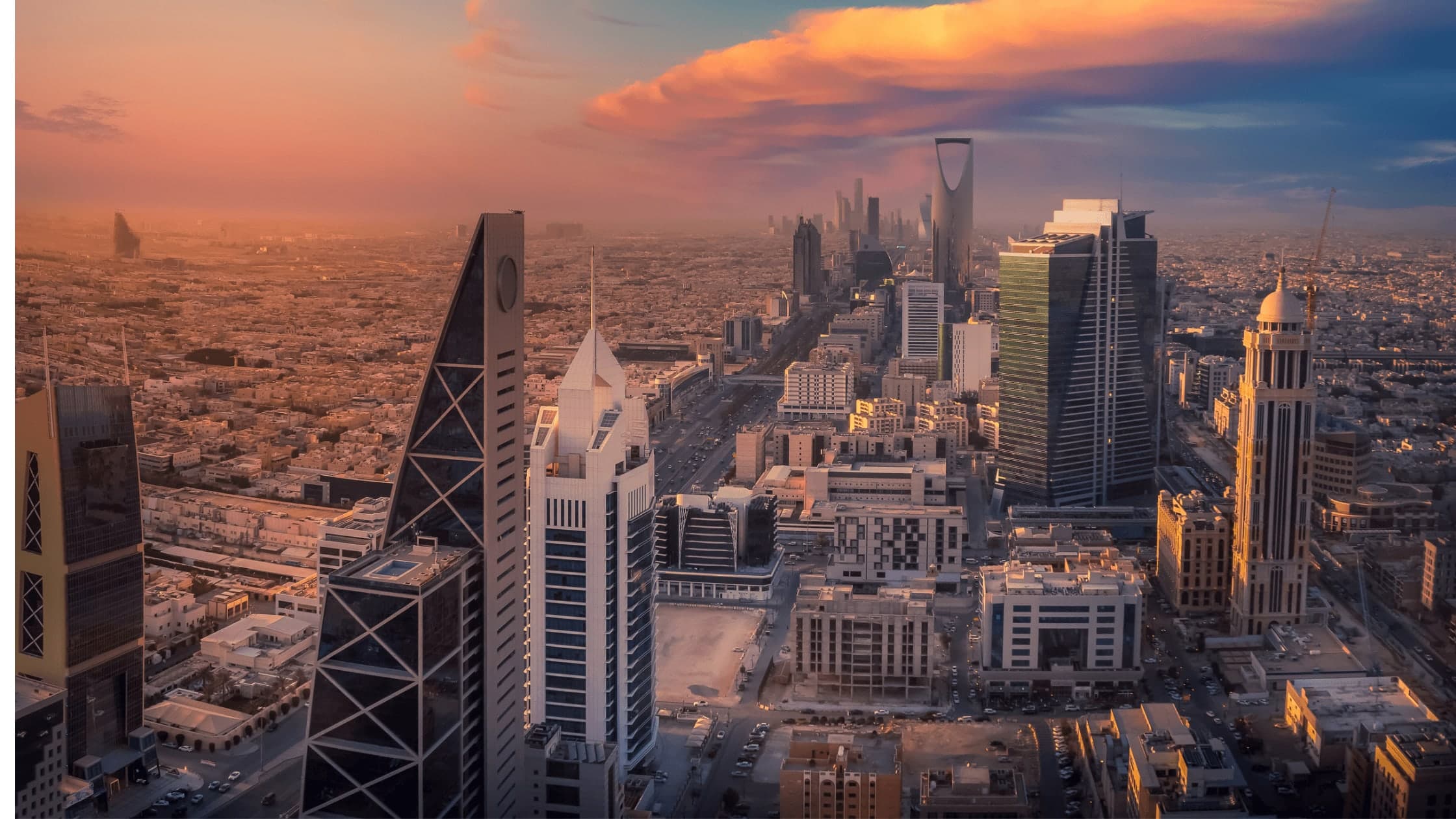
Riyadh is the most active property market in Saudi Arabia, and 2026 has changed how investors need to approach it. A five-year rent freeze, new land supply in the north and a law allowing non-Saudis to buy in designated zones have reshaped the numbers behind real estate investment in Riyadh.
The short answer: the capital still offers the Kingdom's deepest demand, driven by jobs, regional headquarters and major infrastructure. In 2026, though, returns depend less on rising rents and more on buying the right asset, in the right district, at the right price.
This guide covers current prices, the rules that affect rental income, the main property types, north Riyadh and other growth corridors, commercial property, costs and taxes, a step-by-step buying process and the risks to watch.
Is Real Estate Investment in Riyadh Still Worth It in 2026?
For most long-term investors, yes, but the strategy has changed. Riyadh is posting the strongest price growth among the Kingdom's major regions, and prime offices are almost fully let. Because rents are frozen until September 2030, returns now depend mainly on entry price, asset quality and long-term capital growth.
The case rests on three drivers:
Jobs. More than 700 multinational companies had set up regional headquarters in the capital by early 2026, bringing senior staff who need homes and office space.
Infrastructure. The six-line Riyadh Metro, the planned King Salman International Airport and giga-projects such as Qiddiya and New Murabba are extending the city's growth corridors.
Events. Riyadh will host Expo 2030 and is a host city for the 2034 FIFA World Cup, both of which support hospitality and infrastructure spending.
The counterweight is regulation. The government has stepped in directly to cool land prices and rents, and investors who ignore those rules risk overpaying for income that cannot grow.
Riyadh Property Market in 2026: Key Numbers
Official data shows the capital outperforming the national market. Riyadh Region recorded a 4.2% annual rise in real estate prices in the second quarter of 2026, compared with 1.3% for the Kingdom as a whole.
Indicator | Latest reading | Period |
|---|---|---|
Real estate prices, Riyadh Region | +4.2% year on year | Q2 2026 |
Real estate prices, Saudi Arabia | +1.3% year on year | Q2 2026 |
Residential land prices, national | +6.3% year on year | Q2 2026 |
Apartment prices, national | +1.1% year on year | Q2 2026 |
Villa prices, national | −9.7% year on year | Q2 2026 |
Commercial property prices, national | −3.2% year on year | Q2 2026 |
Grade A office occupancy, Riyadh | About 98% | Q2 2026 |
Two patterns stand out. Land is leading residential price growth, while villas have cooled after several strong years. On the commercial side, national prices for commercial plots and buildings fell, yet prime Riyadh offices remain almost fully occupied. More than 570,000 square metres of new office space is scheduled to arrive from late 2026 onward.
For a fuller breakdown, see our Q2 2026 Saudi real estate price index report.
Rules That Shape Investment Returns in Riyadh
The five-year rent freeze
Since 25 September 2025, landlords inside Riyadh's urban boundary cannot increase rent on residential or commercial leases, new or existing, for five years. The five-year rent freeze fixes rent at the level in force on that date.
Different rules apply depending on the property's history:
Leased on 25 September 2025: rent stays at the current level.
Previously leased but vacant: rent is fixed at the last amount registered on the Ejar platform.
Never leased before: rent is agreed between landlord and tenant, then frozen.
Escalation clauses in contracts signed before 25 September 2025 remain enforceable, but new contracts cannot escalate during the freeze. Landlords may object only in limited cases, such as substantial structural renovation or where the last lease was signed before 2024. Violations can attract fines of up to twelve months' rent.
Automatic renewal and Ejar registration
Leases across the Kingdom now renew automatically unless either side gives at least 60 days' notice before expiry. In Riyadh, landlords generally cannot refuse a tenant's renewal except in defined cases, such as unpaid rent or personal use by the owner or a first-degree relative. Every lease must be registered on Ejar.
For investors, the practical lesson is simple: model rental income as flat until at least September 2030, and value properties on today's rent rather than on hoped-for increases.
New land supply in north Riyadh
In March 2025, a Crown Prince directive lifted transaction restrictions on 33.2 square kilometres of land in north Riyadh, bringing the total released area to 81.48 square kilometres. The Royal Commission for Riyadh City was also tasked with supplying 10,000 to 40,000 developed residential plots a year for five years to eligible citizens, at no more than SAR 1,500 per square metre. These plots carry a ten-year restriction on sale, lease or mortgage, except for construction finance.
Together with expanded White Land Fees, which can reach 10% a year in the highest-priority tier, these measures add supply and discourage holding undeveloped land for speculation.
Can Foreigners Invest in Riyadh Property?
Yes. Since the Law of Real Estate Ownership by Non-Saudis took effect on 22 January 2026, non-Saudi individuals and companies can own property in designated zones across Riyadh. Resident foreigners may also own one home for personal use outside those zones. Purchases are processed through REGA's Saudi Properties portal.
The designated zones in Riyadh approved in June 2026 include Qiddiya, New Murabba, the Sports Boulevard, the Arts District, Diriyah Gate, King Salman Park, Sedra, the King Abdullah Financial District, King Salman International Airport and a transit-oriented development site. Exact boundaries are shown on REGA's official zones map.
When a non-Saudi later sells, a 2% disposition fee applies in Riyadh, on top of the 5% Real Estate Transaction Tax. For eligibility, documents and the full process, read our guide to buying property in Saudi Arabia as a foreigner.
Types of Property Investment in Riyadh
Each asset class in the capital responds differently to the 2026 rules, so the choice of asset often matters more than the timing.
Property type | How returns are made | What to know in 2026 |
|---|---|---|
Apartments | Rental income and resale | Largest tenant pool; rent flat under the freeze |
Villas and townhouses | Family rentals and capital growth | Prices softened nationally; demand strongest in north districts |
Off-plan units | Gap between launch price and completed value | Staged payments; developer and escrow checks essential |
Grade A offices | Long leases to corporate tenants | Near-full occupancy; high entry prices |
Retail and showrooms | Leases, sometimes with turnover rent | Location-driven; commercial rent carries 15% VAT |
Industrial and logistics | Warehouse leases | Strong demand for modern space |
Land | Capital growth or development | White Land Fees may apply to undeveloped plots |
REITs and real estate funds | Dividends and unit price growth | Low entry cost; no direct management |
Residential apartments and villas
Apartments remain the most liquid entry point, with broad demand from young Saudi households and expatriate professionals. Under the rent freeze, the key is buying at a price that already works on today's rent. Villas suit investors targeting family tenants and long holding periods, especially in established northern districts. Browse current properties for sale in Riyadh to compare pricing by district.
Off-plan property
Off-plan units let buyers pay in stages during construction, and a unit bought at launch price can be worth more on completion if the project delivers well. The main risk is delay, so check the developer's delivery record, the project's escrow arrangements and the handover schedule. Compare current off-plan properties in Riyadh before committing.
Land
Land has led price growth in the latest official data, but it produces no income and may attract White Land Fees if left undeveloped in a designated area. It suits investors with a clear development plan or a long time horizon.
REITs and funds
Listed real estate investment traded funds and private real estate funds offer exposure to Riyadh offices, retail and residential assets with a much smaller capital outlay. They trade off control for convenience and liquidity.
Matching the asset to your budget, income needs and time horizon is the foundation of profitable real estate investment in Riyadh.
Commercial Property Investment in Riyadh
Commercial property is where Riyadh differs most from other Saudi cities. Demand for Grade A offices is driven by regional headquarters, government-linked entities and fast-growing Saudi companies upgrading to modern space. Prime buildings around the King Abdullah Financial District, Olaya and King Fahd Road are almost fully let, and new supply arriving from late 2026 should only gradually ease the pressure.
Before buying commercial space, weigh these points:
The rent freeze applies here too. Commercial leases inside the urban boundary are frozen for five years, so income on existing leases will not rise.
VAT treatment differs. Commercial and other non-residential leases generally carry 15% VAT, while residential rent is exempt.
Tenant quality drives value. A long lease to a strong corporate tenant is worth more than a higher rent from a weak one.
Strata versus whole buildings. Individual office floors are easier to buy but depend on the building's management; whole buildings offer control but need far more capital.
Retail is location-sensitive. Street-front shops and showrooms on major arterial roads can perform well, but footfall depends heavily on access and parking.
Investors can review current offices for sale in Riyadh to compare locations and sizes.
North Riyadh: Where Growth Is Concentrated
North Riyadh has become the capital's main growth corridor. Districts such as Al Malqa, Hittin, An Narjis, Al Yasmin and Al Arid benefit from proximity to the King Abdullah Financial District, King Salman Road, metro lines, international schools, hospitals and new retail destinations.
Al Malqa is among the city's most sought-after addresses for senior executives and larger families, while An Narjis and Al Arid offer newer stock at lower entry prices.
The March 2025 land release matters most here. Additional plots are expected to moderate land price growth over time, which is good news for end users but means land investors should not assume past price increases will continue at the same pace. Built properties with established tenant demand tend to be less exposed to this new supply than empty plots.
When assessing a north Riyadh property, check:
distance to a metro station or major road
the completion timeline of nearby infrastructure
school and hospital access for family tenants
the pipeline of competing projects in the same district
Other Growth Corridors to Watch
Metro corridors. Properties within walking distance of stations tend to attract tenants who want to avoid traffic. See our analysis of property opportunities near Riyadh Metro stations.
Giga-project districts. New Murabba, Diriyah Gate and the Qiddiya project are long-term plays tied to delivery timelines and are also open to foreign buyers.
The airport corridor. King Salman International Airport is expected to reshape land use in the north-east of the city.
Central regeneration. Olaya and the areas around the historic centre continue to attract commercial and mixed-use redevelopment.
For a district-by-district overview, see our Riyadh area guide.
Costs and Taxes of Investing in Riyadh Property
Cost | When it applies | Amount |
|---|---|---|
Real Estate Transaction Tax (RETT) | On purchase | 5% of the transaction value, unless exempt |
VAT on property sale | On purchase | Exempt |
VAT on commercial rent | On rental income | 15% |
VAT on residential rent | On rental income | Exempt |
Non-Saudi disposition fee | When a non-Saudi sells | 2% in Riyadh |
White Land Fees | Qualifying undeveloped land | Up to 10% a year in the highest-priority tier |
Brokerage, service charges and management | Ongoing | Vary by property and provider |
Example: on a SAR 1,500,000 apartment, RETT would be SAR 75,000 unless an exemption applies. A non-Saudi selling at the same value later would also pay a SAR 30,000 disposition fee.
Our guide to real estate taxes in Saudi Arabia explains each charge in detail. If you plan to use bank finance, review real estate financing in Saudi Arabia for down payment rules and lender criteria.
How to Invest in Riyadh Property: Step by Step
A disciplined process protects returns on any real estate investment in Riyadh.
Set your goal. Decide whether you want income, capital growth or a mix, and how long you can hold.
Confirm eligibility. Saudi citizens can buy anywhere; non-Saudis should confirm the property sits in a designated zone or qualifies under the one-home rule.
Model the numbers on frozen rent. Use today's registered rent, subtract service charges, maintenance, vacancy and VAT where relevant, and test the result against your financing cost.
Shortlist districts and assets. Compare metro access, infrastructure timelines and competing supply.
Carry out due diligence. Verify the title deed, check for mortgages or disputes, confirm the Ejar history of any existing lease, and review the developer's record for off-plan units.
Sign and register. Sign a written contract, settle RETT and register the transfer.
Manage the asset. Register leases on Ejar, track renewal notice periods and keep records for eventual sale. Professional property management services can handle tenants, maintenance and compliance.
Risks and Common Mistakes
Pricing in rent growth. Under the freeze, rent on existing leases will not rise before September 2030.
Overpaying for land. New supply in the north may slow land price growth, and idle plots can attract fees.
Ignoring tenant renewal rights. Automatic renewal and limits on refusal make it harder to reposition a property quickly.
Skipping developer checks. Delays are the biggest risk in off-plan purchases.
Forgetting VAT on commercial rent. Commercial leases usually carry 15% VAT, which affects tenant affordability.
Assuming foreigners can buy anywhere. Outside designated zones, non-Saudis face strict limits.
Chasing headlines. Giga-project areas can take years to mature; match your time horizon to the delivery schedule.
Riyadh Real Estate Outlook for 2026 and Beyond
Riyadh's fundamentals remain strong: a growing workforce, continued regional headquarters demand and a pipeline of major infrastructure. At the same time, policymakers have shown they will intervene when prices or rents rise too fast.
The likely result is a steadier market, where land price growth moderates as supply increases, rental income stays flat until 2030, and value comes from quality assets in well-connected districts. Investors should watch new supply in north Riyadh, office completions from late 2026, and any extension of rent controls or foreign ownership zones.
Conclusion
Real estate investment in Riyadh still offers the deepest demand in the Kingdom, but the 2026 rules reward careful buyers rather than speculators. Frozen rents, new land supply and foreign ownership zones mean returns now come from choosing the right asset, district and entry price.
Focus on well-connected districts, model income on today's rent, budget for RETT and any disposition fee, and verify every title before paying. This guide provides general information, not financial or legal advice, so confirm current rules and your eligibility with a licensed adviser before investing.
Which property type & region do you prefer?
Select property type and preferred city in Saudi Arabia.
Frequently Asked Questions
Riyadh remains the Kingdom's strongest property market, with Riyadh Region prices up 4.2% year on year in the second quarter of 2026 and prime offices almost fully let. However, the five-year rent freeze means income on existing leases will not grow until 2030. It suits long-term investors who buy quality assets at sensible prices rather than those chasing quick rental gains.
Yes. Since 22 January 2026, non-Saudi individuals and companies can own property in designated Riyadh zones, including Qiddiya, New Murabba, Diriyah Gate, King Salman Park, Sedra and the King Abdullah Financial District. Resident foreigners may also own one home for personal use outside those zones. Applications go through REGA's Saudi Properties portal, and a 2% fee applies when a non-Saudi later sells.
From 25 September 2025, rents on residential and commercial leases within Riyadh's urban boundary cannot rise for five years. Vacant units that were leased before must be let at the last registered Ejar rent. Investors should value properties on current rent, expect flat income until 2030 and focus on capital growth and asset quality instead of rent increases.
North Riyadh districts such as Al Malqa, Hittin, An Narjis and Al Yasmin attract strong demand thanks to access to the financial district, major roads, schools and metro lines. Areas near metro stations, giga-project districts like New Murabba and Diriyah Gate, and the King Salman International Airport corridor are also worth watching for long-term growth.
Prime offices in Riyadh are among the most in-demand assets in the Gulf, with Grade A occupancy around 98% in mid-2026, driven by regional headquarters and growing Saudi firms. Entry prices are high, commercial rents are covered by the freeze, and leases usually carry 15% VAT. Tenant quality and location matter more than headline rent.
The main purchase cost is the 5% Real Estate Transaction Tax, unless an exemption applies, and property sales are exempt from VAT. Commercial rent generally carries 15% VAT, while residential rent is exempt. Non-Saudis pay a 2% disposition fee when they sell in Riyadh, and undeveloped land may attract White Land Fees.
Off-plan property can offer lower entry prices and staged payments, but the main risk is delayed delivery. Reduce that risk by choosing developers with a strong completion record, confirming that buyer payments go into a regulated escrow arrangement, and reviewing the handover schedule and penalty clauses before signing.
Saudi citizens buying a first home can finance up to 90% of its value, while banks usually finance second and later homes at up to 70%. Investment purchases often count as second homes, so expect a larger down payment. Non-Saudi borrowers face lender-specific criteria, often including higher down payments and minimum salary requirements.
Listed real estate investment traded funds and regulated real estate funds let you gain exposure to Riyadh offices, retail and residential assets with far less capital than buying a unit. They offer liquidity and professional management, but you have no control over individual properties and returns depend on the fund's performance and fees.
Residential land has led national price growth, rising 6.3% year on year in the second quarter of 2026. In north Riyadh, the release of 81.48 square kilometres for development, a supply of capped-price plots for citizens and expanded White Land Fees are designed to add supply and curb speculation, which may moderate future land price growth.
