
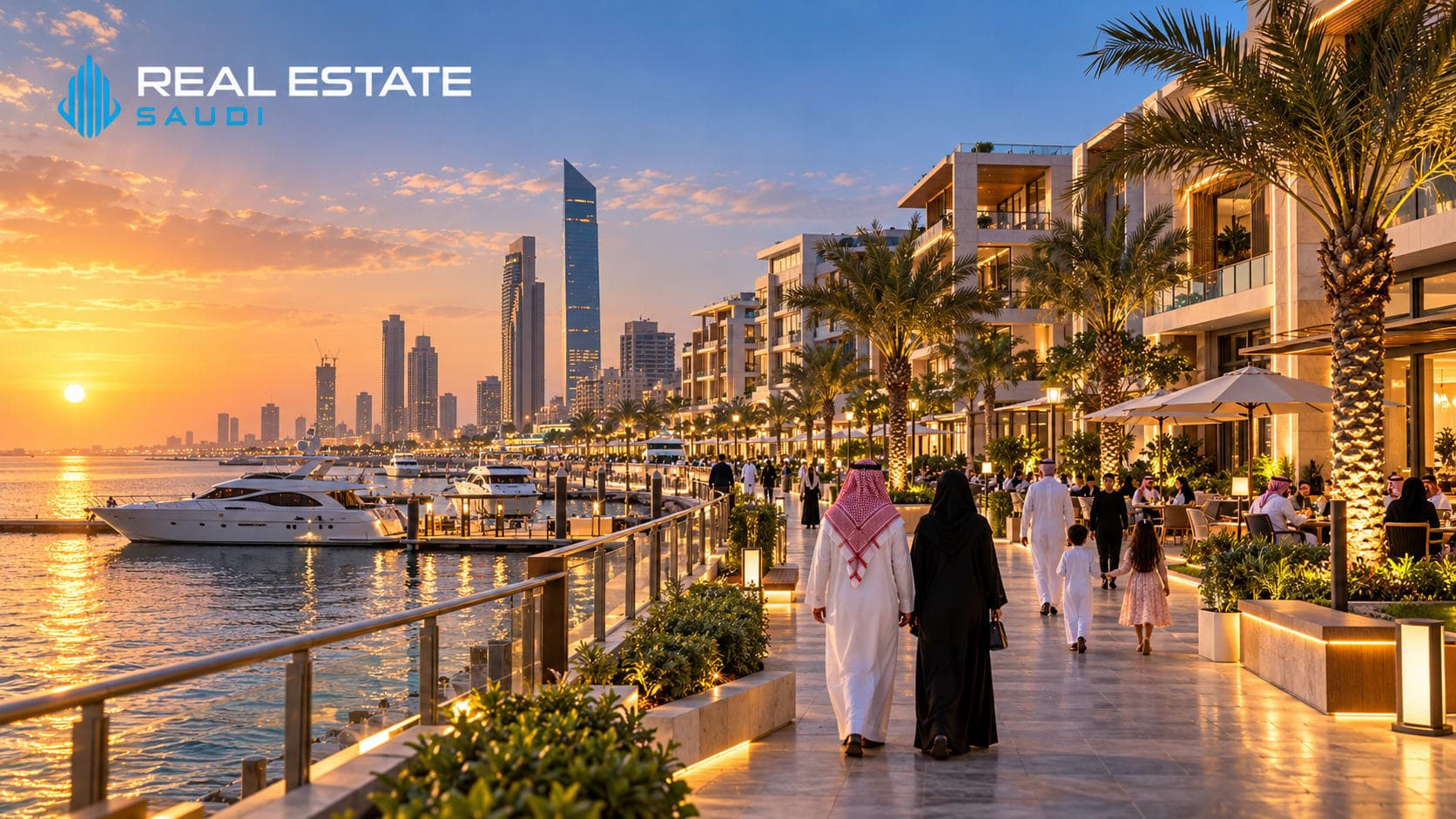
Jeddah Waterfront Development is reshaping how investors, homebuyers and businesses evaluate property along Saudi Arabia's Red Sea coast. In 2026, the most significant opportunities relate to the planned Jeddah Central destination, established coastal neighborhoods, hospitality assets and commercial premises serving residents and visitors. However, these opportunities differ in construction status, ownership arrangements and investment risk.
Jeddah combines an established port-city economy with coastal recreation, heritage attractions and major urban development plans. Its waterfront includes existing public spaces, residential districts and proposed mixed-use destinations. Investors should distinguish these locations rather than assume every property advertised near the coastline belongs to one government-backed project.
The planned transformation may support demand for housing, hotels, retail and leisure facilities, but future property appreciation is not guaranteed. Construction schedules, acquisition prices, regulatory eligibility and operating expenses remain decisive.
This guide examines Jeddah Central, waterfront housing, investment structures, foreign ownership rules, property costs and the practical steps required to evaluate opportunities in 2026.
Jeddah Waterfront Development in 2026: What Is Actually Happening?
Jeddah's waterfront transformation involves several distinct initiatives rather than one continuous redevelopment. Existing Corniche attractions are already part of the city's urban landscape, while Jeddah Central is a major planned mixed-use destination with residential, cultural, hospitality and commercial components.
Other private and developer-led projects contribute to the wider coastal property market. Their locations, legal structures and completion schedules must be reviewed individually.
The most important project for understanding the scale of this transformation is Jeddah Central, developed by Jeddah Central Development Company, which is backed by Saudi Arabia's Public Investment Fund.
According to the Public Investment Fund's official Jeddah Central project profile, the development is planned around a 9.5-kilometre waterfront, a marina, a 2.1-kilometre sandy beach and major cultural attractions.
Its first phase has an announced completion target at the end of 2027. That target should not be confused with confirmation that all facilities were operational in 2026.
For investors, the distinction is essential: existing coastal property can be inspected and evaluated against current demand, while future development opportunities involve additional delivery and market uncertainties.
Jeddah Central: The Major Waterfront Investment Project
Jeddah Central is a planned urban destination intended to combine contemporary living, public attractions, business activity and cultural identity.
The project occupies a strategically located area near the city's central waterfront and draws architectural inspiration from historic Jeddah, particularly Al-Balad.
Project size and development plans
The official Jeddah Central project overview describes a development area of approximately 5.7 million square metres.
Its master plan includes 17,000 residential units, approximately 2,700 hotel rooms, a marina and several major public attractions.
Four planned landmarks are an opera house, museum, sports stadium and oceanarium with coral-related facilities.
These figures describe the master-plan scope, not a confirmed inventory of completed or available units.
Jeddah Central is being developed in major phases, and investors should verify the construction status of the relevant building before making financial commitments.
Why the location matters
A central waterfront destination can bring residential, commercial and cultural activities closer together.
Mixed-use development may create opportunities for businesses requiring access to residents, employees and visitors.
Nevertheless, large master plans also involve complicated delivery schedules and substantial infrastructure requirements.
Investors should separate confirmed facilities from proposed components when assessing the commercial attractiveness of a property.
The Real Estate Saudi Jeddah Waterfront project overview provides additional context for researching the development and related property opportunities.
ما نوع العقار والمنطقة المناسبة؟
اختر نوع العقار والمدينة المستهدفة لاستعراض أنسب الخيارات.
Jeddah Central Versus the Existing Corniche
One common misunderstanding is that Jeddah Central and the entire Jeddah Corniche represent the same development.
The Corniche refers to the city's established coastal environment, including public waterfront areas, roads, recreational facilities and nearby residential districts.
Jeddah Central is a specific large-scale planned development with its own master plan and delivery phases.
Established coastal neighborhoods
Areas along the existing waterfront may already contain completed apartments, villas, hotels and commercial properties.
These assets can be evaluated through physical inspections, existing leases, operating expenses and comparable market evidence.
The strength of an established location depends on its actual facilities and residential demand.
Planned mixed-use destinations
New development areas may eventually introduce residential accommodation alongside retail, entertainment and hospitality facilities.
However, investors cannot assume that proposed infrastructure will be completed exactly as originally announced.
Availability of units, contractual rights and permitted property uses may change between development stages.
Understanding these differences helps prevent inappropriate comparisons between completed coastal apartments and speculative purchases tied to future projects.
How Vision 2030 Supports Jeddah's Coastal Transformation
Jeddah's waterfront ambitions form part of the broader economic environment associated with Saudi Vision 2030.
The programme encourages economic diversification, tourism development, private-sector investment and improvements to quality of life.
Waterfront destinations can contribute to these objectives by creating places for recreation, hospitality, commercial activity and urban living.
However, a national development strategy does not guarantee investment returns for private property purchasers.
Economic diversification
Tourism and entertainment investments can create requirements for hotels, restaurants, retail premises and supporting services.
Additional employment may also influence demand for conventional residential accommodation.
These effects depend on actual business operations, workforce requirements and visitor spending.
Urban quality of life
Public spaces, walkable environments and access to recreational facilities can improve the attractiveness of residential neighborhoods.
Nevertheless, property buyers should assess completed amenities and realistic maintenance expenses.
A planned waterfront park has different investment implications from an existing, accessible public space.
The success of individual developments will ultimately depend on delivery, management and whether residents and businesses find the destinations practical.
Residential Real Estate Opportunities Near Jeddah Waterfront
Residential property is an important component of Jeddah's coastal investment landscape.
Potential opportunities include completed apartments, family villas, serviced residences and qualifying off-plan units.
Each option serves a different buyer profile.
Completed waterfront apartments
Completed apartments allow buyers to examine building condition, views, parking and nearby facilities.
They may appeal to owner-occupiers seeking a coastal lifestyle or investors targeting conventional residential tenants.
However, a sea view does not automatically justify a premium purchase price.
Buyers must examine building management, recurring service charges, structural maintenance and long-term demand.
Properties exposed to coastal conditions may also require particular attention to corrosion, exterior finishes and mechanical systems.
Family housing near the coast
Families may prefer residential neighborhoods offering schools, healthcare, shopping and manageable commuting distances.
A villa farther from the shoreline may provide more space and lower maintenance exposure than an apartment directly facing the sea.
The appropriate choice depends on household priorities rather than marketing descriptions.
Buyers can compare the wider Jeddah residential areas and housing market before choosing a specific coastal neighborhood.
Best Jeddah Areas to Research for Waterfront Property
Jeddah contains several established coastal and near-coastal districts worth examining.
Their suitability varies according to property type, acquisition budget and daily accessibility.
Al Shati
Al Shati is associated with Jeddah's northern coastal environment and established residential activity.
Buyers may investigate premium apartments, villas and nearby commercial services.
Property condition, access to the shoreline and current comparable prices remain important.
Al Hamra
Al Hamra includes established urban accommodation and locations associated with Jeddah's central waterfront.
It may interest buyers seeking a developed neighborhood with access to city amenities.
Older buildings require careful maintenance assessment.
Obhur
The wider Obhur area is relevant to buyers exploring northern coastal living, recreational facilities and residential development.
Individual locations differ in road access, housing specifications and proximity to services.
Other near-coastal neighborhoods
Al Zahra and other northern residential districts may appeal to families seeking accommodation with access to coastal recreation without necessarily purchasing direct waterfront property.
Investors should compare realistic travel times, building quality and rental demand.
A location near the sea should be evaluated as a functioning residential neighborhood, not merely as an attractive map position.
Waterfront Apartments, Villas and Serviced Residences
Different waterfront property categories involve different financial and management responsibilities.
Conventional apartments
Ordinary residential apartments may be suitable for personal occupation or long-term renting.
Ownership arrangements should specify the unit, shared facilities and relevant common-area obligations.
Maintenance charges can materially affect the cost of ownership.
Villas and townhouses
Larger homes may appeal to families seeking privacy, outdoor space and multiple bedrooms.
However, they can involve higher acquisition costs and additional upkeep.
Structural condition and land-use permissions should be verified.
Serviced residences
Serviced properties may include management, housekeeping or hospitality-related facilities.
These arrangements can simplify some operational responsibilities but introduce additional fees and restrictions.
An investor should establish whether the asset is legally classified as residential or hospitality property.
The permitted use matters especially when calculating expected rental income or considering short-term letting.
Commercial and Hospitality Investment Opportunities
Jeddah's waterfront transformation may create demand for commercial premises serving residents, tourists and businesses.
Potential segments include hotels, restaurants, retail units, offices and leisure-related facilities.
Hospitality property
Hotels and serviced accommodation depend on occupancy, operating efficiency and competitive positioning.
Attractive visitor destinations can support demand, but seasonal variation and management costs remain important.
Hotel investment should not be assessed using residential apartment rental assumptions.
Retail and dining
Restaurants and retailers may benefit from accessible locations with substantial customer activity.
However, footfall does not automatically translate into profitable tenancy.
Lease terms, tenant creditworthiness, permitted operating activities and fit-out requirements need careful examination.
Commercial spaces
Offices and other commercial premises may serve businesses connected to tourism, development and professional services.
Investors can examine the broader commercial hotel property category in Saudi Arabia when comparing hospitality-oriented property types.
The commercial viability of each asset depends on actual demand, competitive supply and contractual obligations.
Waterfront Property Prices in Jeddah: What Determines Value?
There is no single reliable price that describes every waterfront property in Jeddah.
Values differ substantially between existing apartments, premium coastal villas, serviced residences and proposed developments.
Location and view
Direct water views may attract premiums, but buyers should verify whether the view is protected or could change because of nearby construction.
Distance from the shoreline is only one factor.
Accessibility, neighborhood services and building quality also influence valuation.
Size and building specifications
Larger units may command higher total prices, but price comparisons should consider usable floor area and condition.
Premium finishes do not eliminate the possibility of expensive repairs.
Transaction and operating costs
A property with attractive asking terms may carry substantial management fees or maintenance obligations.
Investors should compare completed transactions where reliable evidence is available.
They should also distinguish developer launch prices from the resale market.
Avoid treating advertising claims of guaranteed price growth as evidence of actual market performance.
Rental Yield and Capital Appreciation Potential
Rental income is often a central consideration for investors researching Jeddah Waterfront Development.
However, there is no universal rental yield that can be reliably applied to all waterfront apartments, villas or hospitality properties.
Residential rental analysis
For a conventional apartment, investigate achievable annual rent, occupancy, management expenses and recurring service charges.
Compare similar occupied properties rather than rely solely on projected developer income.
A premium waterfront location can have strong buyer appeal while still generating a relatively modest net rental return.
Capital appreciation
Appreciation depends on purchase valuation, supply, demand and broader financing conditions.
A major new development may improve surrounding amenities but also introduce competing housing supply.
Consequently, project announcements should not be treated as a guarantee that nearby resale prices will increase.
Investors should test a conservative scenario in which prices remain stable or decline during the intended holding period.
Financial resilience is generally more important than optimistic appreciation forecasts.
Can Foreigners Buy Waterfront Property in Jeddah in 2026?
Eligible foreign individuals and entities can acquire qualifying real estate rights in Saudi Arabia under the updated non-Saudi ownership framework.
The revised system entered into force on 22 January 2026.
The Real Estate General Authority's official foreign ownership announcement explains the Saudi Properties platform and procedures for residents, non-residents and qualifying entities.
Geographic eligibility
Foreign ownership remains subject to designated geographic permissions, permitted rights and other legal controls.
A waterfront property being publicly advertised does not establish that every international purchaser may legally acquire it.
Application procedures
Eligible residents may use their Iqama to initiate the relevant digital process.
Non-residents may require a recognised digital identity obtained through the prescribed channels.
Foreign companies can face additional registration requirements.
Before transferring funds, investors must verify whether the exact property is available under their ownership category.
Ownership also does not automatically provide residence or immigration privileges.
حدد ميزانيتك الاستثمارية
حدد ميزانيتك التقديرية لنقوم بتضييق خيارات العروض.
How to Verify a Jeddah Waterfront Project
New developments require project-specific due diligence before buyers commit substantial capital.
A developer's reputation and the existence of an attractive master plan are not substitutes for legal verification.
Confirm the developer
Identify the legal entity responsible for the relevant building or development phase.
A project involving multiple contractors or development partners may have different contractual responsibilities.
Verify licensing
Qualifying off-plan developments are regulated under Saudi Arabia's WAFI framework.
The official REGA WAFI sales and leasing platform provides information about developer qualification, project licensing and regulated off-plan activity.
Buyers should verify the particular project rather than assume every building within a major destination has identical approvals.
Review the contract
Examine unit specifications, payment milestones, completion obligations and contractual protections.
Confirm whether the proposed property right is ownership, usufruct or another recognised arrangement.
All important commitments should be documented before payment.
Financing Waterfront Property Purchases
Mortgage financing can increase purchasing capacity but creates repayment obligations and financial risk.
Financing availability depends on lender policies, buyer eligibility, property type and ownership structure.
Residential mortgages
A completed apartment with clear ownership documentation may be assessed differently from an off-plan unit or serviced hospitality property.
Buyers should compare financing costs, required equity and repayment conditions.
Financing for international buyers
Foreign ownership eligibility and mortgage eligibility are separate matters.
Permission to acquire a property does not guarantee access to financing.
Non-resident buyers may face different documentation requirements from residents.
The mortgage assistance services for Saudi property buyers provide additional context for understanding financing considerations.
Financial planning
Investors should maintain reserves for vacancy, repairs and unexpected changes in household circumstances.
A property should remain affordable without relying on uninterrupted rental income or guaranteed resale gains.
Taxes and Transaction Costs for Waterfront Property
Saudi Arabia generally applies a 5% Real Estate Transaction Tax to qualifying real estate disposals, subject to statutory exemptions.
The official ZATCA Real Estate Transaction Tax Law explains the regulatory framework and applicable provisions.
Additional acquisition expenses
Investors may also need to budget for professional valuation, legal review, brokerage, financing and inspection costs.
Foreign purchasers should examine any additional fees applicable to their ownership category.
These obligations depend on the actual transaction and relevant implementing rules.
Ongoing costs
Waterfront buildings may carry expenses associated with shared amenities, building management and maintenance.
Properties near the sea can require particular attention to exterior finishes and mechanical equipment.
For hospitality assets, staff, marketing, utilities and operating management can create further expenses.
The total investment cost should reflect all reasonably foreseeable obligations, not simply the initial purchase price.
Sustainability and Coastal Building Quality
Sustainable design is an important consideration for long-term waterfront property ownership.
Jeddah's coastal climate creates specific requirements relating to heat, humidity, building materials and maintenance.
Coastal construction
Salt exposure can affect exterior components, metal fittings and mechanical systems.
Buyers should inspect protective finishes, waterproofing and ventilation.
The physical condition of a coastal building may differ from a similar property located farther inland.
Energy performance
Efficient cooling systems, insulation and building management can help control operating expenses.
However, claims about smart-home technology or sustainable performance should be checked against actual technical specifications.
Public spaces and environmental design
Landscaping and accessible pedestrian areas can improve residential convenience.
Their value depends on construction quality, maintenance and continuing public accessibility.
Environmental commitments should be evaluated through approved project details rather than general promotional descriptions.
Connectivity and Daily Living Along the Waterfront
Jeddah's coastal environment offers recreational advantages, but a successful residential location must also support daily activities.
Road access
Buyers should test realistic routes to workplaces, schools and healthcare facilities.
Travel times can vary because of traffic, road arrangements and ongoing construction.
Airport and regional connections
Jeddah is served by King Abdulaziz International Airport and has regional railway connectivity.
However, proximity on a map does not guarantee a convenient journey from every coastal district.
Community services
Households should compare access to grocery stores, clinics, educational facilities and recreational areas.
An apartment with an impressive view may be unsuitable if daily services require extensive travel.
Before purchasing, spend time examining the neighborhood outside normal property-viewing hours.
Practical convenience influences long-term residential satisfaction and potential tenant demand.
Comparing Completed Property with Off-Plan Investment
Completed and off-plan properties carry different investment characteristics.
Completed property
A ready unit allows buyers to inspect its physical condition, surrounding infrastructure and existing management arrangements.
Where reliable lease information is available, rental performance may be assessed using actual income evidence.
Off-plan property
An unfinished unit may offer contemporary design and staged contractual payments.
However, buyers face construction delays, delivery uncertainty and possible differences between marketing material and final specifications.
Choosing between them
The appropriate option depends on risk tolerance, intended holding period and whether the buyer requires immediate occupation.
Investors comparing planned development locations can explore new residential and commercial projects in Jeddah.
The critical issue is whether the contract, purchase price and delivery risk match the investor's financial objectives.
Step-by-Step Guide to Investing in Jeddah Waterfront Property
A structured investment process helps buyers avoid unnecessary risk.
Step 1: Define the investment objective
Decide whether the property is intended for owner occupation, long-term rental income, hospitality operations or eventual resale.
Each objective requires a different financial assessment.
Step 2: Select the preferred location
Compare Jeddah Central opportunities with completed residential districts and other near-coastal locations.
Review access, neighborhood services and available property categories.
Step 3: Confirm ownership eligibility
Establish that the intended buyer can legally acquire the proposed right.
International buyers should complete relevant regulatory checks before making deposits.
Step 4: Inspect the property or project
For completed assets, arrange technical inspections and review maintenance records.
For off-plan units, verify licensing and contractual specifications.
Step 5: Evaluate financial performance
Compare acquisition costs, realistic income, service charges and potential resale conditions.
Include scenarios involving slower leasing or delayed completion.
Step 6: Complete due diligence
Review title documents, seller authority, developer obligations and any registered restrictions.
Obtain appropriate legal and financial advice when necessary.
Step 7: Finalise through authorised procedures
Complete the transaction using the applicable legal registration and payment arrangements.
The Saudi Arabia property investment guide offers broader guidance on investment planning and risk assessment.
Property Management and Long-Term Ownership
Property management can substantially influence the performance of coastal residential and commercial assets.
For rental apartments, owners need procedures for tenant screening, rent collection, repairs and financial reporting.
Hospitality investments may require more specialised management arrangements.
Maintenance planning
Waterfront conditions can increase the importance of preventative maintenance.
Building systems, exterior finishes and shared facilities should be reviewed regularly.
Management fees
Professional management creates expenses that must be incorporated into investment calculations.
The owner should understand which services are included and whether major repairs require separate approval.
Investors can examine property management services in Saudi Arabia when evaluating ongoing ownership responsibilities.
A well-managed property may offer more dependable tenant experiences, but professional management cannot eliminate market risk.
كيف تفضل التواصل معك؟
اختر وسيلة التواصل الأكثر ملاءمة لك لمناقشة فرصك الاستثمارية.
Major Risks of Jeddah Waterfront Investment
Waterfront development offers opportunities, but investors should understand the principal risks before committing funds.
Delivery and construction risk
Major destinations can experience changes in project scope, timing and development priorities.
A master-plan target is not equivalent to an unconditional completion guarantee.
Pricing risk
Premium coastal property can carry substantial acquisition costs.
If buyers pay too much, even a desirable location may produce disappointing returns.
Competing supply
New apartments, hotels and retail facilities may increase choices for tenants and visitors.
Additional supply can also place pressure on rental pricing and occupancy.
Liquidity risk
Luxury and specialised properties may take longer to sell than conventional residential accommodation.
Regulatory risk
Foreign ownership permissions, licensing requirements and property-use restrictions can affect investment suitability.
All these factors should be evaluated before relying on projected income or capital appreciation.
Jeddah Waterfront Investment Outlook for 2026 and Beyond
Jeddah's coastal property market will continue to be influenced by existing residential demand, tourism activity and the delivery of major urban destinations.
Jeddah Central is particularly significant because of its planned combination of housing, hospitality, cultural landmarks and public waterfront facilities.
However, the timing and commercial performance of individual components remain important uncertainties.
The announced end-2027 target for its first major phase should be monitored against subsequent official development updates.
Investors should also distinguish completed properties from projects still progressing through construction or licensing stages.
The strongest opportunities are likely to be those supported by credible demand, reasonable acquisition valuations and clearly documented ownership rights.
Market forecasts should not replace property-specific financial analysis or independent legal verification.
تحدث معنا عبر قناتك المفضلة
استشارات عقارية مباشرة حول الاستثمار والسوق العقاري في المملكة العربية السعودية.
الأسئلة الشائعة
Jeddah waterfront development refers broadly to urban improvements and real estate activity along the city's Red Sea coastline. It includes established Corniche areas and major planned destinations such as Jeddah Central. These should not be treated as one project. The specific investment opportunities, development status and property rights depend on the location and building concerned.
Jeddah Central is a major mixed-use waterfront destination being developed by Jeddah Central Development Company, a Public Investment Fund-backed company. Its master plan combines residential, hospitality, commercial and cultural facilities. The development is intended to create a major destination in central Jeddah, but individual construction and operational milestones must be checked separately.
The published master plan covers approximately 5.7 million square metres. It includes a planned 9.5-kilometre waterfront, a 2.1-kilometre sandy beach, residential accommodation, hotels and major cultural attractions. These figures describe the intended development scope and should not be interpreted as confirmation that all components were completed in 2026.
The project is planned in major phases. Publicly available official project information identifies the end of 2027 as the target for its first major phase. This is a stated development target, not a guarantee that every residential unit or commercial facility will open simultaneously. Buyers should obtain updated project-specific delivery information before committing funds.
Eligible foreign individuals and entities can acquire qualifying real estate rights under Saudi Arabia's updated ownership framework effective from 22 January 2026. However, acquisition remains subject to geographical permissions, applicant eligibility and applicable legal controls. A waterfront listing does not establish automatic eligibility. Foreign buyers should confirm permitted ownership rights through official procedures before paying deposits.
They may offer opportunities for residential income, personal use or commercial activity, but profitability is not guaranteed. Investors should compare purchase prices, actual rental demand, operating costs and property condition. Off-plan assets introduce additional completion risks. A desirable sea view or major development announcement does not establish that a property is fairly priced.
Depending on the location, buyers may investigate completed apartments, villas, serviced residences, hospitality assets and commercial premises. Some newer developments may offer off-plan opportunities. Legal classifications and ownership structures differ between property types. Investors should verify whether an asset is intended for conventional residence, managed hospitality use or another permitted activity.
Saudi Arabia generally applies a 5% Real Estate Transaction Tax to qualifying property disposals, subject to relevant exemptions. Other costs may include financing, professional valuations, inspections and brokerage. Additional obligations can apply according to buyer status and ownership structure. Investors should confirm the complete transaction cost before signing binding agreements.
Buyers should identify the responsible developer, examine the specific project's licensing status and review approved specifications. The Real Estate General Authority supervises qualifying off-plan activity through WAFI. Purchase contracts should clearly establish payment schedules, completion obligations and applicable protections. Major destination branding is not a substitute for verifying the individual project.
The outlook is influenced by the progress of Jeddah Central, existing residential demand, tourism activity and coastal infrastructure. These factors may create opportunities, but future property prices and income will vary by location and asset type. Investors should monitor verified construction milestones, local supply and financial performance rather than assume guaranteed appreciation.
