
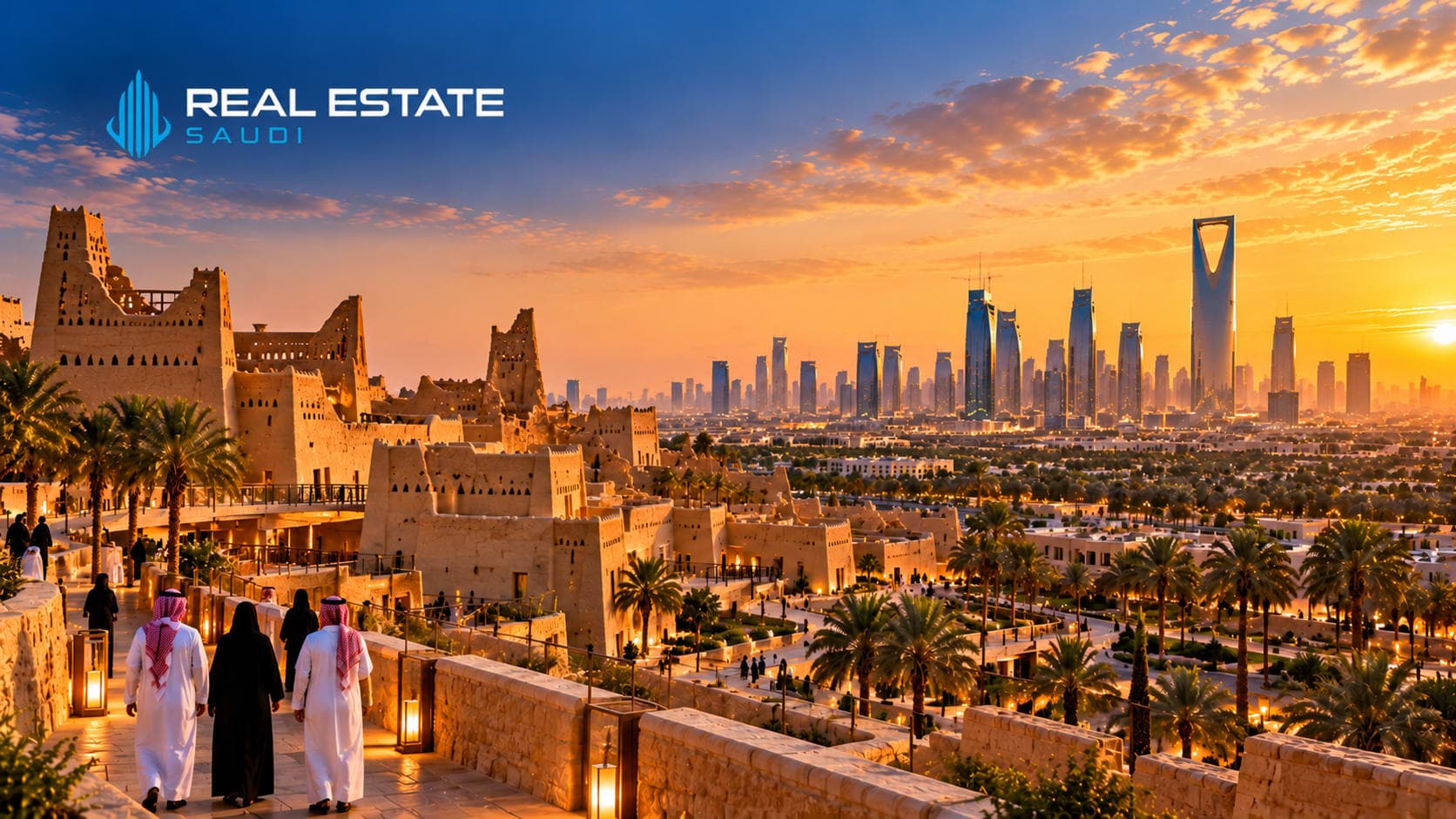
Saudi Arabia is a country where ancient history, Islamic traditions, modern cities and ambitious economic development meet. This comprehensive Saudi Arabia Guide explores the Kingdom's historical foundations, geography, cultural identity, economic transformation, major cities and everyday life in 2026.
Officially known as the Kingdom of Saudi Arabia, the country occupies much of the Arabian Peninsula and has coastlines along the Red Sea and Arabian Gulf. Riyadh serves as its capital, while Jeddah, Dammam, Makkah and Madinah play important commercial, residential and religious roles.
Saudi Arabia is also implementing Vision 2030, a national transformation programme focused on economic diversification, housing, tourism, infrastructure and quality of life.
Understanding the Kingdom requires looking beyond its petroleum industry. Its regional traditions, urban development, expanding tourism sector and evolving investment regulations are equally important.
This guide provides practical information for travellers, expatriates, professionals, entrepreneurs and property investors interested in understanding Saudi Arabia in 2026.
Saudi Arabia Guide 2026: Country Overview and Essential Facts
Saudi Arabia is the largest country on the Arabian Peninsula, covering approximately 2.15 million square kilometres. It shares land borders with Jordan, Iraq, Kuwait, Qatar, the United Arab Emirates, Oman and Yemen, with Bahrain connected by the King Fahd Causeway.
Its location between major international trade routes gives it strategic importance in energy, logistics, aviation and maritime commerce.
Category | Information |
|---|---|
Official name | Kingdom of Saudi Arabia |
Capital | Riyadh |
Official language | Arabic |
Currency | Saudi Riyal (SAR) |
Government | Monarchy |
National Day | September 23 |
Major cities | Riyadh, Jeddah, Makkah, Madinah, Dammam |
Main economic sectors | Energy, manufacturing, trade, services, construction and tourism |
National development programme | Saudi Vision 2030 |
Saudi Arabia uses the Gregorian calendar for many commercial and administrative purposes, while the Islamic Hijri calendar remains important for religious observances.
The country has a predominantly arid climate, although temperatures and landscapes vary substantially between coastal areas, inland deserts and mountainous regions.
Which property type & region do you prefer?
Select property type and preferred city in Saudi Arabia.
History of Saudi Arabia: From Ancient Civilisations to the Modern Kingdom
Ancient Arabia and early trade routes
The territory of modern Saudi Arabia has been inhabited for thousands of years.
Ancient communities developed trade networks connecting the Arabian Peninsula with neighbouring regions. Caravan routes facilitated the exchange of incense, spices and other goods.
Archaeological sites across the Kingdom provide evidence of settlements, inscriptions, cultural exchanges and commercial activity.
AlUla, in northwestern Saudi Arabia, is particularly significant because of its ancient heritage and connections to regional trade routes.
The archaeological site of Hegra preserves monumental Nabataean tombs and remains an important destination for historical research and cultural tourism.
The emergence of Islam
The seventh century marked a defining period in Arabian history.
Islam originated in the Arabian Peninsula, with Makkah and Madinah becoming central to its historical and religious development.
These cities continue to hold exceptional importance for Muslims worldwide.
Makkah is associated with the Kaaba and the annual Hajj pilgrimage, while Madinah is home to the Prophet's Mosque.
Their religious significance influences the country's cultural identity, infrastructure planning, hospitality sector and international connections.
Formation of modern Saudi Arabia
The modern Kingdom was established in 1932 under King Abdulaziz Al Saud.
The unification of territories created the foundations of the contemporary Saudi state.
During the following decades, the discovery and development of petroleum resources transformed the national economy.
Oil revenue supported infrastructure, education, healthcare, transportation and large-scale urban development.
Saudi Arabia subsequently became an influential participant in international energy markets.
However, the country's modern history also includes extensive institutional development, economic reforms and efforts to broaden economic activity beyond petroleum.
Geography and Climate of Saudi Arabia
Saudi Arabia's geographical diversity is often overlooked by people who associate the country exclusively with deserts.
Its landscape includes sand dunes, rocky plateaus, coastal plains, mountain ranges and agricultural regions.
Deserts and natural landscapes
The Rub' al Khali, commonly known as the Empty Quarter, occupies a large area of the southern Arabian Peninsula.
Its extensive sand dunes form one of the world's most recognisable desert landscapes.
Other important geographical features include the An Nafud desert and the Dahna sand corridor.
Desert environments have influenced traditional settlement patterns, transportation and cultural practices for centuries.
Mountains and highland regions
The southwestern part of Saudi Arabia includes mountainous areas with cooler conditions than many inland desert locations.
Asir is known for elevated landscapes, mountain villages and distinctive regional architecture.
Abha and surrounding highland destinations attract visitors interested in outdoor recreation and cultural experiences.
Taif also benefits from its elevation and has long been associated with seasonal tourism and agricultural production.
Coastal regions
Saudi Arabia has extensive coastlines along the Red Sea and Arabian Gulf.
Jeddah, Yanbu and other western coastal destinations support maritime activity, tourism and commercial development.
On the eastern coast, Dammam and Al Khobar are important urban centres connected to industry, logistics and business services.
The official Saudi Tourism Authority destination guide introduces the Kingdom's natural landscapes, heritage attractions and regional tourism experiences.
Weather and seasonal conditions
Summers can be extremely hot across much of the Kingdom, particularly in inland areas.
Coastal locations experience higher humidity, while elevated regions may have milder summer temperatures.
Winter conditions vary by region, and northern or mountainous areas can experience notably cold weather.
Travellers should check destination-specific forecasts rather than assume that Saudi Arabia has identical weather throughout the country.
Population, Language and Demographics
Saudi Arabia has a substantial and diverse population comprising Saudi citizens and expatriate residents.
According to the General Authority for Statistics, the country's population was estimated at 35,300,280 in 2024.
Population estimates should always be identified by their reference year rather than presented as an exact current count.
Foreign residents contribute to numerous sectors, including healthcare, engineering, construction, education, hospitality and professional services.
Arabic language and regional dialects
Arabic is Saudi Arabia's official language.
Different regions have distinctive dialects, reflecting the Kingdom's geographical and cultural diversity.
Modern Standard Arabic is important in formal communication, education and official documentation.
English is also used in many international businesses, hotels, healthcare facilities and expatriate workplaces.
However, English proficiency varies between locations and professional environments.
Learning basic Arabic expressions can improve communication and demonstrate cultural understanding.
Common phrases include "Shukran" for thank you, "Ahlan wa sahlan" for welcome and "As-salamu alaykum" as a traditional greeting.
Saudi Arabian Culture, Religion and Traditions
Saudi Arabian culture reflects Islamic heritage, family relationships, regional customs and longstanding traditions of hospitality.
Although contemporary lifestyles continue to evolve, cultural identity remains important in public life and social relationships.
Religion and everyday life
Islam plays a central role in Saudi society.
Daily prayer times, Ramadan, Eid al-Fitr and Eid al-Adha influence cultural practices and public schedules.
During Ramadan, Muslims observe fasting from dawn until sunset, and business operating hours may change.
Visitors and expatriates should respect local customs and understand the expectations applicable to public behaviour.
The standard working week for many government offices and businesses runs from Sunday to Thursday, with Friday and Saturday forming the usual weekend.
Hospitality and family values
Hospitality is an important feature of Saudi social culture.
Guests may be welcomed with Arabic coffee, known as qahwa, and dates.
Family gatherings, shared meals and respect for elders are prominent social traditions.
A majlis, or dedicated gathering space, remains an important setting for receiving guests and discussing community matters.
Hospitality practices vary between regions and households, but generosity and courteous interaction are widely valued.
Traditional clothing
Traditional Saudi men's clothing commonly includes a thobe, sometimes accompanied by a ghutra or shemagh.
Women's clothing may include an abaya, although personal styles differ and contemporary fashion is increasingly diverse.
Visitors should follow applicable public-decency requirements and dress appropriately for the setting.
Clothing expectations may be different at religious sites, official institutions and private events.
Traditional Saudi Arabian Food and Cuisine
Saudi cuisine reflects regional agriculture, historical trade connections and traditions of shared dining.
Rice, meat, wheat, dates and aromatic spices appear frequently in traditional dishes.
Kabsa is a widely recognised Saudi dish prepared with seasoned rice and meat.
Jareesh, made from crushed wheat, is another traditional food associated with Saudi households and cultural occasions.
Saleeg is particularly associated with western Saudi Arabia, while regional breads and seafood dishes reflect local ingredients.
Mandi, although historically associated with Yemen, is also popular throughout the Kingdom.
Arabic coffee and dates are often served during visits and celebrations.
Saudi cities additionally offer international restaurants representing South Asian, Middle Eastern, European and other culinary traditions.
This diversity reflects the country's commercial connections and multinational resident population.
Saudi Arabia's Economy in 2026
Saudi Arabia has historically depended heavily on petroleum production and exports.
The energy sector remains economically significant, but national policy increasingly supports the development of non-oil industries.
Manufacturing, logistics, construction, financial services, tourism and technology all contribute to economic diversification.
Energy and industrial development
Petroleum production remains important to government revenue, exports and industrial activity.
Saudi Aramco and associated industries form part of a broad energy ecosystem.
Industrial cities such as Jubail and Yanbu support petrochemicals, manufacturing and related infrastructure.
Saudi Arabia is also investing in renewable energy and projects intended to improve energy efficiency.
However, new energy initiatives should be assessed according to confirmed operational capacity rather than announced targets alone.
Business and international investment
The Kingdom is developing policies intended to encourage private-sector participation and international investment.
Foreign businesses may investigate opportunities in manufacturing, professional services, technology, tourism and real estate.
Investment requirements depend on business activity, ownership structure and applicable licensing rules.
Entrepreneurs should verify sector-specific conditions before registering a company or committing capital.
Financial and commercial centres
Riyadh is a major administrative, financial and corporate centre.
Jeddah plays an important role in trade, logistics and commerce.
The Eastern Province supports industries associated with energy and manufacturing.
These economic differences influence residential demand, commercial property requirements and employment opportunities across the Kingdom.
Saudi Vision 2030: Goals, Progress and Economic Transformation
Saudi Vision 2030 was introduced in 2016 as a national programme intended to diversify the economy, develop public services and improve quality of life.
The strategy includes three broad themes: a vibrant society, a thriving economy and an ambitious nation.
The official Saudi Vision 2030 overview explains the programme's goals across housing, economic opportunity, tourism, culture, infrastructure and public-sector development.
Housing and urban development
Housing development is a major component of the programme.
According to the Vision 2030 Annual Report 2025, the Saudi family homeownership rate reached 66.24% in 2025, compared with the national target of 70% for 2030.
This reflects progress in housing policy, financing access and the expansion of residential supply.
Property development remains important to the broader economy through construction, infrastructure and related services.
Investors should nevertheless distinguish national housing targets from guaranteed appreciation in individual properties.
Tourism and entertainment
Saudi Arabia is expanding its tourism and entertainment industries.
Investment includes cultural attractions, hospitality destinations, events and recreational infrastructure.
The strategy seeks to diversify visitor experiences beyond established religious and business travel.
Historical destinations, coastal resorts and cultural districts play increasingly visible roles in the country's tourism sector.
Technology and digital transformation
Technology investment is another important development priority.
Digital government services, financial technology, artificial intelligence and modern communications infrastructure are receiving attention across public and private organisations.
Technology adoption can improve administrative efficiency and create new business requirements.
However, the commercial success of individual technology projects depends on implementation, market demand and operating performance.
What is your approximate budget?
Narrow down property options based on your target budget.
Major Cities in Saudi Arabia: Where to Live, Work and Invest
Saudi Arabia's cities have different economic functions, cultural characteristics and residential markets.
Riyadh: Capital and business centre
Riyadh is the country's capital and an important destination for corporate professionals.
It includes government institutions, financial services, commercial offices and extensive residential neighbourhoods.
Housing options range from apartments to villas and planned residential communities.
Prospective residents can explore the Riyadh real estate market and residential areas to compare neighbourhood characteristics.
Jeddah: Red Sea commercial centre
Jeddah combines commercial activity, coastal recreation and cultural heritage.
Its historic Al-Balad district and waterfront destinations contribute to its distinctive identity.
The city offers residential apartments, family villas and commercial property.
The Jeddah property and neighbourhood guide provides additional information about accommodation and urban locations.
Dammam and Al Khobar: Eastern Province centres
Dammam and Al Khobar are important destinations for professionals connected to energy, industry, engineering and logistics.
Residential demand is influenced by employment and the needs of local households.
Both cities provide shopping, healthcare and recreational amenities, although neighbourhood characteristics vary.
Makkah and Madinah: Religious and cultural centres
Makkah and Madinah hold exceptional importance for Muslims.
Their economies include residential services, education, healthcare and activities associated with religious visitors.
Real estate investment and ownership require careful attention to the additional legal restrictions applicable to these cities.
Abha and AlUla: Heritage and regional tourism
Abha is known for its mountainous setting and regional cultural traditions.
AlUla combines archaeological heritage, dramatic desert landscapes and growing cultural tourism activity.
Investors and visitors should distinguish established destinations from future development proposals.
Living in Saudi Arabia as an Expatriate
Saudi Arabia is home to international professionals working across numerous industries.
Daily life depends significantly on employment conditions, housing choices, family arrangements and location.
Accommodation and residential communities
Expatriates can choose from apartments, villas and residential compounds.
Compounds may offer shared recreation facilities, maintenance services and community amenities.
However, rent and service costs vary significantly.
New arrivals can review the residential compounds in Saudi Arabia guide to understand the differences between compound housing and conventional accommodation.
Healthcare and education
Major Saudi cities have public and private healthcare facilities.
Eligibility for services and insurance coverage depends on residency and applicable regulations.
Families considering international schools should confirm curriculum, admission availability, transport arrangements and fees before relocating.
Employment contracts may include medical insurance, housing allowances or education benefits.
These provisions should be reviewed individually.
Cost of living
Living expenses depend on city, accommodation, family size and lifestyle.
Housing and education can represent substantial expenses for expatriate households.
Transport, groceries, utilities and healthcare-related costs should also be included in monthly budgets.
A generous salary does not necessarily result in substantial savings when housing and family expenses are high.
Moving to Saudi Arabia: Visas, Employment and Residency
People relocating to Saudi Arabia must use the immigration route appropriate to their circumstances.
Employment, family residence, tourism and investment arrangements have different requirements.
Employment and residence permits
Many expatriate professionals enter Saudi Arabia after securing employment with an eligible organisation.
Required documents may include a passport, employment contract, qualifications and other evidence specified by the relevant authorities.
After completing the prescribed process, eligible foreign residents receive an Iqama, or residence permit.
The exact procedures depend on the applicant's circumstances and applicable rules.
Tourist visas
Saudi Arabia offers electronic tourist visa facilities to eligible international visitors.
The official Saudi tourist eVisa portal explains the available application process and eligible nationalities.
Tourist visas are intended for permitted visitor activities and do not generally authorise employment.
Travellers should confirm eligibility and conditions using official government channels.
Relocation planning
New residents should verify employment terms, accommodation arrangements, medical insurance and dependent-related requirements before travelling.
Families should also examine school availability and commuting requirements.
For a more detailed comparison of relocation destinations, review the best Saudi cities for expatriates in 2026.
Saudi Arabia's Real Estate Market and Property Investment
Real estate is an important component of Saudi Arabia's economic development.
Residential construction, commercial expansion and infrastructure investment create activity across different property segments.
However, price movements and investment returns vary according to property type, location and market conditions.
Residential and commercial opportunities
Residential investors may evaluate apartments, villas and planned communities.
Commercial opportunities include offices, shops, warehouses and hospitality assets.
Each segment has different operating expenses, tenant requirements and market risks.
Investors should compare prices, rental demand and property condition before purchasing.
The Saudi real estate investment guide provides additional information about investment structures and market considerations.
Foreign ownership regulations
Saudi Arabia introduced an updated real estate ownership framework for non-Saudi investors that entered into force on January 22, 2026.
The Real Estate General Authority's official ownership announcement explains that eligible individuals and entities can apply through the Saudi Properties digital platform.
Ownership remains subject to geographical restrictions, buyer eligibility and other regulatory conditions.
Special limitations apply to Makkah and Madinah.
Foreign investors should verify the specific rules before purchasing or paying deposits.
Renting versus buying
Renting may provide flexibility for expatriates who have recently relocated.
Buying can be considered by legally eligible residents expecting a longer stay.
Both arrangements require careful financial assessment.
Tenants should review their contractual obligations, while buyers must verify ownership rights, acquisition expenses and maintenance requirements.
The Saudi Arabia rental and tenant guide explains relevant rental considerations.
Tourism, Heritage and Major Development Projects
Saudi Arabia is developing tourism destinations alongside the preservation of historic sites.
NEOM and northwestern development
NEOM is a major development initiative in northwestern Saudi Arabia.
Its announced plans include urban, industrial, tourism and technology-related components.
However, development schedules, project scope and operational progress must be distinguished from long-term master-plan ambitions.
The Red Sea and coastal tourism
The Red Sea region is receiving investment in resorts, hospitality facilities and supporting infrastructure.
Tourism development seeks to combine visitor accommodation with natural landscapes and marine environments.
Project-specific environmental requirements and development progress remain important considerations.
Diriyah and heritage tourism
Diriyah is closely associated with Saudi history and the country's early political development.
The historic At-Turaif district is a major heritage attraction.
Nearby developments aim to support cultural tourism, hospitality and urban regeneration.
Visitors interested in this destination can explore the Diriyah heritage and development area.
Tourism and the property market
Hospitality investment can create demand for hotels, commercial premises and supporting services.
However, projected visitor numbers do not guarantee profitable property investments.
Developers should assess actual occupancy, operating costs, infrastructure and local competition.
Practical Tips for Visiting or Relocating to Saudi Arabia
Planning ahead can improve the experience of visiting, working or investing in the Kingdom.
Travellers should first confirm visa eligibility and passport requirements.
Weather conditions deserve attention, particularly during periods of extreme summer heat.
Appropriate clothing, hydration and careful scheduling of outdoor activities can improve comfort.
Visitors should respect local cultural expectations, particularly during Ramadan and at religious sites.
Expatriates should investigate employment contracts, insurance coverage and accommodation before relocating.
Property buyers must verify ownership rights and obtain appropriate professional guidance when required.
For businesses, reviewing licensing requirements and the relevant regulatory framework is essential.
Reliable information from official Saudi authorities is more useful than broad claims about effortless investment or guaranteed returns.
How would you like to be contacted?
Choose your preferred channel for a private consultation.
Saudi Arabia's Future Beyond 2026
The next phase of Saudi development will depend on economic diversification, housing availability, industrial productivity, tourism investment and the implementation of major projects.
Vision 2030 continues to provide a framework for government programmes and private-sector participation.
Saudi Arabia's geographic position and established energy industry remain important economic advantages.
At the same time, commercial success in emerging sectors will depend on productivity, investment performance and sustainable demand.
Population growth and urban development may create requirements for additional homes and commercial facilities, but demand will vary between cities.
Environmental management, infrastructure capacity and affordability will also influence long-term outcomes.
For visitors, professionals and investors, the strongest approach is to monitor confirmed developments rather than rely exclusively on ambitious future projections.
The Kingdom's transformation is significant, but its opportunities should be evaluated with realistic expectations.
Conclusion: Understanding Saudi Arabia in 2026
Saudi Arabia combines deep historical roots, important religious traditions, diverse landscapes and an evolving modern economy.
Its major cities offer different opportunities for employment, residential living, tourism and commercial investment, while national programmes continue to influence infrastructure and economic development.
Vision 2030 is central to understanding the Kingdom's long-term objectives, particularly in housing, tourism, technology and economic diversification.
For visitors, expatriates, businesses and property investors, understanding local regulations, cultural expectations and regional differences is essential.
This Saudi Arabia Guide provides a foundation for exploring the Kingdom's history, culture, economy and future development with realistic expectations.
As Saudi Arabia continues its transformation, informed research and reliable official information remain the best starting points for making travel, relocation and investment decisions.
Talk to Our Real Estate Experts
Get real-time insights on investment options, commercial properties, and market guidelines.
Frequently Asked Questions
Saudi Arabia is known for its Islamic heritage, major petroleum industry, desert landscapes and growing international economic role. Makkah and Madinah are especially significant religious cities for Muslims worldwide. The Kingdom is also recognised for Saudi Vision 2030, a national transformation programme involving economic diversification, housing, infrastructure, tourism and cultural development.
Saudi Vision 2030 is a national development programme introduced in 2016. It aims to diversify economic activity, improve quality of life, expand housing opportunities and strengthen public services. The programme includes initiatives involving tourism, entertainment, investment, technology and urban infrastructure. Individual objectives and progress are documented through official programme reports.
Riyadh is the capital of Saudi Arabia and a major administrative, financial and commercial centre. It accommodates government institutions, business districts, residential communities and important transport infrastructure. The city is also a significant destination for expatriate professionals working in finance, technology, consulting, construction and other industries.
Arabic is Saudi Arabia's official language. Regional dialects vary between different parts of the Kingdom, while Modern Standard Arabic is commonly used in formal communication and official documentation. English is also used in many international workplaces, hotels and tourist destinations. Learning basic Arabic expressions can improve everyday communication.
Saudi Arabia may be suitable for expatriates seeking employment in industries such as healthcare, engineering, finance, education and technology. Major cities provide diverse accommodation and modern services. However, the experience depends on salary, working conditions, housing allowances, family expenses and personal preferences. Prospective residents should review employment contracts and living costs before relocating.
Eligible foreign individuals and entities may acquire qualifying real estate rights under Saudi Arabia's updated ownership framework effective January 22, 2026. Ownership is subject to geographical restrictions, regulatory requirements and the buyer's eligibility. Additional limitations apply in Makkah and Madinah. Buyers should verify permissions through the Real Estate General Authority before making commitments.
Riyadh, Jeddah, Al Khobar and Dammam are important cities for expatriates and professionals to consider. Riyadh is a major corporate centre, Jeddah offers coastal living, and the Eastern Province supports energy and industrial employment. The preferred city depends on employment location, housing budget, schools, healthcare and lifestyle requirements.
Petroleum remains an important contributor to Saudi Arabia's exports and government revenue. However, the economy also includes manufacturing, construction, financial services, trade, logistics and tourism. Vision 2030 seeks to expand non-oil economic activity and create a more diversified economic structure. Contributions from individual sectors change over time.
Saudi Arabia has established tourism infrastructure and visitor services across major destinations. However, travellers should consult current official travel advice, follow local laws and consider regional security developments before travelling. Safety also depends on circumstances, transport choices, weather conditions and personal precautions. Visitors should use official channels for visa information and emergency guidance.
Investors should examine sector-specific regulations, ownership eligibility, licensing requirements, market demand and potential financial risks. Real estate buyers must verify legal title, permitted ownership rights, transaction expenses and relevant restrictions. Business investors should review applicable registration procedures. Professional legal and financial advice may be appropriate before entering substantial agreements.
