
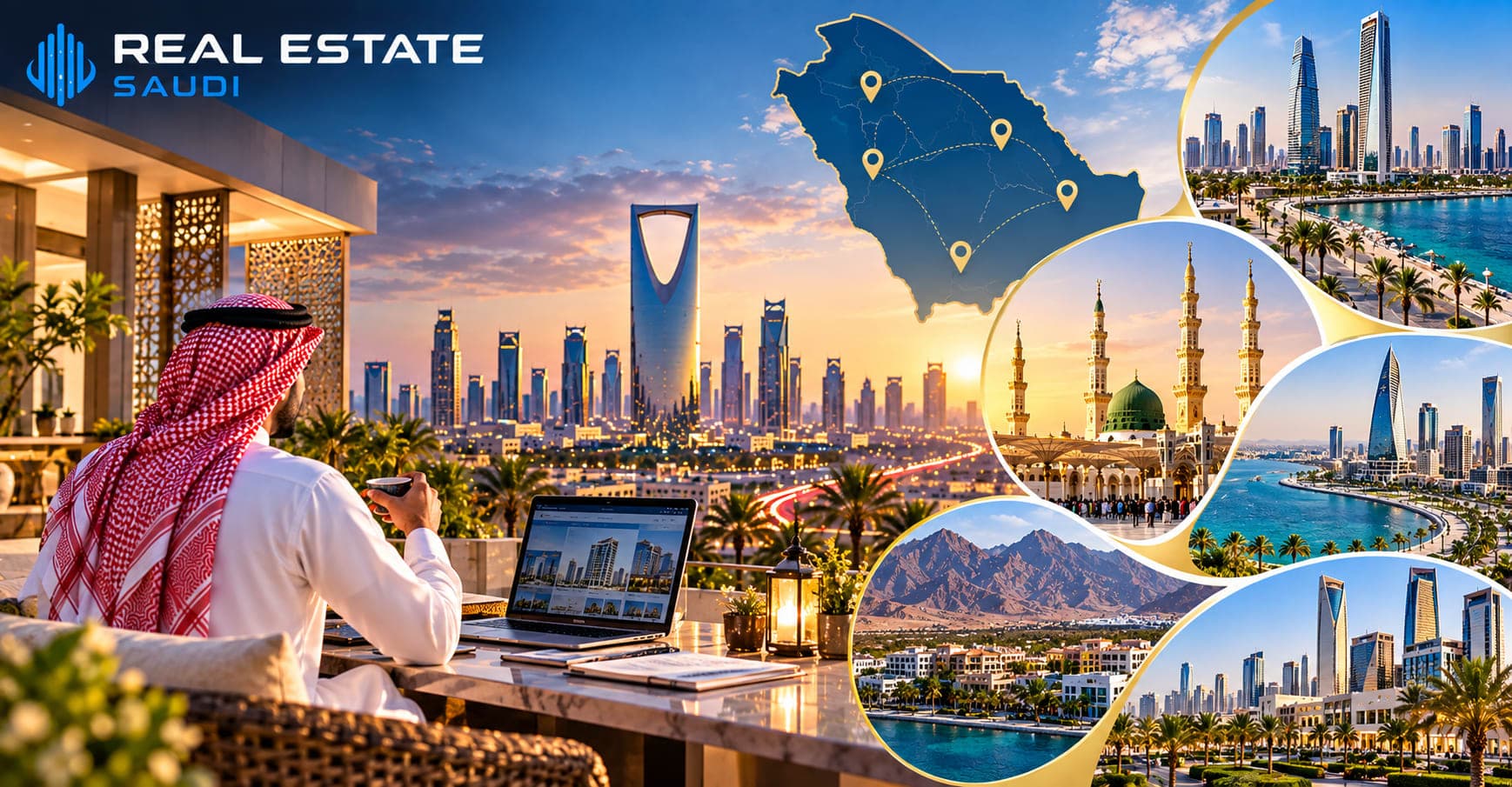
Choosing among the Best Cities in Saudi Arabia for Expats in 2026 depends on career opportunities, housing affordability, family requirements and preferred lifestyle. Riyadh is a leading choice for corporate professionals, Jeddah combines major-city employment with Red Sea living, while Al Khobar and Dammam appeal to expatriates working in energy, engineering, logistics and related industries.
Saudi Arabia offers significantly different living experiences across its regions. Some cities feature extensive business districts and international schools, while others provide industrial employment, coastal recreation or quieter residential environments.
For families, access to healthcare, suitable accommodation, schools and manageable commuting times often matters more than a city's international reputation. Professionals relocating alone may prioritise career development, convenience and flexible rental accommodation.
This 2026 guide compares five established expatriate destinations, examines additional regional alternatives and explains how to evaluate living costs, residential property, employment conditions and foreign ownership rules before relocating.
Best Cities in Saudi Arabia for Expats in 2026: Top 5 Rankings
The following ranking is an editorial comparison based on employment diversity, established housing options, urban services, family suitability and lifestyle characteristics. It is not an official government ranking or a statistically calculated quality-of-life index.
Rank | City | Best Suited For | Key Advantage |
|---|---|---|---|
1 | Riyadh | Corporate professionals and career-focused expats | Major business and employment centre |
2 | Jeddah | Coastal lifestyle and internationally mobile families | Red Sea recreation and diverse urban environment |
3 | Al Khobar | Families and energy-sector professionals | Waterfront lifestyle and Eastern Province connectivity |
4 | Dammam | Engineering, logistics and industrial professionals | Access to industrial and commercial employment |
5 | Madinah | Education, healthcare and hospitality professionals | Distinctive cultural environment and residential communities |
The best destination is ultimately the one that supports an expatriate's employment location, household budget and daily requirements.
The General Authority for Statistics' Livability in Saudi Cities study examines Riyadh, Jeddah and Al Khobar across security, healthcare, education, culture, infrastructure and environmental dimensions. Its framework illustrates why choosing a city requires more than comparing housing prices.
Which property type & region do you prefer?
Select property type and preferred city in Saudi Arabia.
1. Riyadh: Best for Career Growth and Corporate Employment
Riyadh ranks first in this editorial comparison because it combines major business activity, a broad selection of professional opportunities and extensive residential development.
As Saudi Arabia's capital, Riyadh accommodates government institutions, multinational businesses, financial services, technology companies and professional consultancies.
Expatriates working in management, banking, engineering, legal services, construction, technology and corporate operations may find the city's commercial environment particularly relevant.
However, employment opportunities vary by sector, qualifications, nationality-related eligibility rules and the conditions of individual job offers.
Living in Riyadh
Riyadh offers apartments, family villas, gated residential compounds and newly developed communities.
Central and northern neighbourhoods are often considered by professionals seeking access to commercial districts, although accommodation costs vary substantially according to building quality and location.
Areas such as Al Olaya, Al Malqa, Al Yasmin and Hittin represent different residential environments.
Families may prefer accommodation near schools and recreational facilities, while professionals living alone may prioritise shorter commuting distances.
Before choosing a neighbourhood, explore the Riyadh residential areas and property market to understand the available locations and housing categories.
Career and lifestyle advantages
Riyadh's business environment is supported by corporate offices, government activities and ongoing development programmes.
The city also provides shopping destinations, restaurants, entertainment venues and cultural attractions.
Public transport development has expanded mobility options, although suitability depends on the nearest stations and actual workplace connections.
The principal disadvantage for some expatriates is the potential cost of premium housing and the time involved in travelling across the city.
Who should choose Riyadh?
Riyadh is particularly suitable for professionals whose employment is located in the capital and families seeking access to a wide selection of schools, healthcare facilities and urban amenities.
It may be less attractive to expatriates seeking a coastal environment or a smaller city with less extensive commuting requirements.
2. Jeddah: Best for Coastal Living and International Lifestyle
Jeddah ranks second because it combines commercial activity, established residential neighbourhoods and access to the Red Sea.
The city serves important roles in trade, logistics, aviation, hospitality, tourism and professional services.
Its coastal location offers a different lifestyle from inland Riyadh, making it attractive to expatriates who enjoy waterfront recreation and an urban environment with established cultural destinations.
Living in Jeddah
Jeddah provides apartments, villas, residential compounds and other housing arrangements across neighbourhoods with different price levels and amenities.
Areas including Al Shati, Al Zahra, Al Rawdah and Al Salamah are among the locations prospective residents may investigate.
Housing decisions should consider proximity to workplaces, school availability, transport connections and building maintenance.
Properties near prominent waterfront destinations may command higher asking rents than comparable homes farther inland.
Prospective residents can compare the city's neighbourhood characteristics through the Jeddah real estate and area guide.
Employment opportunities
Jeddah's economic activities include maritime trade, distribution, healthcare, retail, tourism and corporate services.
Professionals working in supply-chain management, hospitality, aviation, education and healthcare may find relevant employers in the city.
Nevertheless, a strong regional economy does not guarantee employment for every applicant. Job seekers should secure a suitable offer and confirm contractual terms before moving.
Lifestyle considerations
The Jeddah Corniche, coastal leisure facilities and historic Al-Balad district contribute to the city's distinctive character.
Outdoor activities can be appealing during suitable weather, although summer heat and humidity may affect daily comfort.
Jeddah can be a strong option for families seeking a balance between career opportunities and coastal recreation.
3. Al Khobar: Best for Families and Eastern Province Professionals
Al Khobar ranks third because of its established residential districts, waterfront amenities and access to employment across the Eastern Province.
The city forms part of a metropolitan area connected with Dammam and Dhahran.
Professionals working in energy, engineering, consulting, industrial services and related businesses may consider Al Khobar for residential accommodation.
Living in Al Khobar
Al Khobar includes apartment buildings, family villas, residential compounds and modern housing developments.
Residents can explore areas such as Al Aqrabiyah, Al Ulaya and districts near the waterfront, depending on their workplace and budget.
Housing preferences should be matched against parking, building standards, recreational facilities and the availability of suitable schools.
For families, the combination of residential services and access to nearby employment centres may be particularly valuable.
The Al Khobar location and residential property guide provides additional information about the city's housing market.
Employment and regional accessibility
Al Khobar's location supports access to businesses operating across the Dammam metropolitan area.
The surrounding region includes energy, engineering, logistics and industrial activities.
The King Fahd Causeway also connects the Eastern Province with Bahrain, although cross-border travel depends on applicable immigration rules and traffic conditions.
This regional connectivity can be convenient for some residents but should not be interpreted as a guaranteed short journey.
Quality of life
Al Khobar's Corniche, shopping destinations and residential amenities contribute to its appeal.
Its suitability depends on individual circumstances, particularly employment location and school requirements.
Families working in Dhahran or nearby business districts may prefer Al Khobar over a more distant residential location.
4. Dammam: Best for Industrial and Logistics Careers
Dammam ranks fourth because of its role as an important administrative, industrial and commercial centre in the Eastern Province.
The city is relevant to professionals employed in manufacturing, logistics, distribution, engineering, healthcare and associated services.
Its residential market includes a variety of apartment and family housing options.
Living in Dammam
Dammam offers established residential neighbourhoods and developing communities.
Prospective residents should compare locations according to their workplace, available facilities, property condition and daily transport requirements.
Some households may find suitable accommodation at a lower cost than comparable premium properties in parts of Riyadh or Al Khobar, but citywide affordability rankings cannot be assumed without current comparable rental data.
Explore residential neighbourhoods and property options in Dammam when assessing the local housing environment.
Employment advantages
Dammam is connected to important commercial and industrial activities within the Eastern Province.
Companies serving manufacturing, petrochemicals, transport and regional distribution require technical and operational personnel.
The city can therefore be suitable for expatriates with relevant qualifications and an employment offer in the surrounding region.
However, job location matters significantly. An employee based in Jubail or another industrial area should calculate realistic commuting requirements before selecting housing in Dammam.
Family suitability
Dammam provides healthcare facilities, schools, shopping centres and recreational spaces.
For families, selecting the right neighbourhood can be more important than choosing between Dammam and Al Khobar based solely on reputation.
School admissions, employer transport and household preferences should guide the final decision.
5. Madinah: Best for Cultural Environment and Selected Professional Careers
Madinah ranks fifth as a distinctive destination for expatriates whose employment and personal circumstances align with the city's character.
The city has economic activity connected to education, healthcare, hospitality, public services and supporting commercial sectors.
Unlike Riyadh or Jeddah, its appeal is less dependent on having a broad multinational corporate ecosystem.
Living in Madinah
Madinah includes residential neighbourhoods with different housing styles, amenities and accessibility.
Families should evaluate accommodation according to workplace location, available schools, healthcare services and neighbourhood facilities.
Residents employed in education, healthcare or hospitality may find the city suitable when their work is based locally.
The Madinah area and residential property guide provides a starting point for researching local accommodation.
Cultural and professional considerations
Madinah has particular religious significance for Muslims.
Its economy includes services connected to religious visitors, alongside activities serving the city's permanent population.
This creates specific professional opportunities, but job seekers should verify actual vacancies and contractual conditions rather than assume that visitor activity creates universal employment demand.
Foreign property ownership also requires particular care because Makkah and Madinah are subject to additional restrictions under Saudi law.
Other Saudi Cities Worth Considering
The five principal destinations are not the only options for expatriates relocating to Saudi Arabia.
Professionals with specialised employment may find better opportunities in industrial cities or regional centres.
Jubail: Industrial and engineering employment
Jubail is especially relevant to workers involved in petrochemicals, manufacturing, engineering and industrial operations.
The Royal Commission for Jubail and Yanbu's official Jubail Industrial City profile describes the city's industrial infrastructure, planned residential neighbourhoods and community facilities.
Jubail can be a practical choice for employees working directly in its industrial establishments.
Its suitability depends on the employer's location, housing arrangements and the availability of schools or services required by the household.
Yanbu: Red Sea industrial living
Yanbu provides another alternative for expatriates employed in refining, petrochemicals, logistics and industrial services.
The city combines a Red Sea location with established industrial infrastructure.
Professionals should distinguish between residential areas serving industrial employment and locations intended for other commercial or tourism-related activities.
Yanbu may be attractive to those with a confirmed local job, but it should not be selected solely because of potentially lower housing expenses.
Abha: Regional lifestyle and cooler surroundings
Abha offers a different setting within Saudi Arabia's southwestern highlands.
Its elevation creates a climate distinct from the Kingdom's hottest inland and coastal cities.
The city may interest professionals working in education, healthcare, tourism and local services.
However, employment opportunities and access to particular international facilities should be evaluated carefully.
Abha is not necessarily a direct substitute for Riyadh or Jeddah for professionals seeking specialised corporate roles.
Cost of Living in Saudi Arabia's Major Cities
Cost of living is one of the most important factors when comparing the Best Cities in Saudi Arabia for Expats.
A city's affordability cannot be judged accurately through advertised apartment rents alone.
Household expenses depend on accommodation type, employer benefits, family size, schooling and transport.
Housing expenses
Residential rents can vary widely within the same city.
A furnished apartment in a premium neighbourhood may cost substantially more than an unfurnished unit farther from employment centres.
Compounds with pools, recreational facilities, security services and maintenance support may involve additional costs.
Prospective tenants should compare total annual rental obligations and understand whether utilities or services are included.
Schooling and childcare
International schooling can represent a substantial household expense.
Families should confirm school admission availability before choosing a home.
Transport arrangements, curriculum, language options and additional charges should be evaluated alongside tuition.
Employer education allowances may materially change the affordability of a particular city.
Transport and daily expenses
Transportation requirements vary according to workplace location and available infrastructure.
Some employees receive company transport or a vehicle allowance.
Others may need to budget for private transport, parking and commuting expenses.
Food, telecommunications, healthcare expenses not covered by insurance and leisure spending should also be included.
A city with comparatively affordable rent may become less economical if daily transport requirements are substantial.
What is your approximate budget?
Narrow down property options based on your target budget.
Renting a Home in Saudi Arabia as an Expat
Renting is often a practical starting point for expatriates moving to a new city.
A rental arrangement provides flexibility while residents learn about commuting patterns, neighbourhoods and school locations.
Saudi Arabia regulates rental transactions through the Ejar platform.
The Real Estate General Authority's official Ejar guidance explains how the system supports rental contract registration, renewals and the rights of tenants, landlords and brokers.
What should tenants check?
Before signing a rental agreement, verify the property's condition, the authorised landlord or representative and the contractual payment terms.
Check parking arrangements, maintenance responsibilities, included services and the procedure for handling disputes.
In Riyadh, specific rent-control provisions introduced in September 2025 affect residential and commercial properties within the designated urban boundaries. Tenants should review the applicable Ejar rules rather than assume identical rent-increase conditions apply across all Saudi cities.
Expatriates comparing housing categories can review the residential compounds in Saudi Arabia guide to understand how compound living differs from conventional apartments and villas.
Can Expats Buy Property in Saudi Arabia in 2026?
Eligible expatriates may acquire qualifying real estate rights in Saudi Arabia under the updated non-Saudi property ownership framework.
The relevant law entered into force on 22 January 2026.
According to the Real Estate General Authority's official non-Saudi ownership guidance, property acquisition depends on the applicant's legal status, geographical permissions and applicable regulatory conditions.
Ownership is not automatically available for every property in every city.
Certain legally resident non-Saudi individuals may qualify to own one residential property outside specified geographical zones, subject to the law's conditions and exclusions.
Makkah and Madinah have additional restrictions, including provisions that limit individual ownership rights within relevant zones to eligible Muslim buyers.
Renting versus buying
New arrivals frequently benefit from renting initially because it reduces the commitment associated with choosing a permanent neighbourhood.
Buying may become relevant when employment is stable, the intended residence is suitable for long-term occupation and ownership eligibility has been confirmed.
Property purchasers must also consider acquisition costs, maintenance and the potential difficulty of selling the property later.
Homeownership does not automatically create immigration or residency rights.
Employment Regulations and Expat Relocation
Employment conditions should influence residential decisions as much as housing prices.
Saudi Arabia has introduced labour reforms addressing employment contracts, worker mobility and relevant administrative procedures.
The Ministry of Human Resources and Social Development's labour reform initiative established provisions concerning job mobility and regulated exit and re-entry arrangements for eligible private-sector workers.
Specific rights and procedures depend on the worker's circumstances, employment contract and applicable rules.
Before accepting a job, expatriates should review salary arrangements, housing allowances, medical coverage, annual leave, relocation benefits and dependent-related support.
A generous nominal salary may offer less financial benefit if accommodation and international schooling must be paid entirely by the employee.
Professionals should also check whether their occupation requires professional registration or recognition of qualifications.
Choosing the Right Saudi City for Your Family
For families, selecting accommodation near essential services is often more valuable than living in a prestigious district.
School suitability should be evaluated early, especially when a child needs a particular international curriculum.
Healthcare accessibility is another important consideration. Families should check the terms of their medical insurance and whether suitable facilities are included in the approved provider network.
Travelling time also affects everyday quality of life.
A neighbourhood with attractive facilities may become inconvenient if commuting to work or school involves substantial delays.
Families should compare actual routes during normal commuting periods whenever possible.
Recreational facilities, parks, shopping destinations and community activities can further influence household satisfaction.
The preferred location should support the family's everyday routine rather than simply appear attractive in promotional material.
Residential Property Investment Opportunities for Expats
Some expatriates also consider residential property as a longer-term investment.
The potential benefits include owner occupation, possible rental income and exposure to changes in property value.
However, housing demand differs across cities and neighbourhoods.
Riyadh offers a large residential market, while Jeddah provides coastal and urban investment options.
Al Khobar and Dammam have residential markets influenced by Eastern Province employment and local household demand.
Investment suitability depends on acquisition price, available supply, achievable rental income and the buyer's legal eligibility.
Foreign investors should not assume that employment in a particular city guarantees permission to buy property there.
Property taxes, registration obligations and operating expenses must also be included in financial planning.
A responsible investment decision should be based on documented ownership rights and realistic financial assumptions rather than expected appreciation alone.
Common Mistakes Expats Should Avoid When Relocating
One common mistake is choosing accommodation before confirming the actual workplace location.
Saudi cities can cover extensive metropolitan areas, making commuting an important factor.
Another mistake is comparing salaries without calculating the full cost of housing, schooling and transport.
Families should confirm school places and healthcare arrangements before completing relocation plans.
Tenants should avoid informal agreements that bypass relevant contract-registration requirements.
Property buyers should independently verify ownership eligibility and transaction documentation.
Finally, expatriates should not rely on broad claims that a particular city is universally safer, cheaper or more suitable than every alternative.
Personal requirements and neighbourhood-level conditions provide a more reliable foundation for relocation decisions.
How would you like to be contacted?
Choose your preferred channel for a private consultation.
Saudi Expat Lifestyle Outlook for 2026 and Beyond
Saudi Arabia's economic diversification and urban development programmes continue to influence employment and residential demand.
Changes in business activity, infrastructure and housing development may affect how expatriates choose their future homes.
Riyadh is likely to remain relevant to corporate professionals, while Jeddah and the Eastern Province offer alternative combinations of employment and lifestyle.
Industrial cities such as Jubail and Yanbu will remain particularly important to professionals whose work depends on specialised manufacturing and industrial infrastructure.
However, future salaries, property prices and living expenses cannot be reliably predicted for every household.
Prospective residents should review current employment opportunities, rental listings and official regulations close to their intended relocation date.
A flexible approach provides greater protection against unexpected changes in circumstances.
Conclusion
The Best Cities in Saudi Arabia for Expats offer different combinations of career opportunities, housing options, family amenities and lifestyle advantages.
Riyadh stands out for corporate and professional employment, while Jeddah provides a distinctive coastal environment. Al Khobar and Dammam are strong alternatives for people whose work is connected to Eastern Province businesses and industries. Madinah offers a different residential and cultural setting for expatriates with suitable employment opportunities.
Jubail, Yanbu and other regional cities also deserve consideration when specialised work or personal preferences make them more practical.
The best relocation decision depends on verified employment arrangements, realistic living costs, suitable housing and access to essential services.
Expatriates should compare specific neighbourhoods, confirm relevant legal requirements and prioritise daily convenience before committing to a long-term residence.
Talk to Our Real Estate Experts
Get real-time insights on investment options, commercial properties, and market guidelines.
Frequently Asked Questions
Riyadh, Jeddah, Al Khobar, Dammam and Madinah are five destinations worth comparing. Riyadh suits many corporate professionals, Jeddah offers coastal living, and Al Khobar provides access to Eastern Province employment and family amenities. Dammam is relevant to industrial and commercial careers, while Madinah suits people whose employment and preferences align with the city's distinctive environment. The right choice depends on individual circumstances.
Riyadh may be preferable for professionals seeking employment in the capital's corporate and administrative sectors. Jeddah may appeal to those prioritising coastal recreation and employment connected to logistics, tourism or commercial services. Both provide residential communities and important urban amenities. Housing budgets, school availability, workplace location and preferred lifestyle should determine the decision.
Riyadh, Jeddah and Al Khobar are established options for expatriate families because they offer varied housing, schools, healthcare and recreational amenities. Dammam may also be suitable for households connected to Eastern Province employment. The quality of an individual neighbourhood, available school places and commuting requirements are often more important than the city's general reputation.
There is no universally cheapest city for every expatriate household. Accommodation costs vary according to neighbourhood, property type and employer benefits. Dammam, Jubail, Yanbu and some regional cities may offer suitable lower-cost options for particular residents. However, families should include schooling, transport and insurance-related expenses when comparing total affordability.
Riyadh is an important centre for corporate, financial, consulting and administrative employment. Jeddah also supports commercial, logistics and professional services, while the Eastern Province has substantial energy, engineering and industrial activity. The most suitable location depends on the employer, occupation and actual workplace. Job seekers should verify employment terms before relocating.
Al Khobar can be a suitable destination for expatriate families and professionals working in the Eastern Province. It offers waterfront amenities, shopping, healthcare, schools and access to nearby employment centres. However, accommodation costs and commuting convenience differ between neighbourhoods. Prospective residents should compare housing options according to their workplace and family requirements.
Eligible foreign individuals may acquire qualifying property rights under the law effective from January 2026. Ownership depends on geographical zones, legal status and applicable restrictions. Makkah and Madinah have additional provisions. Expatriates should verify their eligibility through the Real Estate General Authority before purchasing. Owning property does not automatically provide residency or immigration rights.
Renting is often useful for new arrivals because it provides flexibility while they become familiar with local neighbourhoods and commuting patterns. Buying may be appropriate later when employment is stable, ownership is legally permitted and the household expects to remain in the same location. The decision should also account for transaction expenses, maintenance and potential resale difficulties.
Dammam, Al Khobar, Dhahran and Jubail are particularly relevant to engineering, energy and industrial professions. Yanbu is another important destination for refining, petrochemical and industrial operations. However, employment opportunities depend on specialisation and available positions. Professionals should consider living near their actual workplace rather than choosing a city solely because it has a strong industrial reputation.
Expatriates should confirm employment contracts, visa and residency requirements, housing arrangements, health insurance and any family-related benefits. Families should investigate school admissions before choosing accommodation. Tenants should review registered rental agreements, while prospective property buyers must verify legal ownership eligibility. A complete budget covering rent, transport, schooling and everyday living expenses is also essential.
