
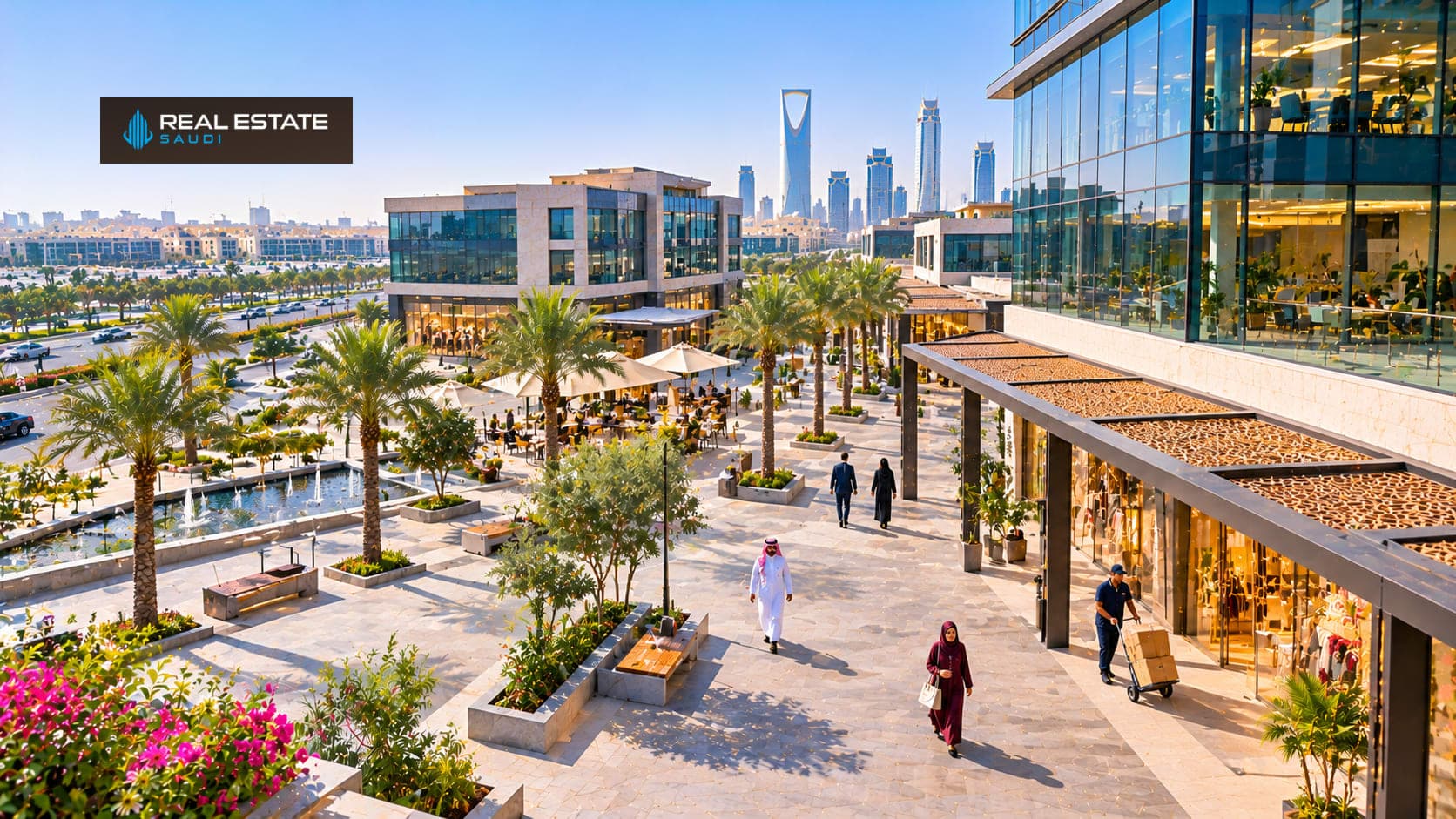
The Best Cities for Commercial Property Real Estate depend on the asset an investor wants to own. Riyadh is a leading choice for corporate offices and metropolitan retail; Jeddah combines business services, trade and hospitality; Dammam and Al Khobar warrant attention for industrial and employment-linked demand. Makkah and Madinah present specialized hospitality and retail opportunities shaped by religious visitors and additional ownership controls.
There is no universally most profitable city. A warehouse near an appropriate freight corridor can be a better purchase than a prestigious but vacant office, while a hotel requires an entirely different operating model from a leased shop. This guide compares six established markets, current research, ownership rules and the property-level checks that matter before committing capital.
Which Saudi Cities Should Best Cities for Commercial Property Shortlist?
Start with the business expected to occupy or operate the premises. Office investors should examine Riyadh and Jeddah first, then assess specific opportunities elsewhere. Logistics buyers may concentrate on Dammam, Jeddah and Riyadh freight corridors. Retail investors should investigate the spending patterns and access needs of neighborhood residents rather than rely solely on citywide visitor statistics.
Hospitality investors may consider Makkah, Madinah, Jeddah and Riyadh, but should evaluate the actual operator, licensing and seasonality. The guide to choosing an appropriate Saudi commercial property location outlines further site-selection questions. The Best Cities for Commercial Property to Buy Real Estate are therefore best understood as a shortlist of markets suited to different investment strategies, not a government ranking or a promise of returns.
What Does the Latest Commercial Market Evidence Show?
The Knight Frank Q2 2026 review of Saudi office markets reported Grade A office occupancy of 97% in Riyadh and 95% in Jeddah. Riyadh's Grade A office rent reached SAR 2,810 per square meter in the period reviewed. These are measured office-market indicators, not office sale prices, retail occupancy rates or average yields for the whole Kingdom.
The report also identified a substantial prospective office supply pipeline, particularly in Riyadh. Announced stock is not equivalent to completed stock, and a larger choice of modern buildings could affect negotiating conditions for older properties. Published figures should always be attributed to their period and sector; they cannot establish the rent a specific landlord is entitled to charge.
Which property type & region do you prefer?
Select property type and preferred city in Saudi Arabia.
Riyadh: A Strong Candidate for Offices and Metropolitan Retail
Riyadh combines government institutions, corporate headquarters, professional services, large residential neighborhoods and major business infrastructure. This makes it a natural starting point for investors seeking corporate tenants. The King Abdullah Financial District environment and Al Olaya have different building characteristics, while King Fahd and northern corridors offer additional commercial formats.
The site's commercial property investment guide for Riyadh covers office, retail and logistics considerations in more detail. For a potential office acquisition, compare net usable space, lift reliability, parking, cooling systems, fit-out flexibility and the credentials of tenants already paying rent. A high occupancy statistic for premium towers should not be applied to an older secondary building.
Neighborhood shops and showrooms require a different approach. Observe pedestrian access, visibility, deliveries, adjacent residential density and the businesses already competing for customers. An expensive storefront on a major road can perform poorly if vehicles cannot stop safely or the intended tenant needs loading access that the building cannot provide.
Riyadh's important restriction on commercial rent increases
Riyadh introduced a five-year suspension of annual rent increases for covered residential and commercial leases within its urban boundaries, effective September 25, 2025. The official Ejar explanation of Riyadh rental regulations distinguishes existing contracts, previously rented vacant premises and first-time rentals, with relevant procedures and exceptions.
For income investors, these rules make the recorded lease history particularly important. Do not assume that buying a shop or office permits an immediate rise to an advertised market rent. Obtain Ejar records and appropriate legal advice before forecasting rental escalation. The Riyadh framework must not automatically be described as applying identically across every Saudi city.
Jeddah: Offices, Retail, Logistics and Coastal Hospitality
Jeddah's Red Sea setting, Jeddah Islamic Port, airport and established services economy support a varied commercial market. Offices serve professional and regional businesses; shops cater to residents and visitors; warehouses depend on freight and distribution needs. Coastal hotels and serviced accommodation have a different revenue profile from properties leased annually.
The Jeddah commercial real estate investment guide helps distinguish those categories. Research Al Rawdah and selected major commercial corridors for offices and customer-facing businesses, and examine southern logistics locations for distribution facilities. The right address depends on parking, freight access and the proposed business—not merely a fashionable district name.
Waterfront properties can carry additional façade, corrosion and maintenance expenses. Buyers of operating hotels should request monthly occupancy, room revenue, staffing and refurbishment records. A view of the sea or a busy road does not guarantee strong net income. Confirm whether the acquisition includes the real estate alone or also equipment, brand rights and an operating company.
Dammam: Industry-Linked Commercial Property and Warehousing
Dammam is relevant to investors serving the Eastern Province's industrial, logistics and business ecosystem. Warehouses, service premises, offices and neighborhood retail can target different groups of occupiers. Investors should distinguish an industrial warehouse from a conventional retail shop rather than compare both by nominal land price.
The Dammam real estate investment overview provides citywide context. A warehouse purchase should be tested against permitted activity, truck circulation, loading bays, clear height, electricity demand and fire-safety arrangements. Cold storage may require specialized refrigeration and backup power that dramatically change the effective investment cost.
The JLL Saudi office-market assessment for Q2 2026 described the Dammam metropolitan office market as relatively subdued compared with Riyadh. That does not establish a lack of opportunity; it signals the need for stronger tenant-specific evidence and cautious assumptions about leasing time and concessions.
Al Khobar: Corporate Services and Lifestyle-Oriented Assets
Al Khobar shares economic connections with Dammam and Dhahran but has a distinct mix of business services, residential communities and waterfront amenities. It can merit research for professional offices, customer-facing retail, serviced accommodation and properties serving Eastern Province employers. The correct asset may appeal to corporate tenants without relying on major tourist events.
A coastal address needs careful inspection for humidity-related wear, building-envelope maintenance and mechanical-system costs. In furnished accommodation, projected nightly revenue must be reduced by cleaning, booking commissions, utilities and replacement furniture. In offices, access for employees and clients may matter more than sea views.
Use actual leases and comparable transactions from the relevant submarket. The Dammam metropolitan area should not be treated as one uniform office, industrial or hospitality market simply because adjacent cities are economically connected.
Makkah: Specialist Retail and Pilgrimage Hospitality
Makkah serves permanent residents, businesses and religious visitors. Shops, restaurants, accommodation and service premises can benefit from identifiable customer groups, but each property must be assessed according to its actual access and permitted use. Demand near Al-Masjid Al-Haram differs from that of a neighborhood shop serving households farther from the central mosque area.
The Mecca property investment market guide offers additional location context. For hospitality, examine visitor seasonality, room inventory, operating license, management contract and realistic refurbishment needs. Peak Hajj or Ramadan trading cannot simply be multiplied across twelve months to estimate annual revenue.
Traffic controls, loading restrictions and the route from public transport to the actual entrance can significantly affect business performance. Makkah also carries special foreign ownership conditions, making legal eligibility a necessary first step rather than a formality after purchase negotiations.
Madinah: Resident Services and Visitor-Facing Commercial Assets
Madinah has a specialized market associated with Al-Masjid an-Nabawi and the needs of households, employees and religious visitors. Relevant property categories can include neighborhood shops, professional premises, hotels and service-oriented mixed-use buildings. These categories should not be assigned one average return because tenants and operators have different cost structures.
The Madinah real estate investment guide provides broader regional background. A retail unit serving residents may generate steadier trading patterns than a seasonal visitor-oriented outlet, but its value still depends on competitive location and the business's ability to pay rent.
Hospitality projects need evidence of licensing and operating performance, not just proximity to a religious landmark. As in Makkah, non-Saudi ownership must be assessed against the holy city's applicable restrictions and the particular buyer's legal classification.
The Best Cities in Saudi Arabia to Buy Commercial Real Estate: Key Differences
City | Commercial sectors worth examining | Main investment question |
|---|---|---|
Riyadh | Corporate offices, shops, showrooms, logistics | Can rent, fit-out and vacancy assumptions withstand new supply and rent controls? |
Jeddah | Offices, port-linked logistics, retail, hospitality | Does the property have reliable customer or freight access? |
Dammam | Warehouses, industrial services, offices | Is the technical specification useful to multiple potential tenants? |
Al Khobar | Corporate services, retail, serviced accommodation | Does the income justify location premiums and coastal upkeep? |
Makkah | Hospitality, shops, mixed-use services | Are ownership, operating permissions and seasonal income verified? |
Madinah | Hospitality, neighborhood retail, services | How strong is year-round demand outside peak visitor periods? |
This is an investment research matrix, not a ranking based on invented yields. Different property types produce different cash-flow and resale profiles even within the same city.
How to Select the Correct Property Type
The Best Cities in Saudi Arabia to Buy Commercial Real Estate change according to whether the investment is a leased asset, an owner-occupied business premises or an operating hospitality property. A small office may have predictable contractual income but depend heavily on one tenant. A multi-tenant retail building spreads occupancy exposure while increasing management responsibilities.
Logistics properties need appropriately designed vehicle access and technical specifications. Hotel income depends on occupancy, room rates, operator quality and repeated capital expenditure. Bare commercial land provides no automatic rent and may face lengthy approval or development periods. Choose an asset class based on your operating knowledge, risk tolerance and expected holding period.
Avoid assuming that a mixed-use property is inherently diversified. If all tenants depend on the same local customer group or access road, their performance can deteriorate together.
What is your approximate budget?
Narrow down property options based on your target budget.
Purchase Prices: Compare Like With Like
Claims that offices, shops or hotels have a fixed purchase-price range across Saudi Arabia are not meaningful without a date, asset definition and transaction sample. An office price might be based on net usable floor space; a logistics site might be priced by land area; and a hotel sale can include operating assets and contract rights.
The most reliable valuation process starts with verified comparable transactions, matched by location, condition, title, area basis and lease terms. Ask whether the quoted price includes parking, furniture, equipment or rights over common facilities. An independent valuer should adjust for these differences and explain the limitations of the evidence.
A relatively low asking price may reflect a motivated seller, but it can also signal deferred maintenance, unusual ownership restrictions or an asset that will be expensive to adapt for the next occupant.
How to Calculate Rental Yield and Real Returns
A straightforward gross rental yield divides annual contracted rent by the property's complete acquisition cost. It is only an initial measure. The investor should then deduct vacancy, management, insurance where applicable, nonrecoverable service charges, maintenance and a reserve for major replacements. Debt service affects cash available to an equity investor and should be modeled separately.
The site's guide to measuring property investment returns in Saudi Arabia provides the wider financial framework. In an operating hotel, assess sustainable operating profit and capital requirements instead of treating gross bookings as rent. For all categories, test a weaker-case scenario with slower leasing, higher repairs and a delayed resale.
There is no defensible single 7%, 10% or 12% annual return that applies to every city. A projected yield must disclose its calculations and supporting evidence.
Can Foreign Investors Buy Commercial Property in Saudi Arabia?
Eligible non-Saudi individuals and entities may acquire qualifying real estate rights under the ownership framework effective January 22, 2026. The conditions depend on the purchaser's category, property location, applicable geographical zones and the type or duration of the right. There is no general entitlement for every foreign buyer to purchase any office or hotel in the Kingdom.
The Real Estate General Authority's official non-Saudi ownership guidance identifies the Saudi Properties portal for checking geographic permissions and application requirements. Companies may also require an appropriate investment registration and ownership structure.
The guide to property ownership by foreign companies can help frame the corporate questions, but it cannot replace a property-specific decision from the competent authorities. Verify eligibility before paying a nonrefundable deposit.
Makkah and Madinah Have Additional Ownership Restrictions
The non-Saudi ownership framework has special conditions for the two holy cities. The rules distinguish Muslim individual applicants from certain Saudi-incorporated companies, regulated investment funds and other entities with their own legal pathways. A company route should never be treated as a way to bypass a prohibition without examining the precise statute and applicable controls.
Foreign purchasers must verify whether the specific parcel, intended use and proposed right qualify under the official geographic framework. A lease, usufruct right and outright ownership can differ significantly in duration and enforceability. Any transaction in Makkah or Madinah warrants specialized Saudi legal review before the buyer commits funds.
Verify Title, Seller Authority and Registered Rights
Property advertisements cannot establish legal ownership. The Saudi Real Estate Registry's title and transaction services include ownership-document verification, registration and transfer-related functions, subject to the relevant registration coverage. Obtain the precise parcel or unit identifier, current ownership evidence and documentation confirming the seller can transfer the stated right.
Investigate mortgages, restrictions, easements, shared parking, loading access and building-management obligations. In a commercial tower, a useful service yard or rooftop installation may not belong exclusively to the unit being sold. An engineer's physical inspection and a lawyer's review of title address different problems; both can be necessary for a major purchase.
Licenses, Zoning and Tenant-Specific Requirements
The title of a commercial building does not automatically authorize a restaurant, clinic, warehouse, hotel or industrial activity. Verify municipal permissions, building approvals, fire protection and any sector-specific license required by the proposed business. A tenant's current permission may not transfer automatically to a replacement operator.
For retail, inspect signage rights, loading and customer access. For industrial premises, check truck circulation, floor capacity, utilities and allowed storage materials. For hospitality, confirm accommodation licenses, classification and operator responsibilities. The cost of meeting these conditions belongs in the acquisition budget, not as an unexpected expense after completion.
When comparing cities, an operationally suitable building in a less fashionable corridor may offer better value than an expensive property that cannot lawfully accommodate the intended tenant.
Taxes, Financing and Total Acquisition Costs
Saudi Arabia generally imposes a 5% Real Estate Transaction Tax on covered disposals, subject to statutory exemptions and applicable conditions. The Zakat, Tax and Customs Authority's Real Estate Transaction Tax law explains the framework. Confirm the legal tax treatment of the specific transaction and the parties' respective obligations before signing.
Acquisition costs can also include valuation, professional advice, brokerage where applicable, financing, surveys, fit-out, utilities, insurance and deferred repairs. Commercial loan terms may differ from residential mortgages, particularly for specialized assets or businesses that occupy their own premises.
Request the lender's term sheet and test whether the property can service debt if a tenant leaves. A substantial nominal discount provides little protection if unexpected refurbishment or interest expense absorbs the cash reserve.
A Practical Eight-Step Investment Checklist
Define the occupier. Identify the type of company or customer that creates the asset's revenue.
Select comparable cities. Shortlist locations that genuinely serve that occupier instead of relying on national rankings.
Verify location. Test road access, parking, deliveries, transport and nearby competing stock.
Check the legal asset. Confirm title, rights, foreign-buyer eligibility and the seller's authority.
Inspect technical condition. Review power, cooling, structure, safety, permits and necessary alterations.
Audit income. Obtain executed leases, payment records or audited operating information where appropriate.
Model full costs. Include taxes, financing, vacancy, maintenance and replacement reserves.
Review the contract. Document included assets, conditions, handover and remedies before paying.
Keep records of all critical findings. If a project, tenancy or ownership claim cannot be verified, resolve the uncertainty before treating it as part of the investment value.
How would you like to be contacted?
Choose your preferred channel for a private consultation.
Common Mistakes and Market Outlook
The most frequent mistake is choosing a city before identifying the tenant. Another is treating Grade A office occupancy as proof that every office is easy to lease, or applying a peak-season hotel figure to twelve months of income. Buyers also overlook property-level restrictions, tenant fit-out costs, future competition and the difference between gross rent and net income.
The 2026 outlook remains highly differentiated. Corporate activity supports research into Riyadh and Jeddah offices, while the Eastern Province needs more careful submarket selection. Pilgrimage cities offer specialist commercial uses with special legal requirements. Announced infrastructure and large projects should be investigated as potential future influences, not counted as completed tenant demand.
Conclusion
The Best Cities for Commercial Property Real Estate are Riyadh for broad corporate and retail opportunities, Jeddah for trade-linked and mixed commercial uses, Dammam and Al Khobar for Eastern Province occupiers, and Makkah and Madinah for carefully structured visitor-related assets. No city delivers guaranteed income, and no average yield describes every commercial property.
A sound investment starts with the actual tenant or operator, then verifies location, rights, licenses, income and total acquisition cost. Use current official regulations and property-specific evidence rather than promotional price bands. For significant purchases, qualified legal, valuation and technical advisers should review the transaction before funds are committed.
Talk to Our Real Estate Experts
Get real-time insights on investment options, commercial properties, and market guidelines.
Frequently Asked Questions
Riyadh and Jeddah are natural starting points for conventional offices and retail. Dammam and Al Khobar suit research into industrial, logistics and employment-linked business premises. Makkah and Madinah offer specialist opportunities linked to residents and religious visitors, especially hospitality and services. The best choice depends on the intended tenant, purchase price, operating costs, legal ownership rights and available evidence of rental demand.
Neither is automatically better. Riyadh has a major corporate and administrative market, while Jeddah combines offices, port-related trade, retail and coastal hospitality. Recent Grade A office occupancy research showed high demand in both markets, but it does not establish an individual building's future performance. Compare similar asset classes, tenant profiles, financing and the exact location before deciding between the two cities.
Dammam, Jeddah and Riyadh are relevant starting points because they serve different freight, industrial and distribution networks. The investment case depends on the particular warehouse's lawful use, access for trucks, loading specifications, utility capacity and tenant requirements. A building with unsuitable turning space or weak fire protection may be costly even in a strong logistics corridor. Inspect technical suitability before negotiating price.
Eligible non-Saudis can acquire qualifying property rights under the law effective January 22, 2026, but the applicable permissions vary by buyer category, geographical area and property rights. A marketing claim that a building is available to foreign buyers does not prove eligibility. Use REGA's Saudi Properties process to verify the exact parcel and obtain appropriate local legal advice before paying a binding deposit.
The two holy cities are subject to special restrictions. The law distinguishes qualifying Muslim natural persons from certain permitted companies and regulated investment entities. The available rights also depend on the geographic zone and transaction structure. Investors should not assume that a business license, partnership or existing title automatically gives them acquisition rights. Verify the specific asset and purchaser status through the competent authorities.
There is no reliable nationwide return percentage applying equally to offices, shops, warehouses and hotels. Calculate gross yield from actual contracted rent and total acquisition cost, then estimate net returns after vacancy, maintenance, service charges and management. Operating hospitality properties require a different profit analysis. Seller-advertised yields should be supported by leases or operating records, and possible capital gains should be treated separately from annual income.
Riyadh's five-year suspension of annual increases in covered residential and commercial rents began on September 25, 2025. The regulations also address previously rented vacant units, first-time rentals and specified exceptions or objections. Investors should check the property's Ejar history and applicable rule before projecting future rent growth. The same framework should not automatically be assumed to apply identically to all other Saudi cities.
Compare properties of the same type and legal status, using consistent land-area or usable-floor-area measurements. Check recent completed transactions, lease terms, condition and repair liabilities. An operating hotel may include equipment and business rights, while a warehouse's value may depend on loading and utility specifications. Online asking prices are only an initial indication; an independent valuation can help when evidence is sparse or assets are complex.
Request the property identifier, ownership or registry documents, seller authorization, details of mortgages and restrictions, approved plans and relevant operating licenses. If the asset is tenanted, obtain leases, rent receipts, deposits and shared-service obligations. For an off-plan development, check project authorization and completion obligations. Foreign purchasers also need confirmation of their own eligibility for the specific property and right being acquired.
The main risk is paying a price based on income or legal rights that cannot be substantiated. An office may lose its principal tenant, a retailer may struggle with access, and a hotel may face seasonal demand or expensive refurbishment. Reduce exposure by examining contracts, physical condition, competing supply, financing and regulatory permissions. A conservative cash-flow model is more useful than promises of guaranteed appreciation.
