
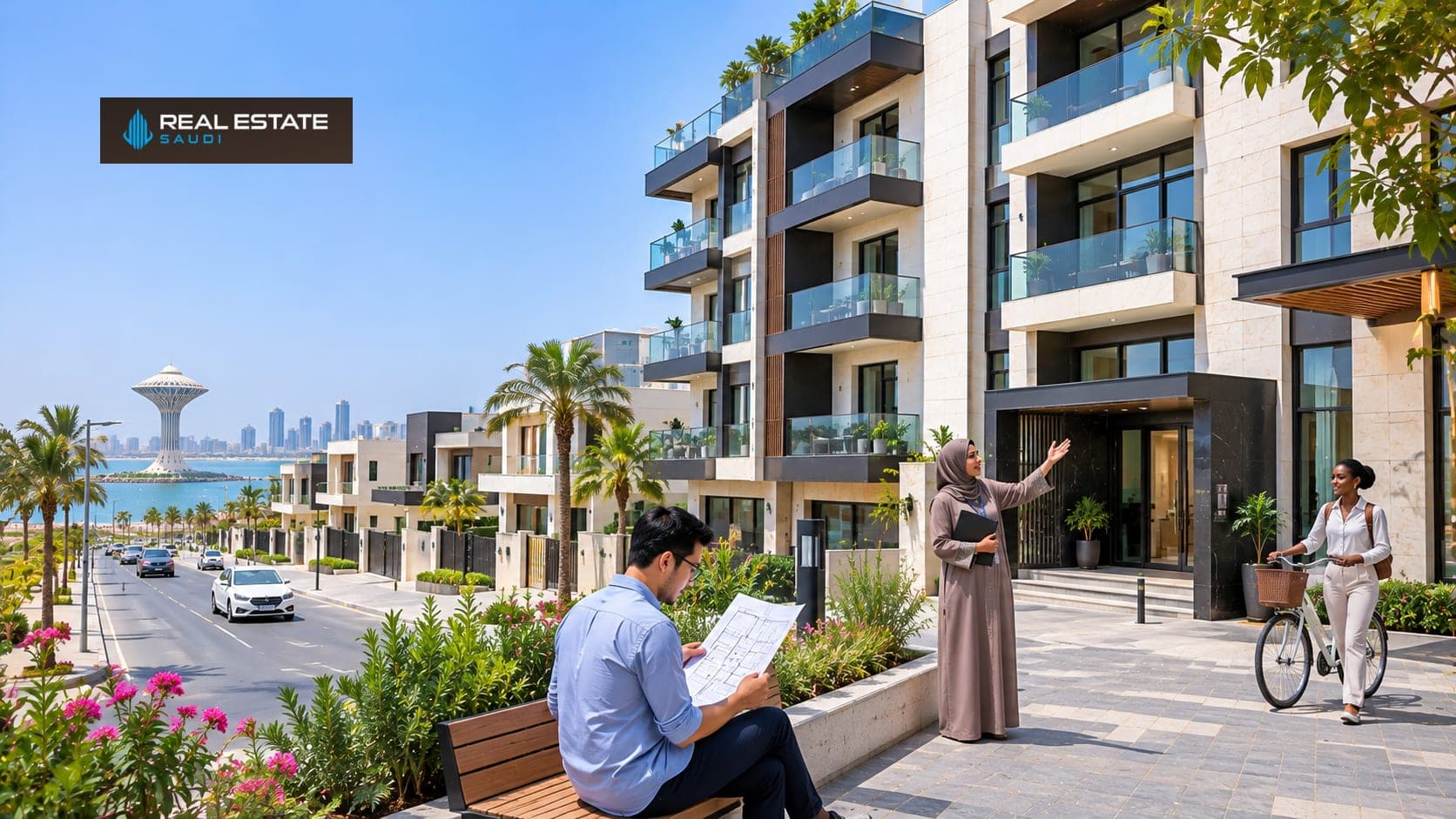
Yes, foreigners buy property in Dammam and Khobar through eligible ownership routes under Saudi Arabia's updated non-Saudi real estate ownership framework. However, purchasing an apartment, villa, commercial building or land in either city depends on the buyer's residency status, the property's geographical eligibility and the specific ownership rights permitted under Saudi law.
The Law of Real Estate Ownership by Non-Saudis entered into force on January 22, 2026, establishing clearer acquisition procedures for residents, overseas individuals and qualifying companies. The updated framework also allows an eligible legally resident foreign individual to acquire one property for personal residence outside designated ownership zones, subject to the applicable conditions.
Dammam and Al Khobar are important residential and commercial markets in Saudi Arabia's Eastern Province. Their proximity to Dhahran, major industrial employers and the Bahrain connection makes them relevant to international professionals and property investors.
However, neither city should be treated as an unrestricted foreign-freehold market. This guide explains the 2027 ownership rules, official zone verification, property options, transaction taxes, financing, registration and practical buying steps.
Can Foreigners Legally Own Property in Dammam and Al Khobar?
Yes. Eligible foreign nationals can acquire qualifying property rights in Dammam and Al Khobar where the applicable ownership conditions are satisfied. The most important distinction concerns whether the purchaser is legally resident in Saudi Arabia or lives overseas.
The Real Estate General Authority's official non-Saudi ownership guidance explains the geographical framework and the application process for different buyer categories.
Under Article 2 of the updated law, the government determines the geographical areas available to non-Saudis, the types of permitted property rights, foreign ownership limits and applicable controls.
The law also provides an additional residential ownership exception for qualifying legal residents outside designated geographical areas, excluding Makkah and Madinah.
These provisions make ownership possible in different circumstances, but they do not remove the need for property-level verification.
What Changed Under the 2026 Ownership Law?
Before the updated legislation, international purchasers faced a more restrictive and fragmented regulatory environment. The new framework introduces clearer digital procedures and recognises various categories of foreign purchasers.
Residents can generally begin the applicable process using their Iqama information, while eligible non-residents follow additional identity requirements.
The law also distinguishes individual purchases from acquisitions involving foreign-incorporated businesses and Saudi companies with foreign shareholders.
These changes matter for 2027 because investors should evaluate properties using the framework currently in force, rather than relying on descriptions of older approval procedures.
Which property type & region do you prefer?
Select property type and preferred city in Saudi Arabia.
Where Can foreigners buy property in Dammam and Khobar?
Foreign property ownership depends on the precise geographical location and the buyer's legal category. A city's name does not establish that every apartment, villa or plot within its boundaries is eligible for purchase.
The June 2026 published summary of approved areas did not individually name ordinary residential districts in Dammam or Al Khobar. It identified Ras Al Khair Special Economic Zone among the Eastern Province's named investment destinations.
However, geographical information may be represented in more detail in REGA's interactive ownership map. Consequently, buyers should not treat the earlier summary as a permanent list of every eligible property in the Eastern Province.
The correct approach is to verify the specific plot or unit through Saudi Properties, including the applicable rights, permitted use and ownership conditions.
Checking the Official Ownership Map
The official Saudi Properties platform provides interactive geographical information associated with foreign ownership.
Before making a reservation, obtain the property's identification details and locate its exact position on the map.
Confirm whether the intended acquisition involves full ownership, usufruct or another recognised real estate right.
The Saudi foreign property ownership zones guide explains how geographical permissions work across Saudi Arabia.
Even when a wider district appears on an approved map, the individual property and purchaser must satisfy the relevant conditions.
Why Neighbourhood Names Are Not Enough
A property broker may advertise an apartment as being located in an internationally accessible neighbourhood.
That description is not an official ownership determination.
Two residential developments situated near each other can have different registered boundaries, title conditions or ownership arrangements.
Similarly, eligibility for one foreign buyer does not necessarily establish eligibility for another buyer with a different residency or corporate status.
Buyers should request official confirmation before making payments that cannot easily be recovered.
Who Can Buy Property in the Eastern Province?
Saudi Arabia's ownership framework recognises several categories of foreign buyers. Their eligibility differs according to residence status, corporate structure and intended property use.
When Can foreigners buy property in Dammam and Khobar as Residents?
A legally resident non-Saudi individual may qualify to acquire one property for personal residence outside designated geographical zones under Article 2(3) of the updated law.
This route is particularly relevant for eligible expatriates living and working in Dammam, Al Khobar or Dhahran.
However, the exception is subject to the applicable regulatory conditions and does not permit unlimited investment-property acquisitions.
The property must be intended for qualifying personal residential use.
The law's exception does not apply in Makkah and Madinah, but those holy-city restrictions do not extend automatically to the Eastern Province.
Non-Resident International Buyers
Eligible non-resident individuals may acquire property within permitted geographical areas.
REGA's January 2026 implementation announcement explains that non-resident applicants begin the ownership process through Saudi diplomatic missions abroad to establish the required digital identity.
Additional banking and registration requirements may apply under the implementing regulations.
The buyer must also verify that the particular property is available to the relevant category of overseas purchaser.
Non-resident investors should not assume that the resident one-home exception applies to them.
Foreign Companies and Saudi Corporate Entities
Corporate ownership follows separate rules.
Overseas companies seeking to acquire qualifying Saudi property generally need the appropriate Ministry of Investment registration and corporate identification arrangements.
Saudi-incorporated companies with foreign shareholders may have additional routes for acquiring real estate needed for authorised business activities or employee housing.
The guide to foreign company property ownership in Saudi Arabia examines corporate classifications and documentation requirements.
A company's permission to operate a business should not be confused with unrestricted ownership of any building or plot.
Freehold Ownership Versus Usufruct Rights
Foreign property buyers should understand the legal interest being acquired before comparing prices.
Full ownership generally provides a registered ownership interest, subject to applicable restrictions.
Usufruct provides a legally recognised right to use and benefit from property owned by another party for a specified period.
The duration and available rights depend on the legal instrument and applicable geographical rules.
A 99-year usufruct, where legally permitted, is not identical to permanent ownership.
Why the Legal Difference Matters
The legal structure influences financing, inheritance, transferability and resale.
A purchaser acquiring full ownership may have different long-term rights from an investor holding a time-limited interest.
Usufruct arrangements should clearly explain permissible activities, maintenance obligations and the consequences of expiry.
An investment advertisement should not describe a time-limited right as unrestricted freehold.
Buyers should confirm the exact interest recorded in the applicable property registration documents.
Best Residential Areas to Research in Dammam
Dammam offers different residential environments, including established urban neighbourhoods and newer family-oriented developments.
However, the following locations are areas for market research, not a verified list of unrestricted foreign ownership zones.
Al Faisaliyah and Al Shati
Al Faisaliyah offers residential accommodation with access to everyday urban services. Buyers may find different apartment and villa configurations depending on the street and property age.
Al Shati is associated with coastal surroundings and residential amenities.
Waterfront proximity may attract buyers, but it can also introduce additional maintenance considerations involving humidity and corrosion.
Before purchasing, investigate actual commuting requirements, building condition and registered ownership eligibility.
Al Nada and Emerging Neighbourhoods
Al Nada and surrounding residential areas may appeal to households comparing available floor space, services and accessibility.
However, neighbourhood growth does not automatically guarantee rental demand or resale appreciation.
Buyers should investigate school access, healthcare, road connectivity and nearby commercial facilities.
A lower asking price may reflect an older building, unfinished amenities or a less convenient location.
Every property should be evaluated independently.
Best Residential Areas to Research in Al Khobar
Al Khobar offers a distinct residential environment connected with coastal recreation, commercial services and the wider metropolitan employment corridor.
Some neighbourhoods may interest professionals seeking convenient access to Dhahran and corporate offices.
Al Aqrabiyah and Al Ulaya
Al Aqrabiyah includes established residential and commercial surroundings, while Al Ulaya offers access to shopping, offices and everyday facilities.
Buyers should compare apartment sizes, building management and parking arrangements.
Traffic and access to workplaces can significantly influence household convenience.
Investment suitability also depends on achievable rents, tenant preferences and the property's purchase price.
Al Khobar Al Janubiyah and Coastal Locations
Southern Al Khobar and selected coastal areas offer different residential characteristics.
Some purchasers may prioritise access to the waterfront, while others prefer homes closer to employment centres or schools.
Coastal properties require particular attention to waterproofing, air-conditioning equipment and building maintenance.
The complete guide to buying property in Saudi Arabia as a foreigner provides broader due-diligence guidance for buyers evaluating different cities and property types.
None of these neighbourhood descriptions should replace official ownership-zone verification.
Dammam Versus Al Khobar: Property Investment Comparison
The choice between Dammam and Al Khobar depends on the purchaser's objectives.
Dammam may appeal to households seeking a wider range of conventional residential choices, while Al Khobar may suit buyers who prioritise particular coastal amenities or access to the Dhahran corporate corridor.
Neither market guarantees higher investment returns.
Buying Consideration | Dammam | Al Khobar |
|---|---|---|
Residential environment | Established neighbourhoods and developing communities | Urban residential districts and coastal locations |
Employment connections | Industrial, logistics and administrative activity | Corporate services and Dhahran business connections |
Property types to investigate | Apartments, villas and family housing | Apartments, villas and premium residential units |
Main buyer consideration | Price, commuting and neighbourhood services | Building quality, accessibility and lifestyle |
Foreign ownership | Property-specific legal verification | Property-specific legal verification |
Investment analysis | Comparable prices, rents and future supply | Comparable prices, rents and future supply |
This comparison describes broad market characteristics rather than guaranteed price or yield differences.
A well-priced apartment in Dammam may perform better financially than an expensive Al Khobar property, or vice versa.
The decisive factors are legal eligibility, valuation and realistic demand.
How Much Does Property Cost in Dammam and Khobar?
There is no single reliable price for apartments or villas across both cities.
Asking prices depend on neighbourhood, floor area, construction age, finishing quality, parking and other property characteristics.
A new family villa cannot be compared directly with an older apartment.
Similarly, premium coastal accommodation may have different costs from ordinary inland housing.
Using Official Property Market Evidence
The Real Estate General Authority's Real Estate Indicators platform provides official transaction and rental indicators that can help purchasers research regional and local property markets.
Buyers should compare recent completed transactions involving similar assets rather than rely exclusively on advertisements.
Building age, internal floor area and the legal rights included in the purchase must be consistent.
An independent valuation may also be appropriate for a substantial investment.
Understanding Rental Yield
Gross rental yield is calculated by dividing annual rental income by the property's purchase price.
For example, a hypothetical apartment purchased for SAR 800,000 and rented for SAR 40,000 annually would have a gross rental yield of 5%.
This is only an arithmetic illustration, not a verified rental yield for Dammam or Al Khobar.
Net returns would be lower after relevant maintenance, service charges, vacancies and management costs.
Property investors should use actual comparable rents and realistic operating expenses.
Property Taxes and Transaction Fees for Foreign Buyers
Saudi Arabia generally applies a 5% Real Estate Transaction Tax to taxable property disposals, subject to statutory exemptions and transaction-specific conditions.
The Zakat, Tax and Customs Authority's Real Estate Transaction Tax Law establishes the governing framework, effective from April 10, 2025.
Foreign purchasers should calculate the tax obligation alongside legal, financing, valuation and registration expenses.
The tax is separate from any additional regulatory fee associated with non-Saudi property-right dispositions.
Additional Non-Saudi Disposition Fees
The 2026 implementing framework specifies a separate 2% disposition fee for qualifying non-Saudi property-right transactions in Riyadh, Jeddah Governorate, Makkah and Madinah.
Other locations, including Dammam and Al Khobar, are subject to a 0% rate for that particular additional fee under the published rules reviewed for this guide.
This does not make property purchases or sales in the Eastern Province tax-free.
RETT and other applicable transaction charges still require assessment.
The Saudi real estate taxes guide provides additional context about taxes and property-related expenses.
What is your approximate budget?
Narrow down property options based on your target budget.
Can Foreign Buyers Get a Mortgage?
Mortgage financing may be available to eligible foreign residents through participating Saudi lenders.
However, ownership permission and borrowing eligibility are separate matters.
Banks assess income, existing financial obligations, creditworthiness and the property's suitability as security.
The Saudi Central Bank's Responsible Lending Principles establish requirements for evaluating borrowers' repayment capacity.
Mortgage Eligibility for Expatriates
A foreign resident may need a valid Iqama, employment documents, bank statements and credit information.
The lender may also require evidence of the property's legal eligibility and a professional valuation.
Non-residents may encounter different financing conditions or limited mortgage availability.
The real estate financing guide for Saudi Arabia explains financing structures, affordability and lender requirements.
Buyers should obtain written financing approval before entering an unconditional purchase agreement.
How Do foreigners buy property in Dammam and Khobar?
The safest purchasing process begins with verifying the buyer's legal category and the exact property location.
Foreign purchasers should complete the applicable ownership checks before paying a non-refundable reservation amount.
Step 1: Confirm Buyer Eligibility
Establish whether the applicant is a legal resident, overseas individual, foreign company or Saudi company with foreign shareholders.
Determine which ownership provisions apply to that category.
A legally resident person buying one family home may have a different route from an overseas investor purchasing rental property.
Step 2: Verify the Geographical Location
Obtain the registered property number, address and relevant title details.
Use the official Saudi Properties system to determine whether the intended property can be acquired under the applicable rules.
Verify the ownership right, permitted use and any duration or percentage restrictions.
Step 3: Inspect the Property
Assess the building's structure, plumbing, electrical systems, air conditioning and general maintenance condition.
For apartments, review common areas, lifts, parking and service charges.
For villas, examine roofing, external walls, drainage and private facilities.
An independent inspection may reveal problems that are not apparent during a brief viewing.
Step 4: Review Seller and Title Documents
Confirm that the seller has authority to transfer the property.
Examine the registered ownership information, mortgages, easements and other relevant restrictions.
The foreign buyer property registration guide explains how registration and title verification support legally valid acquisitions.
Step 5: Calculate the Full Purchase Cost
Include the agreed property price, applicable taxes, financing costs, professional fees and recurring expenses.
If the acquisition is intended for rental investment, include vacancy and maintenance assumptions.
The investment should remain financially manageable without relying on guaranteed price appreciation.
Step 6: Complete the Official Transaction
Review the purchase contract and satisfy the applicable ownership and registration procedures.
Use authorised payment channels and retain transaction records.
Do not assume that receiving keys or paying the purchase price independently establishes registered ownership.
The transaction should be completed through the legally required systems.
Documents Foreign Buyers Should Prepare
Required documentation depends on residency status, corporate classification and property type.
A legally resident individual may need identification and residency records, while a non-resident must follow the applicable Saudi digital identity arrangements.
Corporate buyers can require additional commercial registration and authorised-representative information.
The property file should include the relevant title documents, purchase contract, registered property description and evidence supporting the seller's authority.
Banks may also request salary certificates, statements and valuation reports.
Where the property is under construction, the buyer should obtain development documentation and verify the applicable regulatory approval.
The exact list should be confirmed through the official transaction process.
Can Property Ownership Qualify for Premium Residency?
A qualifying residential property in Dammam or Al Khobar may potentially support a Real Estate Owner Premium Residency application.
However, ordinary property ownership does not automatically grant residency.
The programme has separate conditions covering eligible property rights, minimum value and financing arrangements.
The published Real Estate Owner product includes a minimum qualifying property value of SAR 4 million, subject to additional eligibility requirements.
Property Ownership and Immigration Are Separate
A person who purchases an apartment below the residency threshold may legally own the property without qualifying for the property-linked Premium Residency product.
Similarly, a qualifying property investment does not guarantee approval if the applicant fails to meet the programme's other conditions.
The Saudi Premium Residency property investment guide explains the distinction between ownership and immigration eligibility.
Applicants should obtain current confirmation before purchasing primarily for residency purposes.
Off-Plan Property and Development Risks
Buyers may consider apartments or villas sold before construction is finished.
However, off-plan transactions involve additional uncertainty concerning delivery dates, finishing specifications and developer performance.
The purchaser should verify the project's licensing status and payment arrangements under the applicable Saudi regulatory framework.
An approved ownership location does not automatically establish that the development is authorised for off-plan sales.
The contract should identify construction milestones, delivery obligations and remedies for delays.
Buyers should distinguish realistic project commitments from promotional descriptions.
For foreign investors, the right being purchased must also be legally available to their particular buyer category.
Common Mistakes International Buyers Should Avoid
The most serious mistake is assuming that every property in Dammam or Al Khobar is legally available to overseas purchasers.
Another is confusing the resident personal-home exception with unrestricted investment ownership.
Buyers may also overlook title restrictions, service charges, property defects and financing conditions.
Some investors focus exclusively on advertised rental yield without accounting for vacancies or future maintenance.
Others rely on developers' projected appreciation rather than actual transaction evidence.
A property should satisfy legal requirements and provide reasonable financial value independently of speculative forecasts.
Independent legal and technical advice can be particularly useful for high-value transactions.
How would you like to be contacted?
Choose your preferred channel for a private consultation.
Eastern Province Property Outlook for 2027
Saudi Arabia's 2026 ownership reforms have provided a clearer framework for eligible international property buyers.
Dammam and Al Khobar remain relevant markets because of their connection to industrial, logistics and professional employment activity.
However, future property performance will depend on actual demand, financing conditions, available housing supply and the legal eligibility of individual properties.
Additional foreign ownership zones or revised conditions may be announced through the official process, but investors should not rely on unconfirmed expansion plans.
For 2027, the best approach is to monitor REGA's geographical information, review comparable transactions and assess each property on its own merits.
Should Foreigners Buy Property in Dammam or Khobar?
Eligible foreigners buy property in Dammam and Khobar through legally permitted ownership routes, including the conditional personal-residence exception for qualifying Saudi residents and acquisitions within approved geographical areas.
However, foreign ownership is not automatically available throughout either city.
Buyers must verify their eligibility, the property's geographical status, the legal rights being transferred and the official registration procedure.
Property prices, rental opportunities and long-term returns also require independent analysis.
For 2027, Real Estate Saudi recommends prioritising legal certainty, property condition and realistic financial planning before committing to an investment in the Eastern Province.
Talk to Our Real Estate Experts
Get real-time insights on investment options, commercial properties, and market guidelines.
Frequently Asked Questions
Yes, eligible foreigners can acquire qualifying property rights in Dammam under Saudi Arabia's updated ownership framework. However, the route depends on whether the buyer is legally resident in Saudi Arabia, an overseas individual or a qualifying company. A legally resident individual may qualify for one personal residence outside designated zones. Other acquisitions require verification of the precise property's geographical eligibility and applicable legal conditions.
Yes, property ownership may be available to eligible foreign buyers in Al Khobar under the applicable legal framework. However, not every apartment, villa or commercial building can automatically be acquired by every foreign purchaser. The buyer should verify the registered property location, permitted ownership rights and their own eligibility through Saudi Properties before entering a binding agreement or making a substantial payment.
Eligible non-resident foreigners may acquire property in approved geographical areas, subject to the applicable identification, banking and registration requirements. They should not rely on the separate one-home exception provided for qualifying legal residents. The exact property must be checked against REGA's official geographical information. Non-residents should establish legal eligibility before paying reservation fees or making travel arrangements.
A qualifying legally resident non-Saudi individual may acquire one property intended for personal residence outside designated geographical areas, except in Makkah and Madinah. This provision may be relevant to Dammam and Al Khobar. However, it is subject to the implementing conditions and should not be interpreted as permission to purchase unlimited investment properties throughout Saudi Arabia.
No. The cities should not be treated as unrestricted foreign-freehold markets. Geographical eligibility, the type of property right and the purchaser's category must be checked for the specific unit or plot. Official maps may contain more detailed information than published summaries. Buyers should obtain current confirmation through Saudi Properties rather than rely on neighbourhood names or marketing claims.
Saudi Arabia generally applies a 5% Real Estate Transaction Tax to taxable property disposals, subject to statutory exemptions. Under the 2026 implementing framework, Dammam and Al Khobar carry a 0% rate for the separate non-Saudi disposition fee that applies at 2% in certain other locations. Buyers must still assess RETT and any applicable financing, legal and registration expenses.
Mortgage financing may be available to eligible foreign residents through participating Saudi banks and financing companies. Approval depends on income, creditworthiness, existing obligations, property eligibility and lender requirements. The financing arrangements offered to non-residents can differ from those available to Saudi-based employees. Buyers should obtain current written quotations and confirm the property's legal status before relying on mortgage financing.
Neither city is automatically the better investment. Dammam provides varied conventional residential environments, while Al Khobar offers neighbourhoods connected to corporate activity and coastal amenities. The appropriate choice depends on the individual property's legal eligibility, price, rental demand, maintenance expenses and likely resale market. Investors should compare similar properties using completed transactions and realistic operating-cost assumptions.
Property ownership does not automatically provide Saudi residency or work authorisation. The Real Estate Owner Premium Residency programme provides a separate pathway for qualifying residential property interests, subject to a minimum value of SAR 4 million and additional conditions. Applicants must meet the programme's eligibility requirements and obtain formal approval. An ordinary apartment purchase does not automatically qualify the owner.
Obtain the property's exact registered identification, address and title details. Check its geographical status through the official Saudi Properties platform and confirm the ownership rights available to the buyer's category. Verify seller authority, existing mortgages and registration conditions. For off-plan developments, review project licensing and contractual protections. A qualified Saudi real estate lawyer can assist with complex or high-value acquisitions.
