
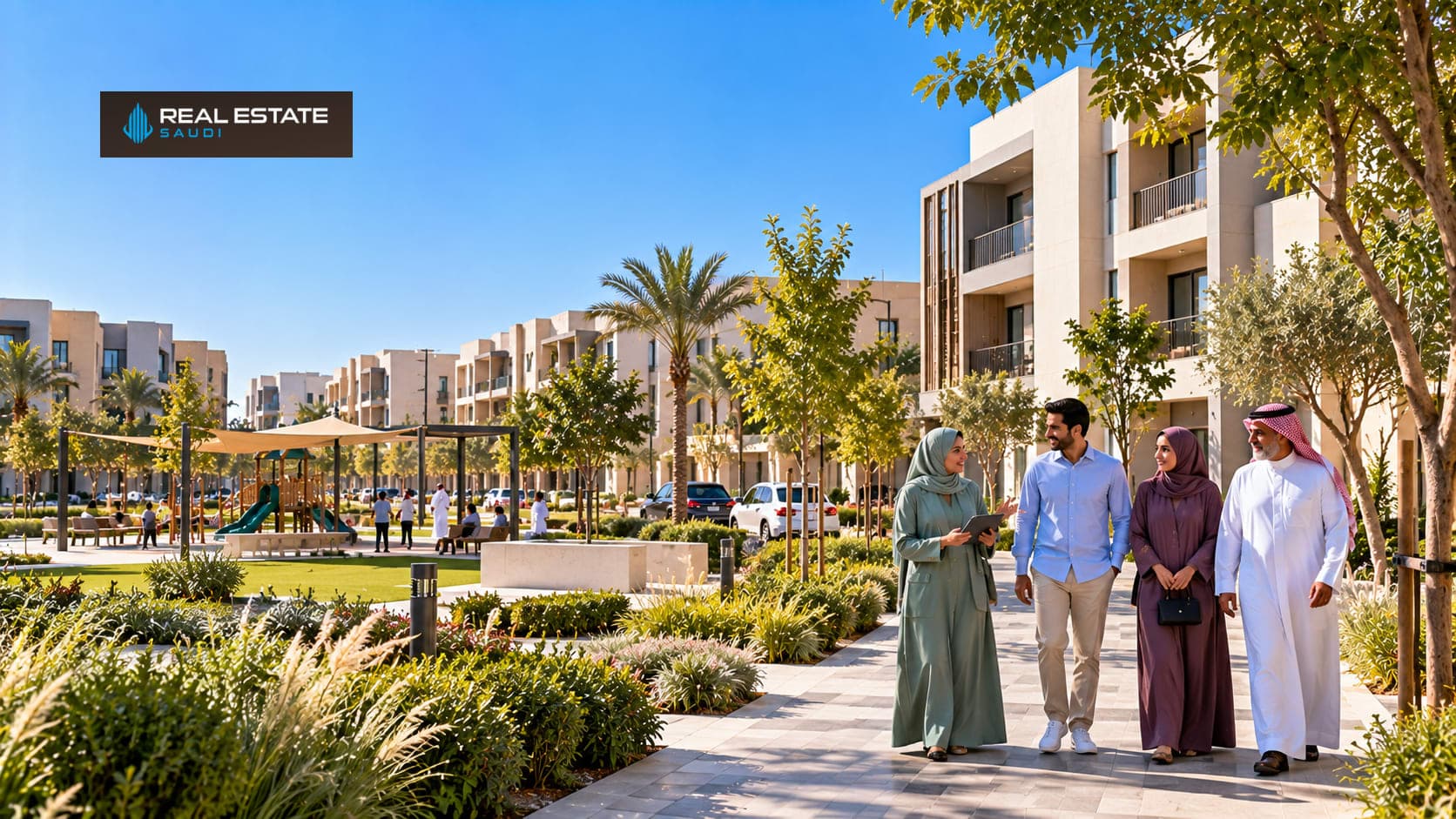
Government Housing Projects in Saudi Arabia help eligible Saudi households explore homeownership through housing support, residential development, financing assistance and targeted programmes for families with greater housing needs. In 2026, the main starting point is Sakani, which allows citizens to check eligibility and explore available housing solutions.
The Kingdom's housing ecosystem also includes the National Housing Company (NHC), the Real Estate Development Fund (REDF), participating financing institutions and Developmental Housing initiatives. These organisations play different roles. Some provide or facilitate financial assistance, others develop residential communities, and some administer eligibility or specialised housing support.
Not every applicant qualifies for every programme, and government involvement does not mean that every home is free or discounted. Eligibility depends on official rules, household circumstances and the product selected.
This guide explains the available programmes, who may qualify, where major developments are located, how to apply through Sakani and what applicants should verify before signing an agreement.
Government Housing Projects in Saudi Arabia: 2026 Overview
Saudi government-supported housing is designed to improve access to suitable accommodation and expand homeownership opportunities. The system includes financial assistance, completed homes, properties under construction, residential land support and assistance for qualifying vulnerable families.
The correct option depends on the household's eligibility, financing capacity and residential requirements.
Programme or Organisation | Primary Role | Main Applicant Consideration |
|---|---|---|
Sakani | Eligibility checks and access to housing solutions | Qualifying Saudi household status |
National Housing Company | Development and delivery of residential communities | Project availability and purchase terms |
Real Estate Development Fund | Housing finance support and related solutions | Support entitlement and lender approval |
Developmental Housing | Housing solutions for qualifying families with significant needs | Social support status and case assessment |
Participating banks | Home financing and repayment arrangements | Credit assessment and affordability |
REGA and Wafi | Regulation of qualifying off-plan developments | Project licensing and buyer protection |
The official Sakani housing support services describe available product categories and online services.
Applicants should always distinguish programme registration, housing support eligibility, property reservation and loan approval.
Why Saudi Arabia Invests in Housing Programmes
Housing development is a significant part of the Kingdom's economic and social policy.
The government has sought to increase housing supply, improve access to homeownership and support residential communities with essential infrastructure.
Saudi Vision 2030 established a national target of 70% homeownership among Saudi families by 2030.
According to the Vision 2030 Annual Report 2025, the Saudi family homeownership rate reached 66.24% in 2025, exceeding that year's target of 65%.
This figure measures national homeownership progress. It is not the percentage of applicants receiving subsidies or the approval rate for Sakani applications.
Residential expansion can provide more housing choices, but affordability still depends on household income, property prices, financing and location.
Government programmes therefore combine support mechanisms with new housing development rather than relying exclusively on construction.
Which property type & region do you prefer?
Select property type and preferred city in Saudi Arabia.
Sakani: The Main Housing Support Platform
Sakani is the primary digital platform for eligible Saudi citizens seeking access to housing support programmes.
It provides eligibility verification, information about housing products and services that help users explore suitable ownership pathways.
Available options may include ready residential units, homes under construction, residential land and financing-related support.
What Sakani does
The platform collects relevant applicant information and checks entitlement against the applicable housing support rules.
Applicants who qualify may then explore products suited to their needs and eligibility.
What Sakani does not guarantee
A successful eligibility check does not automatically reserve a particular apartment or villa.
It also does not mean that a participating bank must approve every financing application.
The applicant must complete the requirements for the selected product.
Households researching the wider affordability picture can consult the affordable housing guide for Saudi Arabia before choosing a property.
Who Is Eligible for Sakani Housing Support in 2026?
Sakani eligibility is based on the housing support regulations applicable to Saudi citizens and eligible family applicants.
The rules consider matters such as nationality, family composition, residence, housing ownership history and financial circumstances.
The precise conditions depend on the applicant's legal category.
Saudi nationality
The housing support regulations generally require the applicant representing the family to be a Saudi citizen.
Foreign residence or permission to own Saudi property does not itself establish Sakani entitlement.
Family circumstances
Different provisions address spouses, parents, widows, divorced applicants and certain other qualifying cases.
An applicant should not assume the same conditions apply to every family structure.
Existing housing
Ownership or previous access to suitable housing can affect entitlement under the applicable rules.
Financial circumstances
Household assets and other financial information may be considered.
The official Sakani housing support regulation contains the detailed eligibility framework.
Applicants should use the live assessment rather than rely on simplified eligibility claims.
How to Check Sakani Eligibility Online
The official eligibility service allows Saudi citizens to verify whether they meet the requirements for housing support.
The process begins with access to the Sakani website or mobile application.
Applicants log in, accept the relevant terms and enter the required personal and family details.
Once the application information is submitted, the service checks eligibility using the applicable assessment process.
The Saudi government's housing support eligibility service describes these steps and identifies the service as free.
If the result is eligible
The applicant can explore available support products and complete any further requirements.
If the result is not eligible
Applicants may review the result and use the available objection or resubmission procedures where appropriate.
If household details change
Information should be updated promptly, because eligibility can be reviewed when circumstances change.
A correct and complete application is essential for avoiding preventable delays.
Step-by-Step Guide to Applying for Government Housing
Applying for Government Housing Projects in Saudi Arabia should begin with official eligibility verification, not with a property reservation payment.
Step 1: Access Sakani
Open the official platform or application and sign in using the required authentication method.
Step 2: Complete your profile
Provide accurate personal, family and contact information.
Step 3: Submit the eligibility assessment
Follow the prompts and confirm that the information supplied is complete.
Step 4: Review your result
Check the displayed eligibility status and any additional instructions.
Step 5: Explore housing products
Compare ready units, off-plan homes, land support and financing solutions available to your category.
Step 6: Assess affordability
Review the required buyer contribution, potential monthly payments and associated costs.
Step 7: Select a suitable property
Investigate location, developer, completion status and project availability.
Step 8: Complete financing and contractual requirements
Follow the lender's and programme's documented procedures.
Step 9: Track the application
Monitor official notifications and respond to requests for information.
Applicants should retain records of every approval and agreement.
Documents and Information Applicants May Need
Document requirements vary by programme, household category and financing provider.
A Sakani eligibility assessment and a bank mortgage application may request different information.
Applicants should be prepared to supply accurate identification, household information, contact details and any supporting records requested through the official process.
Family information
Marriage, divorce, dependent or other family-status details may be relevant to particular eligibility categories.
Income information
Financing institutions may need salary records, employment details or other evidence of repayment capacity.
Residential circumstances
Information about existing property ownership or previous support may be required.
Property documents
Once a home is selected, the buyer may need project, ownership or purchase-contract details.
Do not upload sensitive documents to an unverified website or send them to an unauthorised intermediary.
Only provide documentation through an official or otherwise authenticated application channel.
National Housing Company: Residential Communities
NHC develops residential destinations across Saudi Arabia, including projects in Riyadh, Jeddah, Dammam, Al Khobar and other regions.
Its communities can combine housing with planned schools, parks, retail services and other neighbourhood facilities.
The official NHC residential destinations directory includes developments such as Al Fursan and Khuzam in Riyadh, Sadayem in Jeddah and Lazurd in Al Khobar.
Residential property types
Depending on the project, offerings may include apartments, villas and townhouses.
Planned amenities
Community master plans can feature public spaces and supporting infrastructure.
Buyer considerations
An NHC development is not automatically available to every Sakani applicant or at a single government-set price.
Product availability, project conditions and funding arrangements must be checked individually.
Buyers should verify actual handover schedules, specifications and the legal terms of the selected unit.
Government-Supported Housing Projects in Riyadh
Riyadh is a major centre for new residential construction and planned neighbourhood development.
NHC destinations in the capital include Al Fursan, Khuzam and Al Ruba, among others.
These developments offer different locations, housing types and community designs.
Al Fursan
The destination is associated with residential expansion in northeastern Riyadh and includes several planned housing projects.
Khuzam
Located in northern Riyadh, Khuzam offers another master-planned residential environment.
Al Ruba
This residential destination incorporates design concepts associated with Riyadh's Salmani architectural identity.
Choosing a project
Families should compare workplace travel, schools, healthcare, property specifications and total financing costs.
New communities may still be undergoing construction, so a planned amenity should not be treated as operational.
The Riyadh residential neighbourhood guide provides further context for comparing locations beyond individual developments.
Housing Developments in Jeddah
Jeddah's housing programmes operate within a different residential environment from Riyadh.
The city includes established neighbourhoods, expanding northern districts and new communities serving a variety of household needs.
NHC destinations listed for Jeddah include Sadayem, Al W areef, Al Jawharah and other residential developments.
Different location priorities
Some families prefer proximity to schools and workplaces, while others prioritise newer homes and planned community facilities.
Coastal considerations
A development in Jeddah should not automatically be described as waterfront property.
The exact location and distance from the coast must be verified.
Project availability
Units and payment arrangements can change as sales phases progress.
Homebuyer research
The Jeddah residential areas guide can help families compare neighbourhoods before selecting a particular project.
The project's actual specifications and financing terms should determine suitability.
Housing Projects in Dammam and Al Khobar
The Eastern Province also contains residential developments associated with NHC and other participating developers.
Examples in official NHC directories include Al Wajeha in Dammam and Lazurd in Al Khobar.
These destinations serve markets with different employment patterns, transport connections and household preferences.
Dammam
Buyers may compare new communities with established city neighbourhoods based on schools, commuting and purchase budgets.
Al Khobar
Some households prioritise proximity to business districts, the coast or employment locations elsewhere in the Eastern Province.
Development-stage risks
Property delivery schedules and community amenities may differ between phases.
Affordability
A lower initial price does not necessarily mean lower total ownership costs if travel or maintenance expenses are high.
Families should consider their actual daily routines rather than choosing a project only because it has an attractive master plan.
Ready Housing Units Through Sakani
Ready units allow buyers to evaluate a completed property before proceeding with purchase and financing.
This can be useful for households requiring accommodation within a defined timeframe.
Sakani describes ready units as one of its housing support product categories.
Benefits of completed homes
Buyers can inspect the actual layout, building systems and surrounding neighbourhood.
They can also examine existing roads, utilities and community facilities.
Important checks
A completed property may still have construction defects, incomplete documentation or maintenance requirements.
Availability and price
The number of eligible properties and their prices vary.
Financing
Applicants must confirm whether the selected unit qualifies for the intended support or financing product.
The Saudi property buying guide provides a broader explanation of ownership due diligence.
A completed home can reduce construction uncertainty but does not remove financial or legal risks.
What is your approximate budget?
Narrow down property options based on your target budget.
Off-Plan Housing Through Government-Linked Programmes
Off-plan housing allows a purchaser to enter an agreement for a property that is under construction or planned for delivery.
Some Sakani housing solutions and NHC developments involve off-plan products.
These arrangements can offer access to newly designed homes and staged payment structures.
However, buyers assume development and delivery risks that differ from purchasing a completed property.
Project licensing
Qualifying off-plan projects must comply with the Saudi regulatory framework.
Escrow arrangements
Licensed developments are subject to requirements governing the handling of project funds.
Contract terms
Buyers should review delivery obligations, specifications, payment conditions and the consequences of delay.
The REGA Wafi off-plan sales and lease platform explains developer and project licensing.
The guide to off-plan property investment in Saudi Arabia covers further buyer protections and potential risks.
Developmental Housing for Families With Greater Needs
Developmental Housing is a targeted initiative for households meeting particular social and housing-support requirements.
It is not the same as a standard homeownership purchase available to every applicant.
The official Developmental Housing service describes accommodation support for qualifying vulnerable families, including people covered by the relevant social support system.
Who may qualify?
The programme targets households satisfying both housing-support requirements and the applicable developmental-housing criteria.
How applications are assessed
Eligible applicants complete the relevant registration and provide information needed for case review.
Available housing solutions
Accommodation may be provided through different arrangements depending on need and programme availability.
Approval
A referral or application does not guarantee immediate allocation of a unit.
Applicants should follow official instructions and keep their household records updated throughout the process.
How Developmental Housing Applications Work
Families seeking Developmental Housing should begin by completing the Sakani registration and eligibility process.
If their circumstances satisfy the relevant developmental-housing requirements, the system can direct the application for further assessment.
Registration
The applicant submits the required identity and household information.
Eligibility verification
The relevant authorities confirm whether the family meets the housing-support and developmental criteria.
Case assessment
The applicant's housing circumstances and level of need may be reviewed.
Allocation
Suitable accommodation depends on availability and the programme's allocation process.
Follow-up
Families should monitor official communications and respond to document requests.
Applicants who need clarification should use Sakani's recognised support channels rather than third-party promises of guaranteed allocation.
This pathway is designed around assessed household need, not the purchase of a speculative investment property.
The Role of the Real Estate Development Fund
The Real Estate Development Fund supports Saudi housing finance initiatives and homeownership objectives.
Its role should be distinguished from that of property developers and banks.
Financial support can be connected with approved financing solutions and eligible housing products.
Housing finance assistance
Support may reduce particular financing burdens for qualifying beneficiaries.
Financing institutions
Participating banks and finance providers conduct their own assessments of applicants.
Product differences
The form of support can vary according to the applicable programme and the applicant's circumstances.
Approval conditions
Sakani eligibility does not guarantee that a particular lender will approve the requested loan amount.
Households comparing their financing options can explore the real estate financing guide for Saudi Arabia.
Buyers should obtain written financing terms and understand their complete repayment obligations before signing.
What Financial Support Is Available in 2026?
Housing support can involve different arrangements rather than one universal subsidy.
Sakani's published financial advisory information refers to non-refundable financial support amounts of SAR 100,000 or SAR 150,000 for qualifying approved products and circumstances.
These amounts should not be presented as an automatic payment to every eligible citizen.
Product eligibility
The selected property or financing option must meet the relevant requirements.
Household assessment
The applicant's status and financial circumstances affect available solutions.
Lender participation
Financing arrangements depend on the participating institution and its approval process.
Changing offers
Programmes and product structures can be updated.
Buyers should request a current written explanation showing the approved support amount, financing terms and amounts payable by the household.
An advertisement mentioning a subsidy is not sufficient evidence of the benefit an individual applicant will receive.
How Much Do Government Housing Projects Cost?
There is no single official purchase price covering all supported residential properties.
A small apartment in one region can have substantially different costs from a family villa in Riyadh or Jeddah.
The final price depends on the project, unit size, location, construction specifications and applicable support arrangement.
Purchase price
Check the total contractual amount rather than relying on promotional starting prices.
Buyer contribution
Some financing arrangements require the household to contribute its own funds.
Monthly payments
The repayment schedule should remain manageable under realistic income and expense assumptions.
Additional expenses
Maintenance, services, moving costs and other obligations can affect affordability.
Project incentives
Payment structures or advertised benefits should be confirmed in writing.
The best housing option is not necessarily the cheapest advertised unit. It is one that provides suitable accommodation without creating unsustainable financial pressure.
First-Home Real Estate Transaction Tax Support
Saudi Arabia generally imposes a 5% Real Estate Transaction Tax on qualifying property disposals, subject to exemptions.
Eligible Saudi citizens buying their first home can receive state support covering the tax on up to SAR 1 million of the qualifying property's value.
The ZATCA Real Estate Transaction Tax Law provides the governing tax framework.
Eligibility confirmation
A qualifying purchaser should obtain the required first-home certificate through the prescribed process.
Transaction registration
The seller and relevant parties must complete the applicable tax documentation and transfer requirements.
Amount above the threshold
The tax treatment of any value exceeding the supported amount must be calculated under the applicable rules.
Practical advice
Do not assume Sakani eligibility automatically replaces every tax-certificate requirement.
The buyer should confirm the precise tax position before signing or completing a transaction.
Can Expatriates Apply for Saudi Government Housing?
Government Housing Projects in Saudi Arabia are not the same as general permission for foreigners to purchase property.
Sakani's principal housing-support eligibility service is directed at Saudi citizens under the housing support regulations.
An expatriate resident should therefore not assume eligibility for Sakani subsidies merely because they work in the Kingdom.
Private property purchase
Foreign ownership is governed by a separate legal framework.
Rental options
Expatriates may investigate suitable housing through the private rental market.
Employer accommodation
Some businesses arrange housing for staff, but employer assistance is not the same as citizen housing support.
Important distinction
Legal permission to own a qualifying property does not establish entitlement to government financial assistance.
Non-Saudi buyers should check the requirements applicable to their nationality, residence status, chosen property and ownership structure.
Comparing Government-Supported and Private Housing
Government-supported and private-market homes can sometimes look similar, but the financial and eligibility arrangements may differ.
A supported purchase may require a successful housing eligibility assessment and compliance with product-specific rules.
A private purchase depends on legal ownership eligibility, seller terms and the buyer's funding arrangements.
Government-supported options
These may provide qualifying assistance or access to housing products intended to improve affordability.
Private-market options
These can offer a wider range of properties, but prices and financing are determined through the applicable market arrangements.
Property quality
Neither ownership pathway guarantees a particular construction standard.
Location
Buyers should compare actual access to work, schools and medical services.
Contractual obligations
Both pathways require careful review of ownership, payment and handover terms.
Applicants should choose according to their needs rather than assume a project is automatically superior because it is associated with a public programme.
Common Mistakes Housing Applicants Should Avoid
One common mistake is assuming that a successful Sakani eligibility check guarantees a particular property.
Another is relying on outdated information about subsidy amounts, income requirements or available housing projects.
Some applicants submit incomplete or inconsistent household details and then face avoidable delays.
Others choose homes based mainly on attractive payment advertisements without checking total financing costs.
Off-plan purchasers may overlook project licences, escrow arrangements and handover obligations.
Families can also underestimate transport costs when selecting homes far from workplaces or schools.
Applicants should never pay unauthorised intermediaries who promise guaranteed approval.
Accurate information, official procedures and careful property inspection provide better protection.
How would you like to be contacted?
Choose your preferred channel for a private consultation.
Housing Programme Outlook Beyond 2026
Saudi Arabia's housing initiatives will continue to be shaped by homeownership targets, household affordability and the delivery of new residential communities.
NHC projects can expand available housing choices in multiple regions, while Sakani supports qualifying households through different ownership pathways.
Financing conditions will remain important because many households require long-term repayment arrangements.
The national homeownership rate reaching 66.24% in 2025 demonstrates progress toward the 2030 objective, but the remaining challenge involves providing appropriate homes across different income groups and locations.
Applicants should monitor current programme announcements, product availability and official eligibility conditions.
The success of an individual housing decision depends on suitability, legal certainty and sustainable household expenses rather than national development targets alone.
Conclusion
Government Housing Projects in Saudi Arabia provide several pathways for eligible citizens seeking suitable homes, from Sakani-supported ownership and NHC residential communities to financing assistance and targeted Developmental Housing.
The best starting point is the official Sakani eligibility assessment. Applicants should then explore available products, confirm financing and compare actual housing projects according to location, affordability and completion status.
Ready homes and off-plan units involve different risks, while specialised housing assistance has its own eligibility and case-review requirements.
Government participation does not guarantee free housing, immediate allocation or automatic loan approval.
Talk to Our Real Estate Experts
Get real-time insights on investment options, commercial properties, and market guidelines.
Frequently Asked Questions
The principal housing support ecosystem includes Sakani, NHC residential developments, financing assistance associated with the Real Estate Development Fund and Developmental Housing for qualifying families. These programmes perform different functions. Some provide access to financial support, while others develop homes or address specific social housing needs.
Visit the official Sakani platform or mobile application, sign in, provide accurate household details and complete the eligibility assessment. If you qualify, review available housing products and follow the relevant financing or selection process. A successful eligibility result does not automatically mean a property has been reserved.
Sakani's housing support regulations principally apply to eligible Saudi citizens and qualifying household categories. Eligibility can depend on nationality, family status, residence, property ownership history and financial circumstances. Applicants should complete the official eligibility check because different family categories may be subject to different conditions.
Not all government-supported housing is free. Many Sakani products involve purchasing a home with financing or other approved assistance. Developmental Housing serves qualifying families with particular housing needs through different arrangements. Applicants should confirm the financial conditions for their specific programme rather than assume every government-supported unit is provided without cost.
Sakani provides access to housing support eligibility checks and related services. NHC develops residential communities and individual housing projects across Saudi Arabia. A buyer may encounter NHC housing while exploring available ownership options, but project availability and programme eligibility remain separate considerations.
The principal Sakani housing-support eligibility service is intended for Saudi citizens under the applicable regulations. Non-Saudi residents should not assume they qualify for citizen subsidies. Foreign residents may investigate private rentals or qualifying property ownership under the separate legal rules that apply to their circumstances.
The official NHC directory includes residential destinations in Riyadh, Jeddah, Dammam, Al Khobar and several other Saudi cities. Examples include Al Fursan, Khuzam, Sadayem, Al Wajeha and Lazurd. Available units, prices, construction stages and purchase conditions should be checked directly because project offerings can change.
No. Sakani eligibility confirms housing-support entitlement under the relevant assessment; it does not guarantee approval of any requested mortgage. A lender may separately examine income, financial commitments, credit information and property eligibility. Applicants should obtain a formal financing offer before committing to a purchase they cannot otherwise fund.
Developmental Housing is a targeted initiative for qualifying vulnerable households, including families covered by relevant social support programmes. Applicants generally complete housing-support registration and undergo additional eligibility or case assessment. Allocation depends on the applicable criteria and available accommodation, rather than automatic approval for every registered household.
Verify the property's specifications, actual price, financing terms, developer or seller authority and expected handover date. For off-plan homes, check the relevant REGA project licence and contractual protections. Families should also assess schools, transport, maintenance obligations and the total long-term cost of ownership.
