
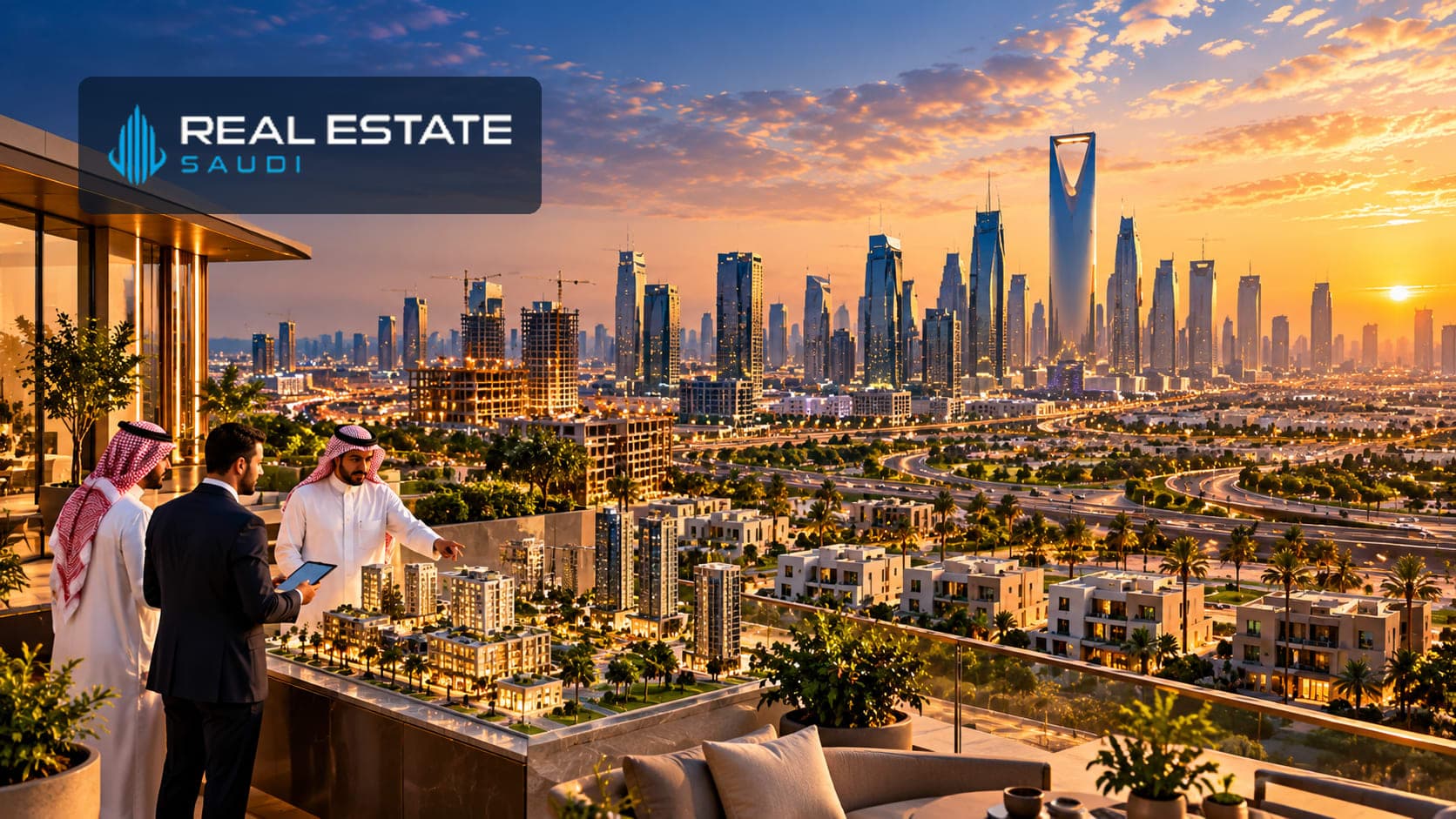
Saudi Arabia's real estate sector offers opportunities for investors interested in residential properties, commercial developments, rental income and long-term capital growth. Economic diversification, infrastructure expansion, housing development and updated property ownership regulations are reshaping the Kingdom's investment landscape. For investors planning to Invest in Saudi Arabia Real Estate in 2026, the market presents several advantages, including expanding urban development, opportunities across different property categories and increasing regulatory transparency. However, successful investment requires careful research into property values, legal eligibility, financing, rental demand and potential risks.
Saudi Arabia's Vision 2030 programme continues to influence the development of residential communities, commercial districts, tourism destinations and supporting infrastructure. These initiatives create potential opportunities, but investors must distinguish between national development objectives and the financial performance of individual properties.
This guide explains the benefits of Saudi real estate investment, the latest foreign ownership regulations, important investment locations, property taxes, financing considerations and practical steps for making informed decisions in 2026.
Why Invest in Saudi Arabia Real Estate in 2026?
Saudi Arabia is undergoing an economic transformation intended to diversify national income, increase private-sector participation and improve living standards. Real estate supports these objectives by providing housing, workplaces, tourism accommodation and commercial infrastructure.
The Kingdom's investment appeal comes from several interconnected factors: government housing initiatives, business activity, urban expansion and the development of new residential and commercial destinations.
The official Saudi Vision 2030 programme establishes national priorities involving economic diversification, housing accessibility and improvements to quality of life. These objectives provide a long-term policy framework for property development.
Investors can participate in different market segments depending on their financial objectives. Some may prefer completed apartments capable of producing rental income, while others may investigate offices, retail properties, development projects or regulated real estate investment funds.
However, an expanding economy does not guarantee profitable property investments. Purchase prices, future supply, tenant demand and maintenance obligations all influence the financial outcome.
Investors should therefore assess the Kingdom's broader economic prospects alongside the fundamentals of individual properties.
Saudi Arabia's Economic Growth and Real Estate Development
Economic diversification supports property demand
Saudi Arabia's economic diversification initiatives encourage investment in tourism, logistics, technology, manufacturing, entertainment and professional services.
These industries require offices, warehouses, commercial facilities, employee accommodation and supporting residential communities.
As businesses expand into different regions, some areas may experience increased demand for suitable housing and commercial premises.
For example, districts located near major employment centres can appeal to professionals seeking convenient accommodation. Areas connected to logistics and industrial activity may attract demand for warehouses and specialised commercial properties.
Nevertheless, investors should examine actual employment growth, occupied business premises and existing property supply before making assumptions about future demand.
Housing development remains a major priority
Housing availability is an important component of Saudi Arabia's national development strategy.
Government-supported programmes and private developers are contributing to the construction of new residential communities, apartments and family homes.
The Vision 2030 Annual Report 2025 reported that the Saudi family homeownership rate reached 66.24%, reflecting progress toward the programme's long-term housing objectives.
These developments create opportunities for construction companies, developers, service providers and property investors.
Buyers interested in this sector can explore the broader market through the affordable housing in Saudi Arabia guide.
However, increasing housing supply can also intensify competition among landlords. Investors must evaluate how many similar properties are available in a neighbourhood and whether rental demand is sufficient to support them.
Which property type & region do you prefer?
Select property type and preferred city in Saudi Arabia.
Major Benefits of Investing in Saudi Arabia Real Estate
1. Potential for long-term capital appreciation
Property values may increase when an area experiences sustained demand, infrastructure improvements and economic development.
New transport connections, schools, healthcare facilities and commercial districts can improve the attractiveness of residential communities.
For example, apartments in established neighbourhoods with convenient access to employment centres may appeal to a wider range of potential buyers and tenants.
However, capital appreciation is never guaranteed. Property prices can decline when market demand weakens, financing becomes more expensive or new supply exceeds demand.
Investors should compare purchase prices with similar completed properties and assess whether expected future improvements are already reflected in current valuations.
2. Opportunities for recurring rental income
Rental properties may generate regular income while providing exposure to the underlying real estate asset.
Residential apartments can appeal to working professionals and families, while commercial units may attract offices, retailers and service businesses.
The actual profitability of rental property depends on occupancy, achievable rent, operating costs and tenant reliability.
Property owners should consider maintenance expenses, service charges, vacancy periods and management fees before estimating annual returns.
A well-maintained property in a convenient location may provide more dependable income than a cheaper building with recurring maintenance problems.
3. Infrastructure investment and urban expansion
Saudi Arabia continues to develop transport networks, public facilities and urban infrastructure.
These improvements can increase accessibility and support economic activity in certain districts.
Investors may investigate residential areas near transport connections, developing employment centres or established community facilities.
However, the benefits of infrastructure investment vary significantly by location. A planned road or transport project does not automatically increase the value of every nearby property.
Investment decisions should reflect confirmed project progress, accessibility, local demand and realistic acquisition prices.
4. Diversification across property categories
Saudi Arabia offers different real estate investment options, including residential apartments, villas, offices, retail premises, warehouses and qualifying off-plan developments.
Each property category responds to different economic conditions.
Residential demand is influenced by household formation, affordability and employment, while commercial demand depends more directly on business requirements.
A diversified strategy may reduce dependence on a single tenant category or property segment, although diversification cannot eliminate market risk.
Investors should select properties that match their available capital, investment experience and capacity to manage ongoing obligations.
Foreign Property Ownership Rules in Saudi Arabia 2026
One of the most significant regulatory developments in 2026 concerns property ownership by non-Saudi individuals and entities.
Saudi Arabia's updated Law of Real Estate Ownership by Non-Saudis entered into force on 22 January 2026.
According to the Real Estate General Authority's official foreign ownership announcement, eligible residents, non-residents and qualifying entities can apply for ownership through the Saudi Properties digital platform.
The framework creates investment opportunities while maintaining eligibility requirements, geographical restrictions and regulatory controls.
Can foreigners buy property in Saudi Arabia?
Yes. Eligible foreign individuals and companies may acquire permitted real estate rights under the applicable legal framework.
However, foreign ownership is not unrestricted across every property category and geographical location.
The law provides different ownership arrangements for individuals, companies, investment funds and other eligible entities.
Certain legally resident non-Saudi individuals may qualify to own a residential property outside designated geographical areas, subject to statutory conditions and exclusions.
Makkah and Madinah have additional restrictions, including requirements relating to the buyer's status and the permitted ownership structure.
Investors can review the detailed Saudi foreign property ownership law before proceeding with an acquisition.
How foreign investors apply for ownership
Eligible residents generally begin their applications through the official Saudi Properties platform using their residency identification.
Non-resident applicants may need to obtain a recognised digital identity through Saudi diplomatic channels before completing the required procedures.
Qualifying foreign companies without an established Saudi presence may need to complete investment registration and obtain the relevant unified identification number.
The exact requirements vary according to the applicant's circumstances and proposed property acquisition.
Before paying a deposit, foreign investors should verify that the intended ownership rights are permitted in the property's location.
Best Types of Real Estate Investment in Saudi Arabia
Residential apartments
Apartments are a commonly considered investment option because they can serve a broad residential tenant market.
Investors should examine building quality, parking, maintenance standards, service charges and proximity to employment centres.
Demand can differ between studio apartments, family-sized units and luxury residences.
A property's suitability depends on local tenant preferences rather than its advertised classification alone.
Villas and townhouses
Villas and townhouses may appeal to families seeking larger living spaces, privacy and access to community facilities.
These properties can offer long-term ownership opportunities but may involve higher acquisition and maintenance expenses.
Investors should consider landscaping, building systems, structural condition and the availability of suitable tenants.
Commercial properties
Commercial real estate includes offices, shops, showrooms, warehouses and other business-related assets.
Such properties may provide rental income through commercial leases, but investors must evaluate tenant quality, location, business activity and vacancy risk.
Office demand can depend on access to business districts, parking facilities and modern workplace specifications.
Retail investments require attention to customer traffic, surrounding businesses and the commercial viability of the location.
Off-plan developments
Off-plan investments involve purchasing property before construction is completed.
These projects may provide access to modern communities and staged contractual payment arrangements.
However, buyers face risks associated with construction delays, developer performance, completion standards and changing market conditions.
The official WAFI off-plan sales and leasing platform provides information about regulated developments and licensing procedures.
Investors should verify the specific project's status and review the purchase contract before transferring funds.
Best Cities for Real Estate Investment in Saudi Arabia
Riyadh: Business and residential investment
Riyadh is a major administrative and commercial centre, attracting businesses, professionals and residents.
Investment opportunities include completed apartments, family villas, commercial offices and properties within developing residential districts.
Neighbourhoods vary considerably in pricing, facilities, accessibility and tenant demand.
Investors should consider commuting convenience, building standards, nearby services and future competing supply.
A premium neighbourhood may offer strong amenities but can also require a significantly higher purchase price.
Jeddah: Coastal property and commercial opportunities
Jeddah combines established residential areas, business activity and coastal development.
The city offers opportunities across apartments, villas, retail premises and commercial property.
Some waterfront locations may appeal to premium buyers, while established residential districts can serve families and working professionals.
Investors should evaluate property maintenance, neighbourhood accessibility and realistic rental demand before paying additional premiums for coastal locations.
Dammam and Khobar: Eastern Province opportunities
Dammam and Khobar are important residential and commercial markets in Saudi Arabia's Eastern Province.
Regional employment, industrial activity, logistics and business services influence property requirements.
Potential opportunities include residential apartments, family accommodation and commercial premises.
Investors should examine proximity to employment centres, transport networks and established neighbourhood amenities.
Makkah and Madinah: Specialised real estate markets
Makkah and Madinah have distinctive property markets associated with permanent residents, religious visitors and hospitality-related activities.
Investment opportunities may exist in qualifying commercial, accommodation and residential assets.
However, foreign ownership restrictions and operational requirements make regulatory verification particularly important.
The presence of significant visitor activity does not guarantee year-round occupancy or consistent profitability.
Investors comparing different regions can explore the top real estate investment opportunities in Saudi Arabia for additional market considerations.
Property Taxes and Investment Costs in Saudi Arabia
Understanding investment expenses is essential before purchasing real estate.
The total cost of ownership includes more than the advertised property price.
Real Estate Transaction Tax
Saudi Arabia applies a 5% Real Estate Transaction Tax to qualifying real estate transactions, subject to statutory exemptions and other applicable conditions.
The official ZATCA Real Estate Transaction Tax Law explains the tax framework, including the legislation that became effective on 10 April 2025.
Investors should confirm the treatment of their particular transaction before signing a purchase agreement.
Additional acquisition expenses
Depending on the investment, buyers may encounter legal review costs, valuations, financing expenses, brokerage charges and registration-related obligations.
Foreign investors must also consider any applicable fees under the non-Saudi ownership framework.
Tax treatment of rental income or investment profits may depend on the ownership structure and investor's circumstances.
Investors should avoid assuming that every form of Saudi property income is exempt from taxation.
Ongoing property expenses
After purchasing a property, owners may be responsible for repairs, building maintenance, property management and service charges.
Commercial properties may also require additional operational expenditure.
Unexpected expenses can reduce rental profitability, particularly when the property is vacant.
Maintaining financial reserves is therefore an important part of responsible property investment.
Rental Income and Return on Investment
Rental yield is an important indicator when comparing income-producing properties.
It shows how annual rental income relates to the property's purchase price.
For example, consider an apartment purchased for SAR 1,000,000 that generates SAR 60,000 in annual rent.
In this hypothetical example, the property's gross annual rental yield is 6%.
However, gross yield does not represent the owner's final earnings.
If annual operating expenses and vacancy allowances total SAR 15,000, the remaining operating income would be SAR 45,000 before financing costs and applicable taxes.
These figures illustrate a calculation method and should not be interpreted as typical Saudi rental returns.
Investors should evaluate net operating income, property condition, acquisition expenses and financing obligations.
A property with a higher advertised yield may produce weaker financial results if occupancy is inconsistent or maintenance expenses are substantial.
For a deeper explanation, see the return on real estate investment in Saudi Arabia guide.
What is your approximate budget?
Narrow down property options based on your target budget.
Real Estate Investment Funds and REITs in Saudi Arabia
Direct property ownership is not the only way to gain exposure to Saudi real estate.
Regulated investment funds can provide access to professionally managed portfolios.
Real estate investment trusts, commonly known as REITs, may hold income-producing assets and offer units that investors can purchase subject to market and regulatory conditions.
These structures can reduce the need to manage individual tenants or building maintenance personally.
However, fund investors must still consider management fees, portfolio concentration, liquidity and market-price fluctuations.
The Saudi Capital Market Authority's real estate investment fund regulations establish regulatory requirements for the sector.
Investors should understand the fund's objectives, underlying properties and financial disclosures before purchasing units.
A listed fund may offer greater trading flexibility than direct property ownership, but its market price can fluctuate even when the underlying properties remain occupied.
How to Invest in Saudi Arabia Real Estate Successfully
Step 1: Define your investment objectives
Determine whether the primary goal is rental income, capital appreciation, long-term ownership or exposure to commercial property.
Establish a realistic budget and investment period.
Investors should also decide how much financial risk they can tolerate.
Step 2: Research the preferred location
Compare cities and neighbourhoods according to employment, accessibility, amenities and competing housing supply.
Investigate achievable rental income rather than relying exclusively on advertised figures.
Local market research is especially important because performance can differ substantially between nearby districts.
Step 3: Verify ownership eligibility
Confirm that the intended buyer can legally acquire the proposed rights.
Foreign investors should check geographical restrictions and complete the appropriate official procedures.
Step 4: Examine property documentation
Review ownership records, seller authority, registered restrictions and existing obligations.
The Real Estate General Authority's property deed verification service describes procedures for checking qualifying registration documents.
Investors should obtain professional assistance if ownership documents, boundaries or contractual conditions are unclear.
Step 5: Evaluate the property's condition
Inspect structural condition, electrical installations, plumbing, waterproofing and other important building systems.
For apartments, examine shared facilities and building management arrangements.
For off-plan developments, verify approved specifications and construction obligations.
Step 6: Calculate the total investment cost
Include the purchase price, applicable taxes, financing costs, management expenses and expected maintenance.
Consider the financial impact of lower rental income or delayed occupancy.
Step 7: Complete the transaction properly
Use authorised transaction procedures and retain all contractual and ownership records.
Buyers should verify payment instructions before transferring funds.
After acquisition, establish appropriate maintenance and management arrangements.
Financing Real Estate Investments in Saudi Arabia
Mortgage financing may help eligible buyers purchase property without providing the entire price upfront.
However, financing availability depends on lender policies, income verification, residency or ownership status, property eligibility and other applicable requirements.
Investors should compare repayment obligations, financing costs, contract duration and early settlement provisions.
Borrowing increases financial exposure because repayments may continue even when a rental property is vacant.
A property that appears profitable before financing can produce negative cash flow after debt repayments.
Financial planning should therefore include cash reserves and realistic rental assumptions.
Investors should also consider whether a property remains affordable if maintenance costs rise or rental income falls.
Major Risks of Invest in Saudi Arabia Real Estate
Market price fluctuations
Property values respond to economic conditions, financing costs, supply and demand.
Even properties located in major cities can experience periods of slower sales or price declines.
Excess housing supply
Large development programmes can increase competition between similar properties.
Additional housing supply may benefit residents but reduce rental pricing power for some landlords.
Construction delays
Off-plan developments can experience delays, unexpected costs or changes to completion schedules.
Investors should carefully examine contractual rights and remedies.
Liquidity limitations
Real estate is generally less liquid than many publicly traded financial assets.
Selling a property can require substantial time, negotiation and transaction expenses.
Regulatory considerations
Ownership permissions, tax requirements and property-use restrictions may influence the suitability of an investment.
Foreign investors should verify the regulations applicable to their specific circumstances.
Property management challenges
Maintenance, tenant disputes and unexpected vacancies can reduce profitability.
Professional property management may help, but it introduces additional costs.
Investors should include these risks in their financial planning rather than relying entirely on optimistic projections.
Invest in Saudi Arabia Real Estate Outlook for 2026 and Beyond
Saudi Arabia's property market is expected to remain influenced by national development programmes, housing construction, infrastructure investment and evolving ownership regulations.
The updated foreign ownership framework provides a significant development for qualifying international investors.
At the same time, continued residential construction may affect prices, rental competition and availability in particular neighbourhoods.
Future investment performance will vary according to location, property quality, market demand and acquisition cost.
Economic diversification may generate additional property requirements in emerging business and industrial districts, while established residential neighbourhoods may continue to appeal to buyers seeking completed infrastructure.
However, forecasts should not be treated as guaranteed outcomes.
Investors should monitor official market statistics, property transactions and financing indicators when reviewing long-term opportunities.
A disciplined investment strategy should combine national market research with detailed evaluation of the individual asset.
How would you like to be contacted?
Choose your preferred channel for a private consultation.
Practical Tips for Property Investors in Saudi Arabia
Successful real estate investment requires patience, realistic expectations and careful financial planning.
Investors should compare several properties before committing to a purchase and avoid relying solely on promotional claims.
Property inspections, verified ownership records and appropriate legal guidance can help reduce preventable transaction problems.
Rental projections should be based on realistic market evidence, with allowances for vacancy and unexpected maintenance.
It is also useful to consider the potential resale market before buying. An attractive property should meet the needs of future purchasers as well as current tenants.
Investors should review their property performance periodically and remain informed about changes in relevant regulations.
Most importantly, investment decisions should reflect individual financial circumstances rather than the assumption that every property in a growing economy will increase in value.
Conclusion
Saudi Arabia offers a range of property investment opportunities supported by economic diversification, infrastructure development, housing programmes and an evolving regulatory framework.
Residential apartments, villas, commercial properties, off-plan developments and regulated real estate investment funds provide different ways to participate in the market.
The updated foreign ownership framework is an important development for qualifying international investors, although eligibility requirements and geographical restrictions remain significant considerations.
Talk to Our Real Estate Experts
Get real-time insights on investment options, commercial properties, and market guidelines.
Frequently Asked Questions
Saudi Arabia offers opportunities in residential, commercial and regulated real estate investments. Economic diversification, housing development and infrastructure initiatives provide important market drivers. However, profitability depends on property selection, acquisition cost, rental demand, operating expenses and regulatory eligibility. Investors should evaluate individual assets rather than assuming national economic growth guarantees positive investment returns.
Yes. Eligible foreign individuals and entities may acquire qualifying property rights under Saudi Arabia's updated non-Saudi ownership framework, which entered into force on 22 January 2026. Ownership is subject to geographical restrictions, eligibility requirements and official procedures. Additional controls apply to Makkah and Madinah. Investors should verify their circumstances through the appropriate regulatory channels before purchasing.
Riyadh, Jeddah, Dammam and Khobar offer different investment characteristics. Riyadh has significant business and residential activity, Jeddah provides coastal and urban property opportunities, and the Eastern Province supports residential and commercial demand. The best investment location depends on budget, tenant requirements, property type and market conditions. Neighbourhood-level research is essential.
There is no universal minimum amount applicable to every property investment. The required budget depends on the property's location, size, category and financing arrangements. Buyers must also consider applicable taxes, transaction expenses, maintenance and financial reserves. Certain ownership structures or investor categories may have additional requirements that should be verified before purchasing.
Rental property can provide recurring income, but profitability depends on occupancy, achievable rent, acquisition cost and ongoing expenses. Investors should assess net income after maintenance, management fees, service charges and vacancy allowances. Advertised rental yields should not be treated as guaranteed returns because actual property performance can vary significantly.
Saudi Arabia generally applies a 5% Real Estate Transaction Tax to qualifying property disposals, subject to applicable exemptions and statutory provisions. Other taxes or fees may apply depending on the transaction, ownership structure and investor's circumstances. Investors should obtain current guidance on acquisition costs, rental income and disposal-related obligations before making financial commitments.
Eligible non-residents may acquire qualifying real estate rights under the updated foreign ownership framework. Their application process can involve obtaining a recognised digital identity and completing the required procedures through the official Saudi Properties platform. Approval depends on the applicant's eligibility, property location and regulatory conditions. Property ownership does not automatically provide residency status.
Off-plan properties may offer opportunities in newly developed residential communities and provide staged contractual payment arrangements. However, buyers face construction, completion and developer-performance risks. Investors should verify project licensing, purchase agreements, approved specifications and payment protections before proceeding. Expected appreciation should not be assumed without supporting market evidence.
Investors should examine the seller's ownership documents, relevant registration records, property restrictions and outstanding obligations. The appropriate official verification procedure depends on the property and registration system. Legal professionals can assist with title checks, transaction documentation and contractual questions. Buyers should complete these checks before transferring substantial funds.
Saudi Arabia's real estate market will continue to be influenced by housing development, infrastructure investment, economic diversification and evolving property regulations. These factors may support opportunities across residential and commercial sectors. However, future prices and rental income will depend on local supply, affordability, financing conditions and property demand. Investors should use current market evidence rather than relying on guaranteed growth forecasts.
