
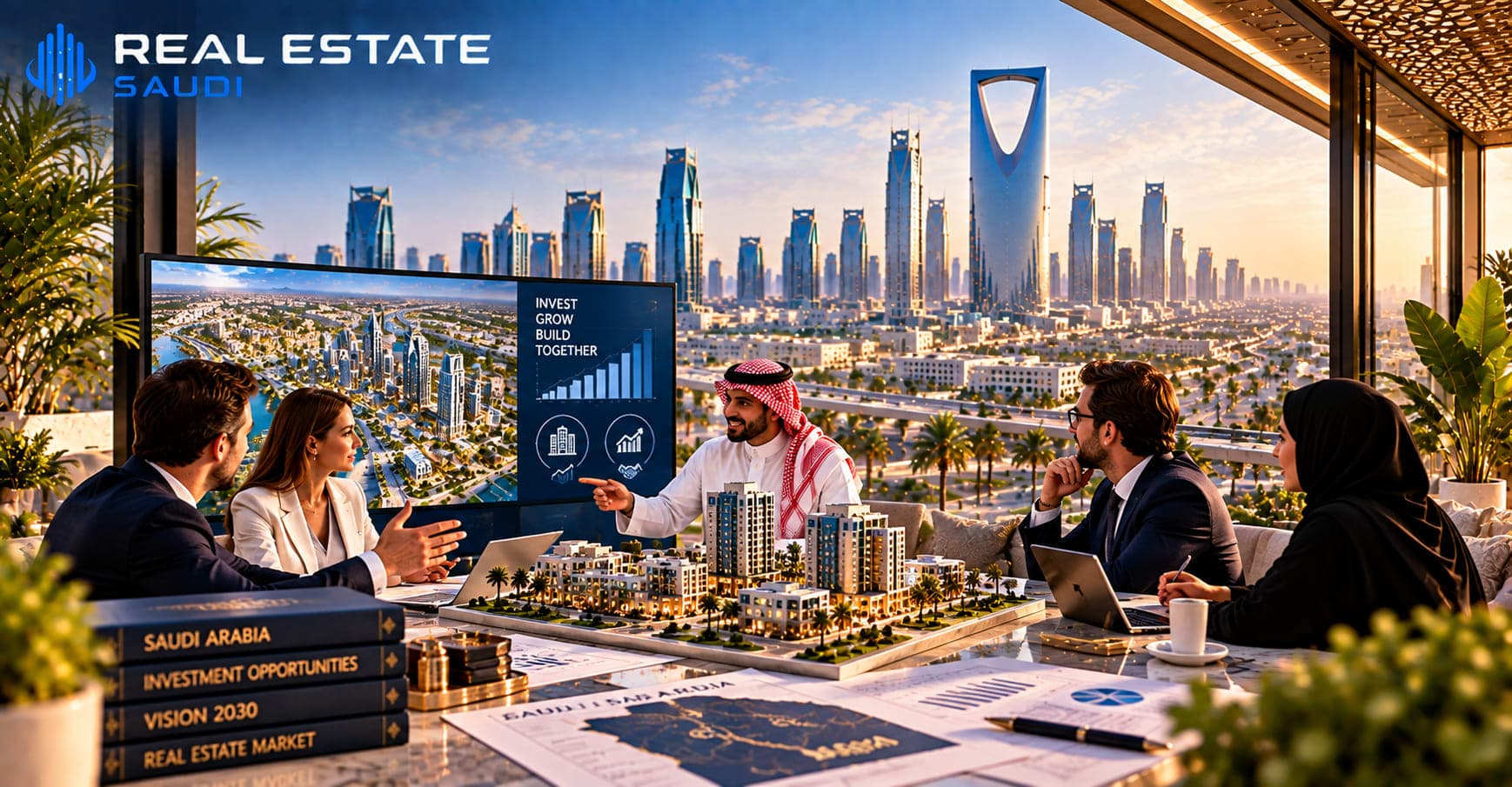
With global investors seeking resilient returns amid macroeconomic uncertainty in Western and Asian markets, Saudi Arabia has firmly established itself as one of the most compelling real estate investment frontiers in the world. Backed by sovereign diversification under Vision 2030, an expansive young domestic population, and a rock-solid currency peg, the Kingdom offers exceptional risk-adjusted fundamentals.
Here is an objective, data-backed analysis evaluating whether Saudi Arabia is a good place to invest in real estate in 2026.
The 6 Core Investment Pillars of the Saudi Market
1. Massive Sovereign Backing & Economic Diversification
Unlike speculative property cycles driven by debt-fueled private syndicates, Saudi Arabia's urban transformation is directly underwritten by the Public Investment Fund (PIF), one of the world's largest sovereign wealth funds with over $900 billion in assets under management. Real estate and urban infrastructure represent a central pillar of non-oil GDP growth, ensuring continuous government investment through 2030 and beyond.
2. Attractive Rental Yields Compared to Global Metros
Gross residential rental yields across major Saudi metropolitan areas outperform European and North American benchmarks:
- Riyadh Executive Apartments: 7.8% – 9.5% gross yield
- Jeddah Coastal Residences: 7.2% – 8.8% gross yield
- London / New York / Paris: 2.8% – 4.2% gross yield
3. Highly Favorable Tax Architecture
The Kingdom maintains one of the world's most investor-friendly personal fiscal regimes:
- 0% Personal Income Tax: Zero taxes levied on residential rental income for individuals.
- 0% Personal Capital Gains Tax: Full profit retention upon property disposition.
- 0% Inheritance / Estate Tax: Direct wealth transfer to legal beneficiaries without punitive death duties.
- 5% RETT Flat Transaction Fee: A predictable, one-time property transfer tax replacing traditional high-bracket stamp duties.
4. Currency Stability: The US Dollar Peg
The Saudi Riyal (SAR) has remained pegged to the US Dollar at 3.75 SAR = 1 USD since 1986. This guarantees international investors complete protection against currency devaluation risks and unpredictable foreign exchange shocks common in other emerging markets.
5. Young Demographics & Surging Housing Demand
With over 63% of the Saudi population under the age of 30 and national homeownership targets aiming for 70% by 2030 under the Sakani initiative, domestic demand for modern townhouses and apartments is sustained by strong household formation rather than purely speculative capital.
6. Major Global Catalysts: Expo 2030 & FIFA World Cup 2034
Hosting World Expo 2030 in Riyadh and the 2034 FIFA World Cup guarantees that infrastructure expansion, public transit delivery (Riyadh Metro), and international tourism footfall will maintain elevated demand for residential and hospitality real estate over the next decade.
ما نوع العقار والمنطقة المناسبة؟
اختر نوع العقار والمدينة المستهدفة لاستعراض أنسب الخيارات.
Key Risks & Realistic Caveats to Consider
While macro fundamentals are exceptionally strong, investors must recognize that success requires adhering to official regulations: strictly avoid unlicensed off-plan developers, always demand verified Wafi escrow accounts, ensure leases are registered through Ejar, and consult licensed REGA professionals to navigate neighborhood pricing variations.
Read our comprehensive review of investment pitfalls in Risks of Investing in Saudi Real Estate and explore top locations in Top Real Estate Investment Opportunities.
حدد ميزانيتك الاستثمارية
حدد ميزانيتك التقديرية لنقوم بتضييق خيارات العروض.
الأسئلة الشائعة
Saudi Arabia can offer attractive opportunities in sectors such as real estate, technology, tourism, manufacturing, logistics, healthcare and mining. The economy grew in 2025 and non-oil activity remained an important growth driver. However, investors should evaluate each business or asset individually because national economic growth does not guarantee profitable investment returns.
Major opportunities exist across real estate, tourism, technology, manufacturing, logistics, mining, healthcare, energy and financial services. The most suitable sector depends on an investor's capital, expertise, risk tolerance and investment horizon. Real estate is especially relevant because housing, tourism, logistics and business expansion all create demand for different property types.
Yes. Foreign individuals and companies can invest in Saudi Arabia subject to the updated Investment Law, activity-specific rules and registration requirements. Foreign investors generally register through the Ministry of Investment before carrying out covered activities. Certain prohibited or restricted sectors can have additional requirements.
Yes, eligible non-Saudis can acquire permitted real estate rights under the ownership system that became effective on 22 January 2026. Eligibility depends on the buyer category, geographical zone and property right. Special restrictions apply in Makkah and Madinah.
Real Estate Transaction Tax is generally charged at 5% on qualifying property disposals unless a statutory exemption applies. The current RETT law became effective on 10 April 2025. Property investors should also include finance, legal, maintenance, service and property-management costs in their calculations.
There is no universally best city. Riyadh benefits from employment, corporate expansion and major development, while Jeddah combines established commercial demand with Red Sea and lifestyle property. Al Khobar and Dammam serve the Eastern Province economy. Asset-level pricing and demand matter more than choosing a city based only on reputation.
No. Vision 2030 provides an important economic framework but should not replace investment analysis. Investors should assess the actual business model, market demand, price, competition, financing, regulations and exit strategy of the specific opportunity.
Yes, financing is available through Saudi banks and licensed finance companies, although approval depends on the borrower and investment. Real estate financing may consider income, credit profile, residency, property value and lender criteria. Corporate investments can involve different financing structures and requirements.
Key risks include regulatory changes, market cycles, project delays, financing costs, oversupply, management problems and limited exit liquidity. Foreign investors also need to confirm that they satisfy registration and activity-specific requirements before deploying capital.
Start by identifying the investment activity, confirming whether foreign participation is permitted, reviewing Ministry of Investment requirements and understanding any sector-specific licences. For real estate, also verify ownership eligibility, property title, transaction tax, developer status and financing before signing contracts or transferring significant funds.
