
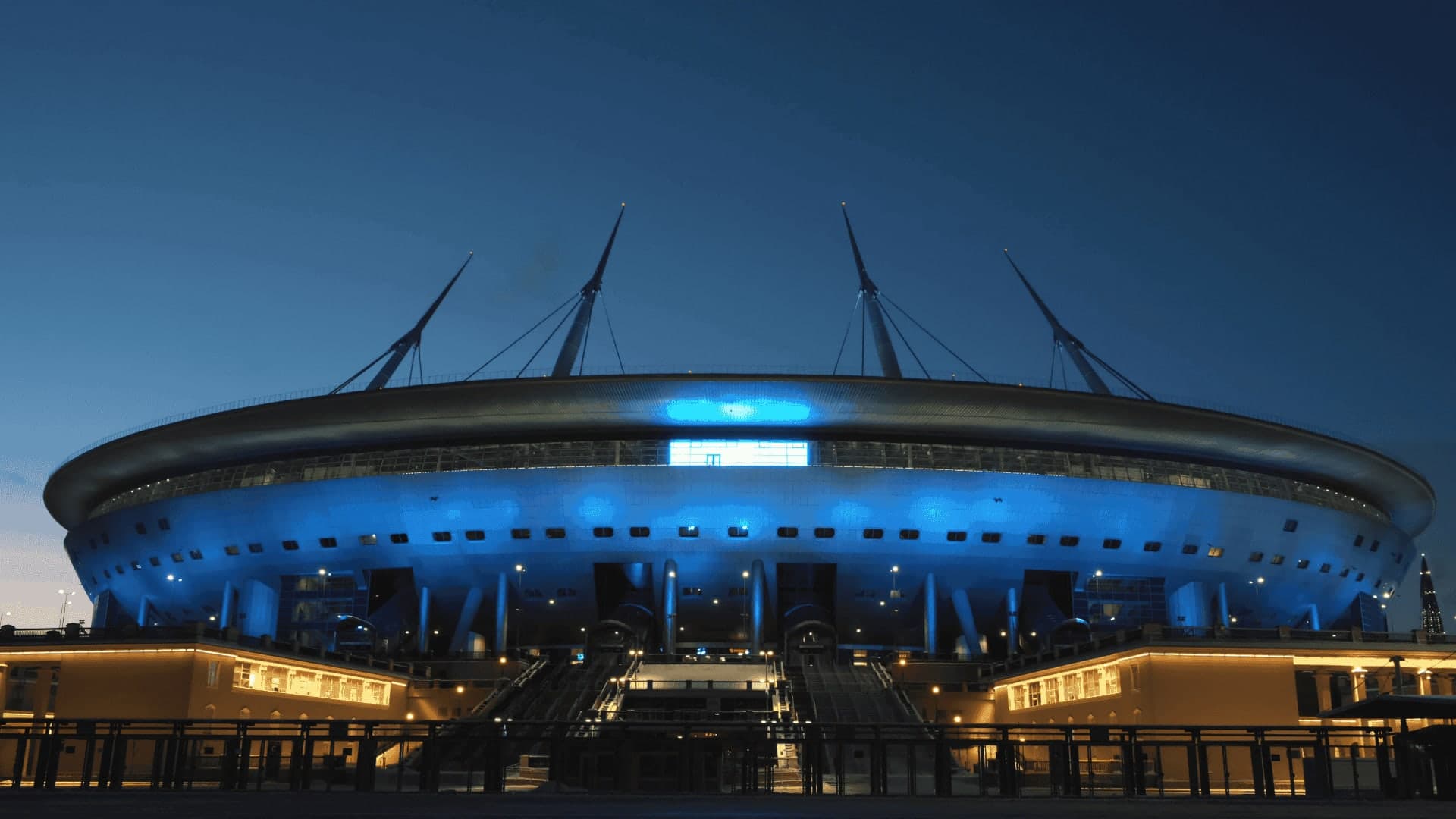
Saudi Arabia is still eight years away from hosting the FIFA World Cup, but the property-market effects are no longer purely theoretical. Saudi Arabia 2034 World Cup Real Estate is now linked to stadium construction, transport planning, tourism capacity, new development activity and private financing across several parts of the Kingdom.
The key question is not whether the tournament will attract global attention. It is whether the infrastructure and investment required for 2034 can create lasting demand for housing, hotels, retail, offices and development land.
As of September 2026, there is evidence of major physical investment and changing capital structures, but there is not enough evidence to claim that the World Cup is already causing a universal rise in Saudi property values. The eventual impact will vary by city, property type, infrastructure delivery and the strength of demand after the tournament.
Saudi Arabia 2034 World Cup Real Estate: What Is the Direct Impact?
The most direct property-market impact comes from construction.
Saudi Arabia's official tournament plan includes 15 stadiums across five host cities: Riyadh, Jeddah, Al Khobar, Abha and NEOM. Riyadh is planned to host eight stadiums, Jeddah four, while Al Khobar, Abha and NEOM each have one. The official Saudi 2034 plan describes four existing stadium refurbishments, three new stadiums already under construction and eight additional planned new builds.
That scale creates real-estate effects well beyond the stadium structures themselves.
Major venues need roads, utilities, public spaces, hospitality, retail, security infrastructure, transport connections and supporting commercial services. When those improvements are permanent, nearby land and property can become more useful to residents, tenants and businesses.
The cause-and-effect chain is straightforward:
World Cup construction → infrastructure spending → improved accessibility and amenities → stronger development potential.
However, stronger development potential does not automatically mean every property near a stadium will rise in value. Supply, accessibility, employment and post-event usefulness still matter.
Stadium Development Is Creating Multiple Property Nodes
The headline venue is King Salman International Stadium in Riyadh. The planned stadium will have capacity for more than 92,000 spectators and is intended to host both the opening match and the final. Its wider precinct is also intended to connect with Riyadh's continuing urban transformation.
This is important for real estate because a large sports precinct can become an anchor for surrounding mixed-use development rather than functioning only as a match venue.
Investors evaluating Riyadh's property market should therefore look at the wider transport and development network rather than measuring opportunity only by distance from a stadium.
In Al Khobar, Aramco Stadium offers a more immediate case study. The venue is due for completion around the end of 2026 and forms part of the Eastern Province's World Cup infrastructure. Reuters has reported that private investors are being brought into its financing structure, making it an example of property development and financial-market participation occurring together.
NEOM is much further along the risk spectrum. Its proposed stadium is still a forward-looking project, with the pitch planned more than 350 metres above ground within THE LINE.
That gives NEOM potentially significant long-term property visibility but also greater development and timing risk than a venue close to completion.
Why the Impact Extends Beyond the 15 Stadiums
The World Cup development footprint is considerably wider than 15 venues.
The Saudi bid proposes 132 training venues across 15 cities, including base-camp facilities for the expanded 48-team tournament.
This matters because teams, staff and support operations require accommodation, logistics, transport and services outside the main match-day districts.
Training facilities can therefore create smaller real-estate demand clusters in locations that would otherwise receive much less direct World Cup investment.
The official plan also distributes activity across host cities and additional base-camp locations. As a result, the real-estate impact should be viewed as a network of development corridors rather than a single stadium-centred boom.
Which property type & region do you prefer?
Select property type and preferred city in Saudi Arabia.
How the Five Host Cities Could Experience Different Property Effects
World Cup spending is unlikely to affect every Saudi city in the same way.
Riyadh: The Largest Concentration of Development
Riyadh has eight proposed stadiums, giving it the highest concentration of venues.
The property effect could spread across residential, office, retail, hospitality and mixed-use sectors because tournament investment overlaps with the capital's wider economic and population growth.
For real estate, the strongest locations may be districts where World Cup projects connect with permanent transport links, employment centres and established communities.
That makes Riyadh real estate relevant not simply because of the tournament, but because stadium infrastructure is being layered onto a large existing urban market.
Jeddah: Hospitality Meets an Established Coastal Market
Jeddah is planned to host four stadiums. Its World Cup property effect is likely to combine tourism and hospitality with existing residential and commercial demand.
The city already functions as a major commercial and tourism centre. New World Cup infrastructure can therefore reinforce an existing market instead of creating demand from scratch.
Buyers and developers studying Jeddah's property market should watch how stadium investment connects with tourism districts, transport and mixed-use development.
Al Khobar: An Early Test of Stadium-Led Demand
Al Khobar is particularly interesting because Aramco Stadium is approaching operation well before 2034.
This makes Al Khobar real estate useful for observing whether a major venue increases surrounding commercial activity, hospitality interest and residential demand over several years.
Its Eastern Province employment base also gives the market demand drivers that are independent of football.
Abha: Tourism and Accommodation
Abha's World Cup role centres on King Khalid University Stadium and supporting training facilities.
The effect on Abha real estate could be felt most clearly through hospitality, serviced accommodation and tourism-linked development.
The important question is whether properties built for increased event and visitor demand can maintain occupancy outside peak tourism periods.
NEOM: Long-Term Development Rather Than Immediate Rental Demand
NEOM's property story differs from established cities because much of the wider destination is still being developed.
The proposed stadium can increase international visibility for NEOM's real estate market, but its property impact depends heavily on delivery of the broader employment, residential and tourism ecosystem.
That makes it a longer-horizon development story rather than a straightforward stadium-proximity investment.
Tourism and Hospitality: A Major Indirect Real Estate Effect
World Cup visitors create demand for accommodation, but the real estate impact starts well before 2034.
Saudi Arabia's official bid outlines more than 230,000 room keys across host and supporting locations for tournament requirements.
For developers, this creates incentives to expand hotel capacity, serviced residences and mixed-use projects.
The impact may also reach the residential rental sector.
Owners of well-located apartments may increasingly consider furnished and short-term rental models as the tournament approaches, particularly in districts connected to stadiums, airports, public transport and entertainment areas.
Readers comparing current supply can review properties for rent in Saudi Arabia to understand how different cities and property types are positioned before the tournament.
Could World Cup Rental Demand Push Rents Higher?
It could create upward pressure in particular locations and time periods, but it would be misleading to predict a universal Saudi rental increase simply because the tournament is coming.
Short-term event demand can support accommodation prices when supply is constrained. But developers can also respond by building more units.
That means the same World Cup that increases demand can simultaneously increase future supply.
This is one of the most important risks when evaluating tournament-related residential property.
Properties with genuine demand from local residents, professionals, business travellers or tourists are more defensible than properties dependent entirely on a few weeks of World Cup activity.
Commercial Real Estate Could Benefit From Wider Business Activity
World Cup preparation also creates commercial demand.
Construction firms, consultants, hospitality operators, retailers, entertainment companies, event specialists and international suppliers all require physical business infrastructure.
That creates potential demand for offices, shops, hotels, restaurants and mixed-use developments.
Investors following Saudi commercial real estate should therefore distinguish between two types of demand.
The first is temporary activity generated directly by construction and tournament preparation.
The second is more valuable from a long-term property perspective: businesses establishing permanent operations because the Kingdom's broader economy, tourism market and investment environment are expanding.
A retail unit next to a stadium may benefit during major events, but a mixed-use district serving residents, employees and visitors throughout the year has a more diversified demand base.
Infrastructure Development May Matter More Than Stadium Distance
The most valuable World Cup legacy for some property markets may not be the stadium itself.
Transport and connectivity can change how a district functions every day.
When new roads, public transport, pedestrian links or airport connections reduce travel times, a location can become more accessible to households, workers, visitors and businesses.
That can increase the number of people willing to live, rent, work or trade in an area.
The Saudi 2034 programme emphasises an integrated transport strategy across host cities.
For property analysis, this means investors should avoid a simple “nearest stadium wins” approach.
A neighbourhood several kilometres away may receive a stronger long-term benefit if new transport infrastructure improves its connection to employment and commercial districts.
This effect is especially relevant in Riyadh, where eight stadiums create several separate infrastructure and development nodes.
How the World Cup Is Affecting Foreign Investment
The World Cup gives Saudi property unprecedented international exposure, but visibility alone does not create investment.
More important is the fact that investment structures around tournament assets are already evolving.
Reuters reported in July 2026 that ROSHN Group, owned by the Public Investment Fund, was seeking private investment in Aramco Stadium using a lease-and-leaseback structure. JPMorgan was advising on the fundraising, while Saudi Aramco operates the venue under a long-term concession.
This demonstrates a direct crossover between the World Cup, real estate and institutional finance.
Rather than every major venue being financed entirely from public capital, private investors may gain exposure to long-duration infrastructure cash flows.
For the wider Saudi market, that matters because Saudi Arabia 2034 World Cup Real Estate is becoming more than a residential-property story. It increasingly involves development companies, infrastructure finance, institutional assets and private capital.
The Ministry of Investment's updated investment framework also emphasises improving the competitiveness of Saudi Arabia's investment environment and protecting the rights of local and foreign investors.
What is your approximate budget?
Narrow down property options based on your target budget.
What Is Happening to Saudi Property Prices in 2026?
The World Cup is only one influence on current property prices.
That distinction is essential.
GASTAT's Q2 2026 Real Estate Price Index reported a 1.3% year-on-year increase in the overall Saudi index. The underlying movements were not uniform across property sectors, reinforcing the need to avoid describing the entire market as one broad boom.
This current data is useful because it provides a baseline from which future World Cup effects can be evaluated.
A national index can move because of residential land, apartments, villas, commercial property or regional differences. It does not prove that stadium construction caused the movement.
For Saudi Arabia 2034 World Cup Real Estate, the more useful question is whether locations receiving substantial World Cup-related infrastructure begin outperforming comparable areas after accounting for wider market conditions.
That evidence will become clearer as more projects move from planning into operation.
Property buyers can also compare new projects across Saudi Arabia when evaluating where development supply is expanding.
Will Prices Rise as 2034 Gets Closer?
Some locations may experience stronger demand as infrastructure is completed, tourism capacity expands and the tournament becomes more immediate.
But a guaranteed national price increase cannot be supported.
Future property values will also depend on:
housing and commercial supply;
mortgage and financing conditions;
household affordability;
employment growth;
tourism performance;
infrastructure delivery;
individual project quality; and
the amount of speculative buying already reflected in prices.
The World Cup should therefore be treated as a demand and development catalyst, not as a guaranteed price forecast.
How Vision 2030 Strengthens the Real Estate Effect
The World Cup is more likely to leave a lasting property impact because it is not operating as a stand-alone event.
Saudi Vision 2030 already places major emphasis on tourism, private investment, sports, infrastructure, urban development and quality of life.
The Vision 2030 Annual Report 2025 describes major international events as part of the Kingdom's expanding tourism landscape and positions the 2034 FIFA World Cup within a broader programme of global events and long-term investment.
This creates an important difference between temporary event spending and structural urban investment.
If roads, hotels, public spaces, transport systems and mixed-use districts are needed for both the World Cup and the Kingdom's longer-term economic strategy, they have a stronger chance of retaining economic usefulness after the tournament.
That is where World Cup spending can become a lasting real estate legacy.
Foreign Ownership Rules Could Convert Global Attention Into Demand
Saudi Arabia's property ownership framework for non-Saudis changed materially in 2026.
REGA announced that the updated Real Estate Ownership System for Non-Saudi Nationals entered into force on 22 January 2026. The framework covers residents, non-residents and qualifying non-Saudi entities, subject to applicable procedures and geographical controls.
This matters for World Cup-related property demand.
International visibility has greater commercial significance when foreign buyers and businesses have clearer regulated pathways to participate in the real estate market.
However, this should not be interpreted as unrestricted foreign ownership across every Saudi location.
Eligibility, permitted areas and applicable regulatory requirements still need to be checked before any transaction.
RETT Must Be Included in World Cup Property Calculations
Buying property because of anticipated World Cup demand still requires normal acquisition-cost analysis.
Saudi Arabia's Real Estate Transaction Tax is currently imposed at 5% on covered real estate transactions, subject to the law's exemptions and applicable rules. ZATCA states that the current RETT law took effect on 10 April 2025.
Real Estate Saudi already has a dedicated guide to the 5% Real Estate Transaction Tax, and that page is confirmed in the current sitemap.
For buyers, transaction costs matter because a future increase in demand does not automatically translate into an attractive net investment result.
Acquisition taxes, financing, maintenance, service charges, management costs and eventual resale conditions all affect the economics of a property purchase.
Could World Cup Development Create Too Much Property Supply?
Yes, oversupply is one of the principal risks.
The tournament creates incentives to build hotels, serviced apartments, residential units, retail and entertainment space before 2034.
If those assets are supported by long-term population, tourism and business demand, they can form part of a sustainable urban expansion.
If too much development is designed primarily for temporary tournament demand, some segments could face weaker occupancy or pricing after the event.
The risk is particularly relevant for hospitality and short-term rentals.
A property purchased in 2026 has roughly eight years before the tournament and will still exist long after 2034. Its investment case should therefore make sense during ordinary market conditions as well as during the World Cup.
How would you like to be contacted?
Choose your preferred channel for a private consultation.
Budget Pressure Makes Private Capital More Important
Saudi Arabia is pursuing the World Cup alongside multiple large Vision 2030 programmes.
That scale requires significant capital.
Reuters reported that lower oil revenues and a wider budget deficit have increased pressure to prioritise capital, while private investors are being sought for projects including Aramco Stadium.
This does not mean World Cup development is being abandoned.
It means financing structures, project sequencing and private-sector participation are becoming increasingly important.
For real estate, this may produce two effects.
First, some developments could be reprioritised or delivered on different schedules.
Second, more opportunities may emerge for institutional capital to participate in real estate and infrastructure assets rather than relying exclusively on government financing.
This is a healthier framework for analysing the market than assuming every announced project will move forward at the same pace.
Is the World Cup Real Estate Impact Sustainable After 2034?
The answer depends on what is left behind.
A stadium that is connected to active neighbourhoods, transport, entertainment and permanent sporting uses can continue supporting nearby property demand.
A hotel district with year-round tourism demand can remain economically useful.
A transport improvement that reduces commute times continues benefiting residents after the tournament has ended.
By contrast, assets dependent mainly on short-lived event demand may face weaker economics afterward.
Saudi Arabia's official hosting strategy repeatedly emphasises legacy uses for stadiums and infrastructure. Several venues are intended to remain home grounds for football clubs or community facilities after the competition.
That post-event planning is important, but investors should still judge the eventual outcome from actual occupancy, employment, tourism and market demand rather than plans alone.
The most sustainable World Cup property story is therefore not “buy anything near a stadium.”
It is buying or developing property in locations where World Cup investment strengthens an already viable urban economy.
Talk to Our Real Estate Experts
Get real-time insights on investment options, commercial properties, and market guidelines.
Frequently Asked Questions
The World Cup is already influencing stadium construction, infrastructure planning, hospitality development and private investment. Saudi Arabia 2034 World Cup Real Estate activity is most visible in Riyadh, Jeddah, Al Khobar, Abha and NEOM. The long-term property impact will depend on whether new transport, tourism facilities and commercial development continue generating demand after the tournament.
The World Cup may support property prices in selected locations, especially where stadium development is combined with better transport, employment, tourism and permanent amenities. However, it does not guarantee price growth across Saudi Arabia. Property values will also depend on supply, financing conditions, affordability, infrastructure completion and local demand.
Riyadh may experience the broadest impact because it is planned to host eight stadiums. Jeddah will have four venues, while Al Khobar, Abha and NEOM will each host one. The effect will differ by city: Riyadh has diversified urban demand, Jeddah has hospitality potential, Al Khobar has corporate demand, Abha is tourism-oriented and NEOM is a longer-term development story.
Saudi Arabia's plan includes 15 stadiums across five host cities. Riyadh is planned to have eight venues, Jeddah four, and Al Khobar, Abha and NEOM one each. Four existing stadiums are being renovated, while the remaining venues are new-build projects. The tournament plan also includes 132 training grounds for the expanded 48-team format.
Stadiums can attract infrastructure, retail, hospitality and transport investment, which may improve the attractiveness of nearby districts. However, being close to a stadium does not automatically increase property value. Areas with strong transport connections, employment, schools, retail and year-round demand are generally better positioned to benefit from World Cup-related development.
Rental demand could increase in host cities as the tournament approaches, particularly for furnished apartments, serviced residences and short-term accommodation. Properties near transport networks and major visitor destinations may receive more attention. However, additional construction could also increase rental supply, so long-term performance will depend on year-round tenant demand rather than World Cup visitors alone.
The tournament is expected to increase demand for hotels, serviced apartments and other visitor accommodation across host cities. This could encourage new hospitality and mixed-use development. The strongest long-term projects will be those that can continue attracting tourists, business travellers and domestic visitors after 2034 instead of depending only on tournament-related demand.
Foreign buyers can access property ownership under Saudi Arabia's updated non-Saudi ownership framework, subject to eligibility requirements, geographical controls and applicable regulations. The World Cup itself does not remove those restrictions. International buyers should check the current REGA requirements for the specific property and location before completing a transaction.
The World Cup supports several wider Vision 2030 objectives, including tourism growth, infrastructure development, international investment, entertainment and urban transformation. This connection matters because many stadium-related investments can also serve residents and businesses after the tournament. That increases the possibility of a longer-lasting property-market impact rather than a temporary event-driven boom.
The impact can be sustainable where World Cup investment creates permanent transport, tourism facilities, employment and mixed-use districts. The main risk is oversupply if too much housing or hospitality space is developed mainly for temporary event demand. Long-term success will depend on whether these properties remain useful and occupied after the World Cup ends.
