
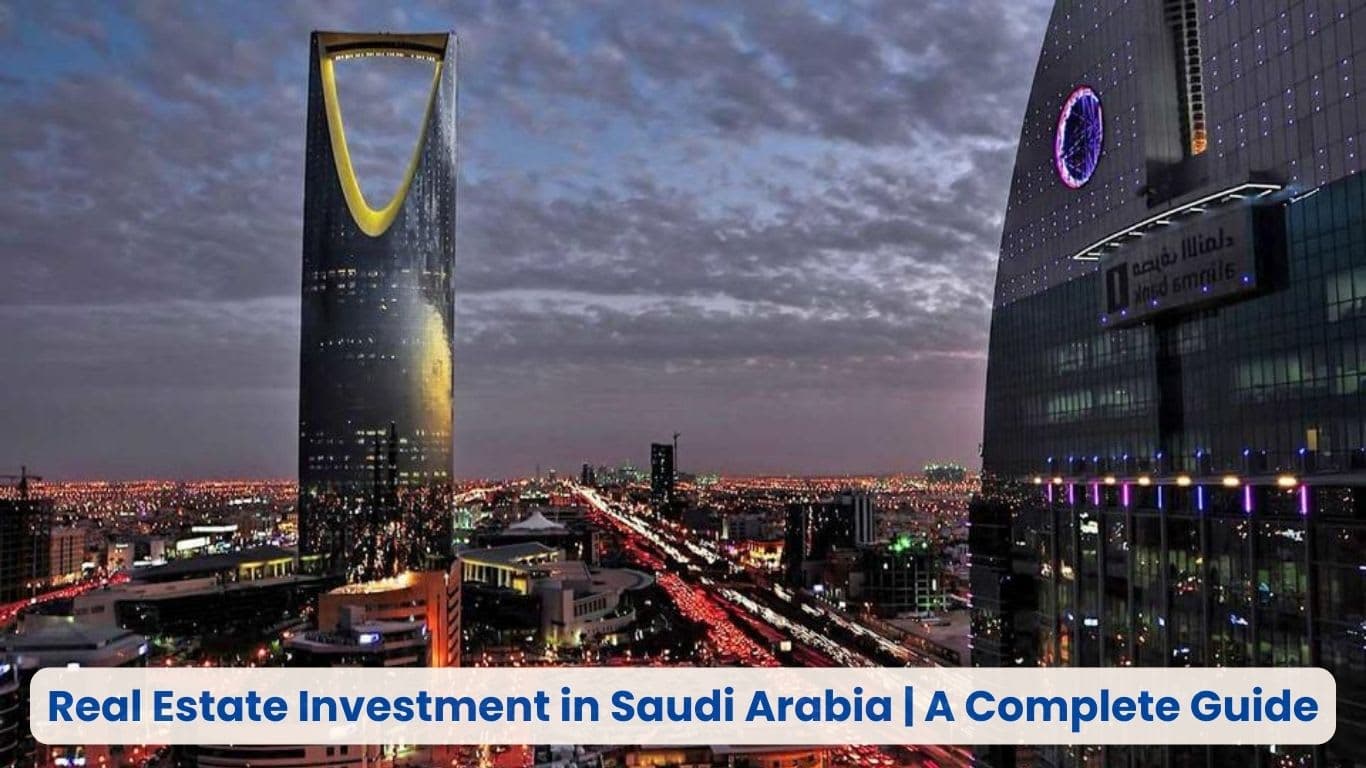
Saudi Arabia’s property market is entering a more internationally accessible phase. Large-scale urban development, infrastructure investment, corporate expansion, tourism projects and the updated foreign-ownership framework have increased interest in residential, commercial and off-plan property across the Kingdom.
However, real estate investment in Saudi Arabia should not be approached as a guaranteed-growth opportunity. The performance of an individual property depends on its city, district, purchase price, ownership structure, property type, rental demand, operating costs and resale market.
A national property-market trend may provide useful context, but it cannot establish whether a specific apartment, villa, commercial unit or off-plan property represents a commercially reasonable investment.
This guide explains the Saudi real estate market in 2026, the current rules for non-Saudi investors, locations worth researching, property types, transaction costs, rental-yield calculations and the verification steps buyers should complete before transferring funds.
Quick Answer: Saudi Arabia may offer meaningful real estate opportunities, but investors should assess each property individually. Ownership eligibility, completed transactions, documented rental demand, service charges, licences, construction status and resale prospects should all be verified before buying.
Saudi Real Estate Investment: 2026 Snapshot
Key point | Current position |
|---|---|
Saudi Real Estate Price Index | Increased 1.3% annually in Q2 2026 |
Residential property sector | Increased 2.6% annually |
Commercial property sector | Declined 3.2% annually |
Foreign-ownership system | In force since January 22, 2026 |
Non-Saudi applications | Processed through Saudi Properties |
Real Estate Transaction Tax | Generally 5%, subject to exemptions |
Non-Saudi disposition fee | 2% in specified locations; 0% elsewhere and in listed cases |
Off-plan verification | Through REGA’s Off-Plan Sales and Lease system |
Broker verification | Through the REGA FAL licence enquiry |
Advertisement verification | Through the REGA advertisement licence enquiry |
The headline figures show why the Saudi market cannot be treated as a single uniform investment category. Residential land, apartments, villas, commercial assets and agricultural property followed significantly different trends during the same quarter.
Saudi Real Estate Market Performance in 2026
The official Real Estate Price Index published by the General Authority for Statistics recorded an annual increase of 1.3% in Q2 2026 compared with Q2 2025.
The overall increase was driven by higher residential and agricultural property prices, while the commercial property sector declined.
According to the GASTAT Real Estate Price Index for Q2 2026, annual changes included:
Property category | Annual change in Q2 2026 |
|---|---|
Overall Real Estate Price Index | +1.3% |
Residential property | +2.6% |
Residential land | +6.3% |
Apartments | +1.1% |
Residential floors | +0.4% |
Villas | −9.7% |
Commercial property | −3.2% |
Commercial land | −3.5% |
Commercial buildings | −0.6% |
Exhibitions and shops | +0.4% |
Agricultural property | +11.3% |
Regional performance also varied. Riyadh Region recorded an annual increase of 4.2%, while Makkah Region increased by 0.4%. Madinah Region declined by 4.5%, Qassim declined by 5.4%, and Hail recorded a decline of 10.1%. GASTAT lists the Real Estate Price Index for Q2 2026 among its July 2026 official publications.
These figures are important because they show that a rising national index does not mean every Saudi property is increasing in value.
An apartment in one Riyadh district may perform differently from a villa in another district. A logistics asset in Dammam cannot be evaluated using the same assumptions as a residential apartment in Jeddah.
Market Data Note: Real estate indices measure historical price movements across categories and regions. They are not forecasts and do not establish the current value or future return of an individual property.
Which property type & region do you prefer?
Select property type and preferred city in Saudi Arabia.
Why Investors Are Researching Saudi Real Estate
Saudi Arabia’s property sector is being influenced by several long-term developments:
Population and household formation in major cities
Government and corporate activity in Riyadh
Residential development across expanding urban districts
Tourism and hospitality development along the Red Sea
Industrial and logistics demand in the Eastern Province
New transport, entertainment and mixed-use projects
Increased regulatory access for eligible non-Saudi buyers
Greater digitisation of ownership, registration and property verification
These developments may support selected cities and property types, but they do not remove investment risk.
Investors still need to determine whether:
The asking price is supported by completed transactions
The property is legally available to the buyer
Rental demand is documented
Service charges are commercially reasonable
The development is properly licensed
The property can be resold within the intended investment period
The ownership right supports the intended use
The complete investment cost has been calculated
Statements such as “guaranteed appreciation”, “assured rental yield” or “best investment opportunity” should not replace independent due diligence.
Can Foreigners Invest in Saudi Real Estate in 2026?
Yes. Saudi Arabia’s Real Estate Ownership System for Non-Saudis officially entered into force on January 22, 2026.
The system applies to eligible residents, non-residents, companies and other qualifying entities. Applications are processed through the official Saudi Properties portal. Residents may apply using their Iqama, while the process for non-residents begins with obtaining an approved digital identity.
The current framework is based on approved geographical zones rather than unrestricted permission to purchase property anywhere in Saudi Arabia.
Eligibility may depend on:
Whether the buyer is resident or non-resident
Whether the applicant is an individual, company, fund or another entity
The property’s geographical zone
The type of ownership or real right available
Maximum foreign-ownership percentages
Permitted usufruct duration
Conditions attached to the location
The intended use of the property
Buyers should review the official Saudi Properties portal and confirm eligibility before paying a reservation amount.
For a more detailed explanation, read the Saudi Real Estate Investment and Foreign Ownership Guide 2026.
Rules for Non-Saudi Residents
A legally resident non-Saudi natural person may, subject to the applicable regulations, own one property outside the designated geographical zones for use as a residence.
This residential exception does not apply in Makkah or Madinah.
The buyer must still complete the required application and registration procedures. The exception should not be interpreted as automatic permission to purchase any property without regulatory verification.
The active ownership law establishes the one-residence exception for legally resident non-Saudi natural persons and excludes Makkah and Madinah from that exception.
Rules for Non-Resident Foreign Buyers
Before purchasing property or acquiring another real right, a non-resident non-Saudi natural person must:
Obtain an approved digital identity
Open a Saudi bank account in the applicant’s name
Obtain a Saudi contact number linked to the digital identity
Complete the ownership application through the official portal
Meet the requirements attached to the relevant geographical zone
These requirements are specified in the active Executive Regulations.
Rules for Non-Saudi Companies
A non-Saudi company without an existing presence in Saudi Arabia must first complete the relevant registration with the Ministry of Investment.
REGA states that qualifying companies must register through Invest Saudi, obtain a Unified Number 700 and then complete the ownership process through Saudi Properties.
Additional banking, ownership-disclosure and legal-representative requirements may apply depending on the applicant’s corporate structure.
Property Ownership in Makkah and Madinah
For natural persons, the right to own property or acquire other real rights within approved geographical zones in Makkah and Madinah is limited to Muslims.
Different provisions apply to certain Saudi-incorporated companies, listed companies, licensed investment funds and other regulated entities.
A property being promoted internationally does not prove that it is legally available to every foreign buyer. Eligibility should be confirmed before any payment is made.
Explore the Makkah property market and Madinah property market.
Registration and Legal Validity
A non-Saudi’s ownership or other real right becomes legally valid after it has been registered with the Real Estate Registry.
The Executive Regulations also require financial transactions connected with non-Saudi ownership, acquisition and disposal to be completed through electronic payment methods.
Receiving a sales agreement, paying a reservation amount or completing the purchase price should not be confused with completing official registration.
Buying Saudi property does not automatically provide citizenship, residency or immigration privileges. Property rights and residency rights operate under separate legal frameworks.
PROPERTY PREFERENCES CTA
Property Preferences
Which property type and city are you interested in?
Select a property type and preferred Saudi city to view relevant listing options.
Property Types
Apartment
Villa
Townhouse
Commercial Property
Preferred Cities
Riyadh
Jeddah
Makkah
Madinah
Al Khobar
Button: Continue to Budget
Best Cities for Real Estate Investment in Saudi Arabia
There is no single city that is automatically the best place to invest.
The appropriate location depends on:
Investment budget
Buyer eligibility
Property type
Investment horizon
Required rental income
Tolerance for construction risk
Resale expectations
Demand within the specific neighbourhood
Riyadh Real Estate Investment
Riyadh is Saudi Arabia’s primary government, corporate and employment centre. Its property market includes apartments, villas, residential land, offices, retail property and major mixed-use developments.
Riyadh Region recorded a 4.2% annual price increase in Q2 2026, according to GASTAT. However, this regional figure should not be applied automatically to every district or property type.
Investors researching Riyadh should compare:
Completed sales within the same neighbourhood
Rents for genuinely comparable properties
Existing and future supply
Building age and physical condition
Annual service charges
Road and public transport access
Distance from employment centres
Resale activity in the same price segment
Planned developments surrounding the property
Availability of schools, retail and healthcare
Explore the Riyadh property market, new projects in Riyadh and apartments for sale in Saudi Arabia.
Jeddah Real Estate Investment
Jeddah offers residential, commercial, logistics, hospitality and waterfront-related opportunities.
Demand may be influenced by:
Local employment
Port and logistics activity
Established residential communities
Tourism
Waterfront development
Mixed-use projects
Access to commercial districts
Future residential and hospitality supply
Waterfront branding or proximity to a major development does not automatically justify a higher purchase price.
Investors should examine:
Completed transactions
Documented rental evidence
Building quality
Building age
Accessibility
Service charges
Future development supply
Applicable foreign-ownership zone
Coastal maintenance requirements
Property-management costs
Explore the Jeddah property market and new projects in Jeddah.
Dammam and Al Khobar Investment
Dammam and Al Khobar may be relevant for investors researching:
Residential rental property
Corporate housing
Offices
Warehouses
Logistics property
Industrial-linked assets
The Eastern Province has different demand drivers from Riyadh and Jeddah because corporate, industrial, logistics and energy-related activity may have a larger influence.
Commercial investors should review:
Permitted property use
Operating approvals
Tenant quality
Lease duration
Renewal provisions
Maintenance responsibilities
Future capital expenditure
Resale liquidity
Vacancy in comparable properties
Research the Dammam property market and Al Khobar area guide.
Makkah and Madinah Investment
Makkah and Madinah have distinct residential, hospitality, religious and regulatory characteristics.
Investment analysis should consider:
Buyer eligibility
Approved foreign-ownership zones
Distance from key destinations
Seasonal and long-term demand
Operating restrictions
Property-management requirements
Service and maintenance charges
Transport access
Hotel and residential supply
Resale restrictions or limited buyer eligibility
Foreign natural persons should confirm both religious eligibility and geographical-zone conditions before evaluating a purchase.
Explore properties and developments in Makkah and the Madinah property market.
NEOM and Saudi Giga-Projects
NEOM, Diriyah, Qiddiya and Red Sea developments receive significant international attention. However, the visibility of a master development does not mean every phase is available for private investment or foreign ownership.
Before considering a property associated with a major development, verify:
The legal developer
The authorised seller
The exact project phase
Construction status
Available ownership structure
Foreign-buyer eligibility
Payment terms
Delivery schedule
Delay provisions
Refund and cancellation rights
Resale or assignment restrictions
Expected service charges
Whether the unit is officially available for sale
Explore the NEOM area guide, Diriyah developments and Red Sea property market.
Residential, Commercial or Off-Plan: Which Is Better?
The appropriate property category depends on the investor’s objective, available capital, experience and risk tolerance.
Property type | Potential use | Main risks |
|---|---|---|
Completed apartment | Long-term rental or occupation | Vacancy, service charges and building condition |
Villa or townhouse | Family occupation or long-term rental | Maintenance cost, pricing and resale liquidity |
Residential land | Development or long-term holding | Planning controls, infrastructure and carrying costs |
Office or retail unit | Commercial leasing | Tenant demand, permitted use and lease concentration |
Warehouse or logistics property | Industrial or logistics income | Operational approvals and tenant strength |
Off-plan property | Staged payments and new-project exposure | Construction, delivery, specification and cancellation risk |
Completed Residential Property
A completed apartment or villa may provide:
An opportunity to inspect the property
Existing transaction evidence
Documented rental history
Earlier rental-income potential
Lower construction risk
Greater visibility regarding service charges
A clearer assessment of the surrounding area
However, completed properties may still carry maintenance, vacancy, service-charge and resale risks.
Browse properties for sale in Saudi Arabia and villas for sale in Saudi Arabia.
Commercial Property
Commercial property may include offices, retail units, hotels, warehouses and commercial land.
The investment should be assessed using:
Tenant demand
Permitted commercial use
Lease length
Tenant credit quality
Vacancy risk
Fit-out responsibilities
Operating costs
Exit liquidity
Licence and approval requirements
Concentration of income in one tenant
Browse commercial properties in Saudi Arabia.
Off-Plan Property
Off-plan property may provide staged payment terms and access to a new development, but it carries additional risks.
These can include:
Construction delays
Changes in specifications
Developer financial risk
Revised completion dates
Cancellation restrictions
Limited resale before completion
Differences between marketing material and the completed unit
Changes to surrounding development plans
During the project-marketing licence period, reservation payments must not exceed 5% of the unit value and must be deposited into the designated escrow account.
Browse new property projects in Saudi Arabia and verify relevant projects through the REGA Off-Plan Sales and Lease platform.
BUDGET CTA
Budget Range
What is your approximate property budget?
Choose a budget range to narrow down relevant property options.
Up to SAR 500K
SAR 500K–1M
SAR 1M–2M
SAR 2M+
What Does It Cost to Buy Property in Saudi Arabia?
The advertised property price represents only one part of the total investment cost.
Investors may need to budget for:
Purchase price
Reservation payment
Real Estate Transaction Tax
Legal review
Registration costs
Brokerage or authorised service charges
Mortgage valuation
Financing costs
Building service charges
Insurance
Furnishing
Repairs and maintenance
Property management
Vacancy
Tenant acquisition
Future disposal costs
Real Estate Transaction Tax
Saudi Arabia generally imposes Real Estate Transaction Tax at a rate of 5% on real estate transactions, subject to statutory exemptions and exclusions.
The current RETT law became effective on April 10, 2025.
Buyers should review the official ZATCA Real Estate Transaction Tax guidance and confirm:
Whether the transaction is taxable
Whether an exemption applies
The taxable transaction value
Registration requirements
Payment responsibility
Payment timing
Separate Non-Saudi Disposition Fee
The Non-Saudi Ownership Law provides for a separate REGA fee when a non-Saudi disposes of a real right over Saudi property.
Under the active Executive Regulations, the fee is 2% for dispositions involving property in:
Riyadh
Jeddah Governorate
Makkah
Madinah
The regulations provide a 0% rate for dispositions outside those locations and for specified cases, including certain inheritance divisions, court-ordered transfers, public-interest acquisitions and other qualifying transactions.
This is a disposition fee. It should not be described as an additional purchase tax payable by every foreign buyer.
RETT and the non-Saudi disposition fee are separate legal charges. The treatment of a particular transaction should be confirmed before signing.
What is your approximate budget?
Narrow down property options based on your target budget.
How to Buy an Investment Property in Saudi Arabia
1. Define the Investment Objective
Decide whether the objective is:
Long-term rental income
Owner occupation
Commercial use
Capital preservation
Development exposure
Long-term appreciation
The objective will influence the city, property type, financing structure and investment period.
2. Confirm Buyer Eligibility
A non-Saudi buyer should verify:
Applicant category
Residency status
Geographical-zone eligibility
Permitted ownership type
Property-use conditions
Applicable ownership percentage or duration
This should be completed before paying a reservation amount.
3. Compare Completed Transactions
Do not rely only on online listing prices or developer projections.
The most relevant comparable properties should have a similar:
Location
Property type
Size
Age
Condition
View
Ownership structure
Completion status
Service-charge structure
Access to amenities
4. Verify the Seller and Property
Confirm that:
The seller owns the registered right
The person signing has authority to sell
The title details match the property
There are no undisclosed ownership disputes
The location and area are correctly recorded
The property use matches applicable approvals
Any registered restrictions are understood
Use REGA’s real estate enquiry services where applicable.
5. Verify the Broker’s FAL Licence
The FAL licence is the official authorisation for individuals and establishments engaging in regulated real estate brokerage activities.
Use the REGA FAL licence enquiry to verify the broker or establishment.
6. Verify the Advertisement Licence
A professionally designed advertisement does not prove that a property is genuine or legally authorised.
Use the REGA real estate advertisement licence enquiry to review the licence status.
7. Verify an Off-Plan Project
Before purchasing off-plan property, verify:
Developer qualification
Project licence
Authorised seller
Project phase
Escrow arrangements
Construction status
Reservation rules
Delivery date
Delay provisions
Cancellation and refund clauses
Use the REGA Off-Plan Sales and Lease platform to review relevant project information.
8. Calculate the Complete Investment Cost
Include:
Purchase price
RETT
Registration expenses
Financing costs
Service charges
Furnishing
Maintenance
Property management
Vacancy
Resale costs
Any applicable non-Saudi disposition fee
9. Review the Contract
The written agreement should clearly identify:
Buyer and seller
Property
Purchase price
Payment schedule
Completion date
Specifications
Service charges
Delay remedies
Cancellation conditions
Refund conditions
Registration responsibility
Resale or assignment restrictions
Verbal promises should not be relied upon unless they are included in the written contract.
10. Use Approved Payment Channels
Financial transactions connected with non-Saudi property ownership, acquisition and disposal must be completed through electronic payment methods.
The beneficiary account should match the authorised seller, developer or project arrangement.
Do not transfer property funds to an unrelated personal bank account.
11. Complete Official Registration
A non-Saudi’s ownership or other real right becomes legally valid upon registration with the Real Estate Registry.
Receiving a contract or making full payment should not be confused with completing the official registration process.
How to Calculate Saudi Property Rental Yield
Gross rental yield is calculated as:
Annual rent ÷ property purchase price × 100
For example:
Property purchase price: SAR 1,000,000
Annual rental income: SAR 60,000
Gross rental yield:
SAR 60,000 ÷ SAR 1,000,000 × 100 = 6%
However, gross yield does not account for:
Vacancy
Service charges
Maintenance
Repairs
Property management
Insurance
Furnishing
Financing
Transaction costs
A more useful calculation is:
Net annual rental income ÷ total invested cost × 100
Example:
Annual rent: SAR 60,000
Annual vacancy and operating costs: SAR 12,000
Net annual income: SAR 48,000
Total invested cost: SAR 1,070,000
Net rental yield:
SAR 48,000 ÷ SAR 1,070,000 × 100 = approximately 4.49%
This calculation provides a more realistic assessment than using gross rent alone.
Rental assumptions should be supported by documented comparable contracts rather than online asking rents.
Saudi Arabia’s regulated residential and commercial rental ecosystem includes the REGA Ejar platform.
Due-Diligence Checklist for Saudi Property Investors
Before transferring funds, confirm that:
The buyer is eligible to acquire the property
The property falls within an eligible ownership zone
The available ownership right is understood
The seller holds the registered title or authority to sell
The broker’s FAL licence is valid
The advertisement licence is active
The off-plan licence is valid, where applicable
The property information matches official records
The payment account belongs to the authorised beneficiary
The contract includes all agreed terms
The full investment cost has been calculated
The property has been technically inspected where appropriate
Service charges have been verified
Rental assumptions are supported by evidence
Registration will be completed through the official system
Fraud-Prevention Note: Independently confirm bank details through official and verified contact information. Do not rely only on payment instructions forwarded through WhatsApp, email or social media.
PROPERTY INFORMATION CTA
Property Information Request
How would you like to receive property information?
Choose your preferred channel for receiving listing details, prices, payment plans and availability information.
Phone Call
WhatsApp
Email
Main Risks of Saudi Real Estate Investment
Ownership and Regulatory Risk
A property marketed to foreign buyers may not be legally available to every non-Saudi applicant.
Eligibility depends on:
Buyer category
Residency status
Property location
Geographical zone
Type of real right
Regulatory conditions
Market and Pricing Risk
The official Q2 2026 data showed annual increases in residential land and apartments but declines in villas and commercial property.
A rising national or regional index does not protect an individual property from:
Overpricing
Weak demand
Falling values
Excess supply
Limited resale activity
Construction and Delivery Risk
Off-plan projects may experience:
Delays
Specification changes
Contractor problems
Financing difficulties
Revised handover dates
Cancellation or restructuring
Rental and Vacancy Risk
Advertised rent is not guaranteed.
Actual income may be reduced by:
Vacancy
Tenant turnover
Service charges
Repairs
Management costs
Rent-collection issues
Service-Charge Risk
Properties with extensive shared facilities may have significant annual charges.
Investors should request:
Current service-charge schedule
Historical increases
Expected future charges
Sinking-fund information
Responsibility for major repairs
Information about unpaid charges or liabilities
Resale and Liquidity Risk
Some properties may take longer to sell because of:
High price
Specialist use
Limited buyer demand
Location
Ownership restrictions
Incomplete development
Oversupply
High service charges
Financing Risk
Financed investors should assess:
Interest or profit rates
Deposit requirement
Monthly instalments
Early-settlement conditions
Refinancing risk
Currency-conversion costs
Concentration Risk
Placing most available capital in one development, city or property type increases exposure to project-specific and local-market risk.
How Real Estate Saudi Supports Property Research
Real Estate Saudi is an independent property portal that helps users discover and research Saudi properties, projects, developers and locations.
Users can:
Browse new property projects
Research Saudi developers
Compare Saudi areas and cities
Explore commercial property
Submit an enquiry about an available listing
Read market and ownership guides
Real Estate Saudi does not replace REGA, Saudi Properties, ZATCA, the Real Estate Registry or qualified legal, financial, tax and technical professionals.
Prices, availability, payment plans, ownership eligibility and project details may change and should be independently verified.
How would you like to be contacted?
Choose your preferred channel for a private consultation.
Official Sources and Verification
REGA: Non-Saudi Property Ownership System entered into force
Saudi Properties portal
Talk to Our Real Estate Experts
Get real-time insights on investment options, commercial properties, and market guidelines.
Frequently Asked Questions
It may be suitable for certain investors, but performance depends on the property’s purchase price, location, legal ownership structure, rental demand, operating costs and resale market.
Eligible non-Saudis may own property or acquire other real rights within the active geographical-zone framework. The exact right depends on the applicant category, property location and conditions applicable to that zone.
Subject to the Executive Regulations, a legally resident non-Saudi natural person may own one property outside the designated geographical zones for use as a residence. This exception does not apply in Makkah or Madinah.
For natural persons, permitted ownership within approved zones in Makkah and Madinah is limited to Muslims. Different provisions apply to qualifying companies, listed companies, licensed funds and other regulated entities.
No. Property ownership does not automatically provide residency, citizenship or immigration privileges.
Real Estate Transaction Tax is generally imposed at 5%, subject to statutory exemptions and exclusions.
It is a separate fee charged by REGA when a non-Saudi disposes of a real right in Riyadh, Jeddah Governorate, Makkah or Madinah. The regulations set a 0% rate for dispositions outside those locations and for listed exempt cases. It should not be described as an additional 2% purchase tax on every foreign buyer.
Use REGA’s advertisement licence enquiry and verify the licence status using the available advertisement, contract or ownership-document information.
Verify the developer, project licence, authorised seller, escrow arrangements, construction status, reservation rules, completion schedule and refund provisions through REGA’s Off-Plan Sales and Lease services.
There is no single best city for every investor. Riyadh, Jeddah, Dammam, Al Khobar, Makkah, Madinah and Saudi destination developments have different prices, demand drivers, ownership conditions and risks.
No. The Q2 2026 index showed growth in some categories and declines in others, including annual declines in villas and commercial property.
Saudi Arabia offers a broad and evolving property market supported by urban development, corporate expansion, tourism, logistics and a clearer regulatory route for eligible non-Saudi buyers. The latest market data also confirms that performance is not uniform. Residential land and apartment prices increased annually in Q2 2026, while villas and commercial property declined. Investors should therefore avoid making decisions based only on national growth narratives, major project announcements or promotional return projections. A stronger investment decision begins with: Verifying buyer eligibility Checking geographical-zone conditions Reviewing completed transactions Confirming documented rental demand Calculating net rather than gross returns Budgeting for the complete investment cost Verifying brokers, advertisements and off-plan licences Completing independent legal and technical due diligence Saudi real estate may offer meaningful opportunities, but the quality of the investment ultimately depends on the individual property, legal ownership right, purchase price, operating costs, income potential and long-term resale prospects.
