
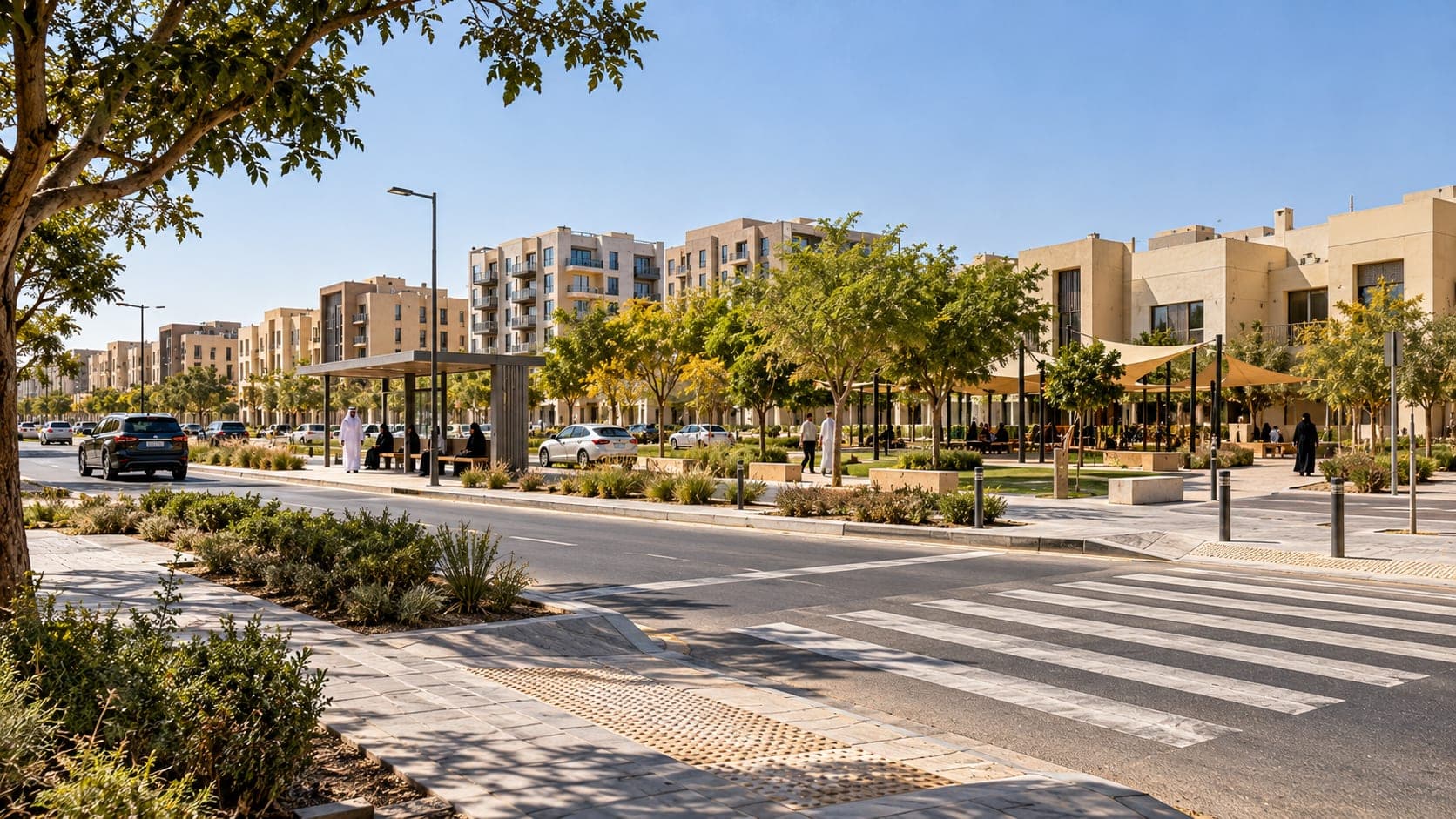
Saudi Urban October 2026, a programme led by Saudi Arabia's Ministry of Municipalities and Housing and King Saud University, was announced to begin on 25 October 2026, with specialised discussions listed for 27 October in Riyadh.
The initiative brings together government officials, academics, urban-planning professionals and international development partners to examine housing needs, city governance, land management and quality of life in Saudi cities.
National Housing Company (NHC) is participating as a programme partner, while the United Nations Human Settlements Programme (UN-Habitat) and the United Nations Development Programme (UNDP) are involved through cooperation with the Ministry.
Official UN-Habitat programme material also identified a proposed launch of the Saudi Urban Lab, a collaborative initiative being established through the Ministry and King Saud University.
However, a separate official post-event statement confirming that the Lab's launch was completed was not identified during this review. Its detailed governance, funding, permanent location, research programme and operating arrangements remain unconfirmed.
Saudi Urban October 2026: Quick Facts
Detail | Verified information |
|---|---|
Programme | Saudi Urban October 2026 |
Arabic programme name | أكتوبر الحضري 2026 |
SPA announcement | 24 October 2026 |
Ministry announcement | 25 October 2026 |
Programme opening | Announced for 25 October 2026 |
Specialised sessions | Listed for 27 October 2026 |
Host city | Riyadh |
Session format | Online participation confirmed for a KSU session |
Physical venue | Not independently confirmed |
Lead organisations | Ministry of Municipalities and Housing; King Saud University |
Programme partner | National Housing Company |
UN partners | UN-Habitat and UNDP |
Patronage | Minister of Municipalities and Housing |
Main subject areas | Housing, urban governance, land management, quality of life |
Saudi Urban Lab | Identified as an initiative being established |
Lab launch completion | Not independently verified |
Lab legal status | Not disclosed |
Lab budget and funding | Not disclosed |
Lab leadership and staffing | Not disclosed |
Number of panel themes | Four |
Total sessions and speakers | Not fully disclosed |
Attendance | Not disclosed |
Signed event agreements | Not confirmed |
New property developments | Not announced |
Land allocations | Not announced |
Investment value | Not disclosed |
Final recommendations | Not independently verified |
Separate innovation hackathon | Scheduled for 29 October 2026 |
Status | Programme announced; post-event outcomes pending verification |
Based on Ministry, Saudi Press Agency, King Saud University and UN-Habitat programme information reviewed on 28 October 2026.
Which property type & region do you prefer?
Select property type and preferred city in Saudi Arabia.
What Is Saudi Urban October 2026?
Saudi Urban October is a knowledge-sharing and urban-development programme intended to connect government, university and professional expertise around the future of Saudi cities.
The Ministry of Municipalities and Housing's official programme announcement explains that the initiative explores changing housing requirements, city-management priorities, efficient use of land and infrastructure, and neighbourhoods that better respond to residents' needs.
The programme forms part of Saudi Arabia's participation in the wider international Urban October initiative.
According to UN-Habitat's official Urban October overview, the international campaign encourages discussions about sustainable urbanisation, housing and the challenges facing cities.
The Saudi programme builds on that framework through conversations involving urban policymakers, academic researchers and development practitioners.
It is important to distinguish this initiative from a property-development announcement.
The programme does not itself establish a new residential community, approve a masterplan or authorise a property sale.
Its immediate purpose is dialogue, knowledge exchange and the exploration of approaches that may inform future urban planning.
When Did the Programme Take Place?
Official information identifies several dates associated with different activities.
Date | Activity | Verified position |
|---|---|---|
24 October 2026 | Saudi Press Agency announcement | Published |
25 October 2026 | Wider Saudi Urban October programme | Announced opening |
27 October 2026 | Specialised urban-planning discussions | Scheduled; online session access published |
29 October 2026 | Urban Innovation Hackathon | Separately scheduled |
The Saudi Press Agency's 24 October announcement stated that the Ministry and King Saud University would begin the programme the following day.
UN-Habitat subsequently identified 27 October as the date of the specialised discussions.
These dates are not contradictory. The first concerns the wider programme opening, while the second identifies a particular discussion activity.
King Saud University's College of Architecture and Planning also published details of a 27 October session beginning at 7:30 PM, with an online participation link.
The university information supports the remote participation format. However, the published geographical reference to Riyadh does not independently establish a physical conference venue.
The 29 October hackathon is a separate scheduled activity and had not yet occurred as of this article's review date.
Who Organised and Supported the Programme?
The programme combines public-sector responsibilities, academic research and practical development experience.
Organisation | Verified role | What should not be assumed |
|---|---|---|
Ministry of Municipalities and Housing | Government programme lead and Urban Lab collaborator | New regulations or approvals |
King Saud University | Academic organising partner and research collaborator | Regulatory or planning-approval authority |
National Housing Company | Programme partner contributing development experience | New construction award |
UN-Habitat | International urban-development cooperation and support | Unannounced funding |
UNDP | International development cooperation and support | A new financial commitment |
The Ministry's announcement identifies NHC as contributing practical experience in residential community development.
King Saud University provides the academic setting for examining urban-development challenges, research methods and potential solutions.
The involvement of UN-Habitat and UNDP creates opportunities for international knowledge exchange.
However, none of these roles automatically establishes binding project contracts or investment commitments.
Saudi Urban October 2026: Four Main Themes
The programme focuses on four interconnected areas of urban policy and development.
1. Housing, Growth and Future Communities
The first theme addresses how changing household requirements and urban growth may influence future residential communities.
Its central concern is not simply the number of homes being constructed, but whether housing responds to residents' needs and connects effectively with surrounding services.
Potential discussion subjects include housing choices, access to amenities and the relationship between residential development and city expansion.
For wider context, Real Estate Saudi's affordable housing in Saudi Arabia guide explains how household finances, available housing options and location can influence accessibility.
The programme did not disclose a new housing-unit allocation or construction budget.
2. City Management and Urban Governance
This theme examines how authorities and institutions manage growing cities.
It includes coordination between organisations, urban service delivery, administrative responsibilities and decision-making processes.
Better governance can potentially help align planning decisions with infrastructure needs and the circumstances of different communities.
However, a discussion about governance does not establish a new municipal law or redistribute existing government authority.
3. Land Management and Urban Development
The third theme considers how urban land can be managed more efficiently.
Topics include land use, infrastructure planning, urban expansion and identifying priorities for future development.
These matters affect the relationship between housing density, road networks, utilities and available public services.
Real Estate Saudi's Saudi housing land development rules consultation report provides separate context on a specific regulatory proposal concerning municipal land.
That consultation is distinct from Urban October and should not be reported as a decision arising from the programme.
4. Quality of Life and Integrated Neighbourhoods
The fourth theme addresses how neighbourhood design affects everyday life.
It considers access to public spaces, local services, mobility and the needs of different population groups.
Integrated neighbourhood planning can involve locating housing alongside schools, healthcare, shops, community facilities and transport connections.
However, the event material does not establish that measurable improvements in these areas have already occurred.
What Is the Saudi Urban Lab?
The Saudi Urban Lab is identified in the official programme as a collaborative initiative being established under the Ministry of Municipalities and Housing in partnership with King Saud University.
The UN-Habitat Saudi Urban October event page describes the intended launch and participation of UN-Habitat and UNDP through the Ministry's United Nations partnership.
The initiative is intended to create an environment for connecting urban research, professional knowledge, policy questions and practical innovation.
The programme also aims to involve different institutions and urban stakeholders in shaping the Lab's future agenda.
However, the official material reviewed does not provide a complete legal or operational profile.
It does not establish a registered legal entity, independent management board, dedicated budget, permanent office, staffing structure or operational project portfolio.
The English name Saudi Urban Lab is confirmed on UN-Habitat's programme page. A separately verified formal Arabic legal name was not identified.
The Lab should therefore be described as a collaborative urban-knowledge initiative, rather than a property developer, regulator, construction company or new city.
Was the Saudi Urban Lab Officially Launched?
A completed formal launch has not been independently verified as of 28 October 2026.
UN-Habitat's event description used forward-looking language indicating that the 27 October programme would launch the Saudi Urban Lab.
A separately listed hackathon page describes the Lab as established through Ministry–KSU collaboration, but does not provide a dated post-event launch record, legal-establishment document or confirmation of a completed inauguration.
No separate post-event confirmation from the Ministry, King Saud University, UN-Habitat or UNDP was identified during this review.
This does not mean the collaboration is inactive or that the launch did not take place.
It means that the available evidence is insufficient to report the planned launch as a verified completed event.
How Does the Programme Address Housing?
The programme's housing discussions examine how cities can respond to changing residential requirements.
This involves considering households within the wider neighbourhood rather than treating homes as isolated buildings.
Residential planning can benefit from understanding population characteristics, household needs, access to services and infrastructure capacity.
Research can also help identify where housing provision and urban services may be poorly aligned.
The Ministry's statement describes an objective of connecting the needs of families within their homes to the services, amenities and opportunities available throughout the city.
However, the announcement did not identify new approved residential projects, beneficiary numbers or construction commitments.
How Does It Address Land Management?
Urban land management is important because development depends on more than the availability of vacant plots.
Road access, water, electricity, drainage, public services and planning permissions can determine how effectively land can be used.
The programme highlights the need to improve land and infrastructure efficiency.
It also considers how planning priorities should respond to population change and urban expansion.
For broader background, Real Estate Saudi's urban development in Saudi Arabia guide discusses the relationship between infrastructure, city planning and residential growth.
However, the October programme does not itself establish new land-use classifications, zoning changes or government land releases.
The Role of Data in City Management
The Ministry's announcement specifically identifies the use of data to improve city management and help determine priorities.
Urban data can support understanding of population distribution, housing demand, infrastructure provision and access to public services.
Authorities and researchers may use relevant evidence to evaluate where further investment or service improvements should be considered.
Academic institutions can contribute analytical methods and independent research to such discussions.
However, the October programme does not confirm the introduction of a new nationwide urban database, digital monitoring platform or compulsory data-sharing system.
Any operational system would require its own governance, implementation and applicable legal arrangements.
Integrated Neighbourhoods and Quality of Life
The programme places considerable emphasis on the relationship between housing and the wider urban environment.
A neighbourhood may contain suitable homes but still face challenges if essential services are difficult to reach.
Access to schools, healthcare, public spaces and transport can therefore influence residents' everyday experience.
Integrated neighbourhood design seeks to consider these needs together.
The programme also recognises that communities contain people with different requirements, including families, older residents and people with mobility constraints.
However, the discussions do not prove that travel times, accessibility or neighbourhood satisfaction have measurably improved.
King Saud University and the 27 October Discussions
King Saud University's academic role extends beyond being named as a programme partner.
Its official College of Architecture and Planning session notice identified the following scheduled speakers for 27 October:
Khalid Al-Ghamlas, Undersecretary for Urban Planning and Lands at the Ministry of Municipalities and Housing.
Professor Abdulaziz Al-Dughaishim, Vice President for Projects at King Saud University.
Dr Anas Al-Mughairy, Director General of the Arab Urban Development Institute.
The university listed Dr Ziyad Al-Hamdan as session moderator.
The notice specified 7:30 PM and provided an online attendance link.
These details establish the advertised programme and scheduled participants, but the notice is not a post-event attendance report.
The official UN-Habitat session page on the future of Saudi cities describes three perspectives: national policy, academic research and practical experiences across Arab cities.
The objective was to examine how planning tools and institutional collaboration can support better urban outcomes.
What Role Did National Housing Company Play?
NHC was identified as a programme partner contributing practical experience from residential and integrated-community development.
The Ministry's announcement specifically connects that experience with the programme's academic and professional discussions.
This provides an opportunity to examine how urban-planning concepts relate to real-world housing delivery.
NHC's official corporate website provides background on its residential destinations and development activities.
However, its participation does not establish that NHC received a new land allocation, development contract or investment commitment through Urban October.
Nor does it confirm that the company owns or operates the Saudi Urban Lab.
What is your approximate budget?
Narrow down property options based on your target budget.
Relationship With UN-Habitat and UNDP
UN-Habitat and UNDP were identified as cooperating organisations under the Ministry's United Nations partnership framework.
Their participation connects the programme with wider experience in spatial planning, institutional capacity and sustainable urban development.
The UNDP's official account of its earlier urban-planning partnership with the Saudi Ministry describes cooperation announced in 2023 involving spatial-planning reforms and urban-design capacity.
That earlier partnership included proposals for developing urban-lab capabilities.
However, it should not automatically be treated as proof of the current Saudi Urban Lab's legal establishment, funding or completed October 2026 launch.
The latest programme establishes cooperation, but does not disclose a new Lab-specific financial contribution from either UN organisation.
Urban Innovation Hackathon Scheduled for 29 October
A related but separately scheduled activity is the Urban Innovation Hackathon.
The official UN-Habitat hackathon listing identifies 29 October 2026 as the event date.
The two-day initiative invites King Saud University students to develop practical proposals addressing urban challenges.
The listed organisers are KSU's Architecture and Planning Department and STEM Innovation Center, working with the Ministry.
NHC and the Saudi Urban Lab are also identified as partners.
Its four tracks broadly correspond to housing, city management, land development and quality of life.
However, the hackathon had not taken place as of 28 October.
No winning projects, completed pilots or commercial developments should be attributed to it before confirmed results are published.
Were Any New Regulations Announced?
No new planning regulation was established in the reviewed Urban October programme announcements.
The discussions concern planning, policy and governance, but discussion is not equivalent to legal enactment.
No verified new zoning rule, building regulation, property tax, ownership entitlement or land-release programme was identified as a result of the sessions.
Readers can compare existing legal responsibilities through Real Estate Saudi's Saudi real-estate regulations guide.
Any actual regulatory change would require an appropriate decision from the competent authority and publication through official channels.
Were Any Property Projects or Investments Announced?
The reviewed programme information does not identify specific new real estate developments, approved housing projects or land-sale opportunities arising from Urban October.
No project-development value, construction budget, contractor award or housing-unit target was disclosed.
Similarly, the available announcements do not establish new financial commitments or binding development agreements attributable to the Saudi Urban Lab.
The programme should therefore be understood as an urban research and policy initiative, not a new property investment offering.
Potential Relevance for Developers and Residents
The discussions could provide useful perspectives for developers, planners, local authorities and researchers.
For developers, research into housing needs, infrastructure and service accessibility may help inform future project-design considerations.
For planners, stronger coordination between institutions may improve the quality of information available for decision-making.
Residents could eventually benefit if research findings are translated into effective urban policies or community improvements.
However, such outcomes depend on future implementation.
No direct benefit, construction timetable or measurable change in living conditions can yet be attributed to the programme.
Relationship With Saudi Vision 2030
The themes discussed during Urban October are relevant to Saudi Arabia's wider priorities concerning housing, urban services, sustainability and quality of life.
The official Saudi Vision 2030 website provides the national policy context for these objectives.
Research collaboration and improved planning may contribute to more effective urban development over time.
However, the Saudi Urban Lab should not automatically be described as a separately approved Vision 2030 programme or a funded national project.
Its formal status and implementation arrangements require specific confirmation.
What the Programme Does Not Mean
The Urban October announcements should not be interpreted as confirmation that a new city, housing project or government development fund has been launched.
They do not establish that land has been released for property buyers, construction contracts have been awarded or zoning rules have changed.
The Saudi Urban Lab is not confirmed as a regulator or planning-approval authority.
NHC's participation does not imply a new project award.
UN-Habitat and UNDP cooperation does not establish undisclosed funding.
The programme also does not demonstrate increases in property values, lower housing prices, reduced infrastructure costs or guaranteed investment returns.
Practical Checklist for Industry Readers
Before relying on any future announcement associated with the Saudi Urban Lab, readers should verify:
The official initiative name and launch status.
The organisations responsible for its operation.
Its legal mandate and governance arrangements.
Named leadership and staffing.
Confirmed funding sources and budget.
Published research priorities.
Any proposed urban pilot locations.
Project partners and contractual responsibilities.
Applicable planning and regulatory approvals.
Land ownership and allocation status.
Implementation milestones.
Published recommendations and follow-up reports.
Actual development contracts, if any.
Measured outcomes supported by official data.
The announcement of a research initiative alone should not be used as the basis for a property transaction or financial commitment.
Editorial Analysis
Saudi Urban October 2026 demonstrates an effort to bring together institutions that approach city development from different perspectives.
The Ministry contributes policy and municipal responsibilities, while King Saud University contributes academic expertise.
NHC brings practical experience associated with developing residential communities.
UN-Habitat and UNDP offer international perspectives on planning, sustainable urbanisation and institutional cooperation.
This combination may help connect research findings with challenges encountered in Saudi cities.
The programme's four themes are also closely related.
Housing demand cannot be evaluated independently of land availability, infrastructure capacity, city governance and residents' access to services.
An integrated approach may encourage decision-makers to consider these relationships more systematically.
However, the potential value of collaboration should not be confused with demonstrated outcomes.
The reviewed sources do not establish that the Saudi Urban Lab has already implemented pilot projects, changed regulations or delivered homes.
Nor do they confirm an operating budget or investment commitments.
A meaningful assessment of the Lab's eventual contribution will require published research, verified institutional arrangements and evidence of practical implementation.
For broader market context, Real Estate Saudi's analysis of future Saudi real estate trends considers how urban infrastructure, regulation and property supply interact.
The Lab's possible contribution remains a subject for future reporting rather than a verified property-market outcome.
Information Still Requiring Verification
The most significant unanswered question is whether the planned Saudi Urban Lab launch was formally completed on 27 October.
Further details are required concerning the initiative's legal establishment, governance, leadership, staffing, permanent location, website and operating budget.
The responsibilities of each institutional partner also require additional documentation.
Other outstanding matters include a detailed research agenda, potential pilot projects, geographic coverage, published recommendations and any implementation timetable.
The complete number of sessions, speakers and attendees has not been independently established.
No confirmed programme-specific agreements, property developments, land allocations, housing-unit targets or investment values were identified.
Future research will also need to establish whether any practical outcomes influence planning efficiency, housing provision, neighbourhood accessibility or urban service quality.
How would you like to be contacted?
Choose your preferred channel for a private consultation.
What Readers Should Monitor Next
Future official updates from the Ministry of Municipalities and Housing and King Saud University should clarify the Saudi Urban Lab's formal status.
UN-Habitat and UNDP publications may provide additional information about technical cooperation and programme outcomes.
NHC announcements could establish whether specific future partnerships or applied research activities proceed.
The results of the separately scheduled Urban Innovation Hackathon may identify student proposals with potential for further development.
However, selecting a proposal for further examination should not be confused with approving or delivering a permanent urban-development project.
Conclusion
Saudi Urban October 2026 brought renewed attention to the relationship between housing, city governance, land management and quality of life in Saudi Arabia.
The Ministry of Municipalities and Housing and King Saud University announced the programme's opening for 25 October, with specialised discussions listed for 27 October in Riyadh.
NHC participated as a programme partner, with UN-Habitat and UNDP involved through the Ministry's international cooperation framework.
The official programme also identified the Saudi Urban Lab as a collaborative initiative intended to support urban knowledge and innovation.
However, the formal completion of its planned launch, operating structure, funding and future project activities have not been independently confirmed.
Talk to Our Real Estate Experts
Get real-time insights on investment options, commercial properties, and market guidelines.
Frequently Asked Questions
Saudi Urban October 2026 is an urban-development and knowledge-exchange programme led by the Ministry of Municipalities and Housing and King Saud University. It brings together government representatives, researchers, practitioners and international partners to discuss housing, land management, city governance and quality of life. The programme is linked to the wider international Urban October initiative. Its immediate purpose is professional dialogue and potential urban innovation, rather than announcing completed real-estate developments.
The Saudi Press Agency announced the programme on 24 October 2026, with the wider initiative scheduled to begin on 25 October. UN-Habitat listed specialised discussions in Riyadh for 27 October, while King Saud University advertised a 7:30 PM online session that day. A separate Urban Innovation Hackathon was scheduled for 29 October. These dates describe different programme activities and should not be treated as one single conference.
The Ministry of Municipalities and Housing and King Saud University were identified as the programme's lead organisations. National Housing Company participated as a partner, contributing practical experience related to residential development and integrated communities. UN-Habitat and UNDP were involved through the Ministry's international cooperation framework. These organisations have different responsibilities, and participation does not automatically establish funding commitments, development contracts or new regulatory powers.
The programme addressed four main themes: housing, growth and future communities; city management and urban governance; land management and urban development; and quality of life and integrated neighbourhoods. Discussions focused on connecting residential needs with infrastructure, services, public spaces and mobility. The programme also examined the role of urban data and institutional collaboration. These subjects represent research and policy discussions rather than newly enacted planning regulations.
The Saudi Urban Lab is described by UN-Habitat as a collaborative urban-knowledge and innovation initiative being established through the Ministry of Municipalities and Housing and King Saud University, with UN-Habitat and UNDP support. It is intended to connect urban stakeholders and help shape future research and practical approaches. The reviewed information does not establish its final legal structure, budget, permanent office, management arrangements or operational project portfolio.
Official UN-Habitat programme material scheduled the Saudi Urban Lab launch in connection with the 27 October 2026 discussions. However, a separate post-event announcement confirming completion of the formal launch was not identified during the review conducted on 28 October. A related hackathon page describes the Lab as established through collaboration but does not independently confirm the launch ceremony. Its formal operating status and governance therefore require further verification.
King Saud University was a lead academic partner in the Saudi Urban October programme and the planned Urban Lab collaboration. Its College of Architecture and Planning published information about a specialised 27 October discussion and identified scheduled speakers from government, academia and urban-development organisations. The university's role connects research and academic expertise with practical planning questions. It does not establish that KSU acquired municipal regulatory powers or independent land-allocation authority.
UN-Habitat and UNDP were identified as international cooperation partners supporting the programme through their relationship with the Ministry of Municipalities and Housing. Their involvement provides opportunities for knowledge exchange, technical perspectives and cooperation on sustainable urban development. UN-Habitat also hosted official descriptions of the programme and its related activities. However, the reviewed announcements do not disclose a specific financial contribution, new funding agreement or committed investment amount for the Saudi Urban Lab.
The reviewed programme announcements did not establish new approved property developments, land allocations, construction contracts or planning regulations. The events focused on discussion, research and potential collaboration involving housing, governance, land management and quality of life. A proposed Urban Lab or research initiative is not itself a property-development approval. Any future regulatory change or construction project would require separate confirmation from the competent Saudi authority.
The Saudi Urban Lab could potentially improve cooperation between government authorities, academic researchers and development practitioners. Its proposed knowledge-sharing approach may help examine housing needs, urban growth, infrastructure priorities and neighbourhood design. Research and practical testing could eventually support more informed planning decisions. However, these are possible future benefits rather than confirmed achievements. The Lab's actual impact will depend on its governance, resources, research outputs and implementation of recommendations.
