
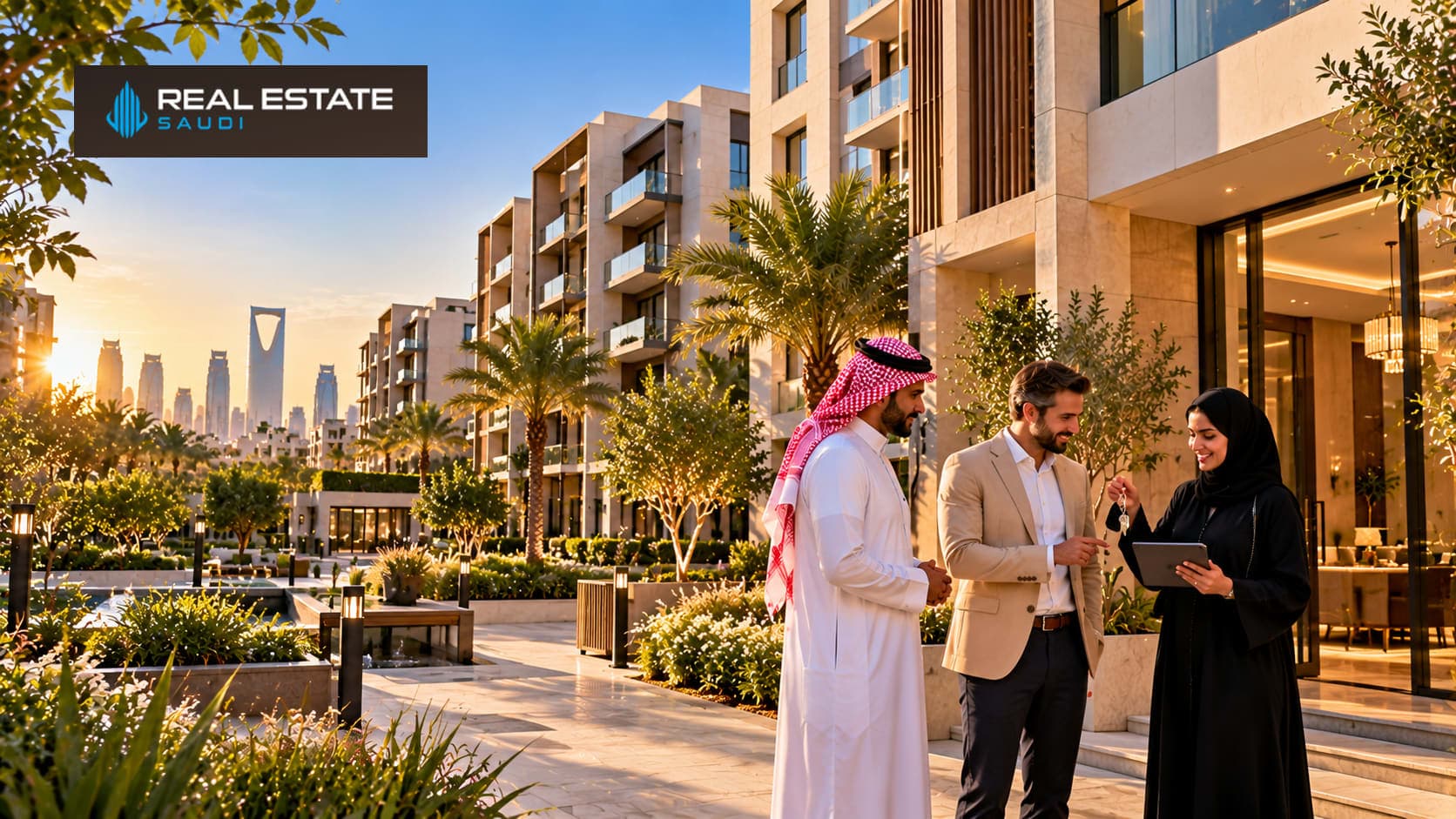
Ready Properties in Saudi Arabia are completed homes or commercial buildings that buyers can inspect before purchase and, once the legal transfer and any necessary preparations are complete, occupy or lease without waiting for construction. For investors seeking rental income or greater certainty about a building's condition, they can offer practical advantages over off-plan developments.
However, ready properties are not automatically safer, cheaper or more profitable. Older buildings may require expensive repairs, desirable locations may command premium prices, and rental income depends on actual tenant demand. Financing costs, transaction taxes and ownership restrictions can also influence the final investment outcome.
Saudi Arabia's property market continues to develop under Vision 2030, alongside evolving housing policies and foreign ownership regulations. The revised non-Saudi property ownership framework, effective January 22, 2026, is especially relevant to international purchasers.
This guide explains the advantages and disadvantages of completed properties, how prices and rental returns should be assessed, which cities deserve attention, and the legal and financial checks investors should complete before buying in 2026.
Ready Properties in Saudi Arabia: Key Investment Facts
A ready property is a completed real estate asset that can be physically examined before purchase. It may already be occupied, vacant or available for immediate handover once contractual conditions are satisfied.
Common examples include completed apartments, villas, townhouses, offices, retail premises and residential buildings.
Investors should distinguish physical completion from legal readiness. A finished building is not necessarily free from ownership disputes, outstanding approvals, construction defects or contractual restrictions.
Investment Factor | Ready Property | Off-Plan Property |
|---|---|---|
Construction status | Building already completed | Construction pending or ongoing |
Physical inspection | Existing condition can be inspected | Finished unit may not be available |
Rental income | Possible after transfer and preparation | Usually dependent on completion |
Purchase price | Based on an existing asset | Based on development contract |
Construction risk | Less exposure to unfinished construction | Greater delivery and completion exposure |
Maintenance risk | Existing defects may require repairs | Early defects and warranty issues possible |
Payment structure | Commonly tied to purchase completion | May involve staged payments |
Market valuation | Comparable completed transactions may exist | Often relies partly on projections |
Buyers can explore the Saudi Arabia property buying guide to understand the wider purchasing process.
Which property type & region do you prefer?
Select property type and preferred city in Saudi Arabia.
What Makes a Property Ready for Investment?
Not every completed house is investment-ready. Investors should determine whether the building can be legally transferred, occupied, maintained and leased for its intended purpose.
A physically completed apartment may still require furnishing, repairs or utility activation. An occupied property may involve an existing lease that must be reviewed before purchase.
Legal ownership
The seller must possess valid rights and the authority to transfer them. Existing mortgages or other registered restrictions can affect completion.
Building condition
Structural quality, water supply, electrical installations, cooling systems and common facilities should be assessed.
Rental availability
A property already occupied by a tenant may provide income, but the buyer must verify the lease and actual payments.
Permitted use
Residential property cannot automatically be converted into commercial or tourist accommodation.
The strongest acquisition combines a legally transferable asset, acceptable condition and a realistic plan for ownership or rental use.
Advantages of Investing in Ready Properties
Completed property ownership offers several benefits that may appeal to buyers seeking transparency and a shorter route to occupation.
1. Physical inspection before purchasing
Investors can examine actual construction quality rather than rely entirely on architectural drawings and promotional renderings.
They can inspect layouts, finishing standards, daylight, ventilation, accessibility and surrounding infrastructure.
An independent inspection may reveal defects that influence the purchase price.
2. Earlier potential rental income
A suitably located property can potentially be offered to tenants after legal completion and necessary preparations.
This reduces dependence on a developer's future construction timetable.
Nevertheless, rental income begins only when an eligible tenant signs a valid lease and starts paying.
3. Visible neighbourhood infrastructure
Buyers can evaluate roads, shops, schools, transport links and neighbouring buildings as they exist.
This is valuable where an off-plan project advertises future services that have not yet been delivered.
4. More comparable market evidence
Completed homes may have nearby sale transactions and rental agreements that support valuation.
The Real Estate General Authority's official transaction and rental indicators allow investors to examine relevant market activity.
5. Reduced construction-delivery exposure
Buying a completed building removes the risk that the buyer's particular unit will never be constructed.
However, ownership, building condition and resale risks remain.
Disadvantages of Ready Property Investment
Ready properties also have limitations that investors should evaluate before deciding whether they offer better value than an under-construction project.
Higher acquisition costs in some locations
Completed properties may command premiums where buyers value immediate possession and established facilities.
Yet this is not universal. An older resale unit requiring substantial renovation may cost less than a newly marketed off-plan home.
Maintenance and renovation expenses
A building that appears attractive in photographs can contain ageing air-conditioning, plumbing or waterproofing systems.
Unexpected repairs can materially reduce investment returns.
Limited design flexibility
Structural layouts and shared building facilities are largely established.
Buyers may be unable to make changes without permissions, engineering assessments or approval from other owners.
Existing tenant obligations
An occupied investment property can provide income, but a purchaser may also inherit contractual responsibilities.
Exposure to changing market prices
Completed assets can lose value if local supply increases, financing becomes more expensive or demand weakens.
Reduced construction risk should not be mistaken for guaranteed financial security.
Ready Properties Versus Off-Plan: Which Is Better?
Neither completed nor off-plan property is universally superior. The appropriate choice depends on the buyer's investment horizon, liquidity needs and willingness to accept uncertainty.
Ready properties may suit purchasers who want to inspect the exact unit, occupy a home soon or assess current rental demand.
Off-plan properties may interest investors who prefer newer designs, staged payments or developments with planned facilities.
However, off-plan returns depend partly on future completion, demand and construction performance.
Saudi Arabia's official REGA WAFI off-plan sales and leasing framework governs qualifying development licensing and buyer-protection procedures.
An approved off-plan project can still experience delays or changing market conditions.
Investors comparing the two options should calculate the full acquisition cost, expected income timeline, legal protections and possible exit value.
A completed apartment may be more suitable for immediate housing needs, while a carefully evaluated off-plan investment may fit a buyer with a longer time horizon.
How Much Do Ready Properties Cost in Saudi Arabia?
There is no single reliable national purchase price for completed Saudi properties.
Acquisition costs differ according to location, plot size, built-up area, property category, construction age and building quality.
A studio apartment in one neighbourhood cannot reasonably be compared with a premium villa in another.
Apartments
Buyers should evaluate bedroom count, usable floor area, shared facilities, building management and associated service charges.
Villas
Land size, construction condition, parking, outdoor areas and maintenance requirements can influence valuation.
Commercial property
Offices and shops require separate analysis of permitted use, existing leases and business demand.
Price verification
The General Authority for Statistics' real estate price statistics provide useful market context, including published 2026 quarterly price-index information.
A price index describes market movements rather than the correct purchase price for an individual property.
Investors should combine official indicators with comparable completed sales and independent valuation where appropriate.
Best Cities for Ready Property Investment in 2026
Riyadh, Jeddah, Dammam and Al Khobar are among the cities investors may consider, but each has a different market structure.
City | Potential Investment Focus | Important Consideration |
|---|---|---|
Riyadh | Apartments, villas and office premises | Rent restrictions and neighbourhood pricing |
Jeddah | Residential and selected coastal properties | Location, maintenance and tenant demand |
Dammam | Family housing and business-related property | Employment exposure and comparable sales |
Al Khobar | Apartments and established residential communities | Acquisition price and tenant affordability |
Makkah | Residential and qualifying hospitality assets | Special ownership and use restrictions |
Madinah | Housing and qualifying visitor accommodation | Legal eligibility and operating permissions |
This is a research shortlist, not a ranking of investment returns.
Investors should choose a particular district and asset category before comparing prices.
A suitable investment requires evidence of achievable rent, total expenses and future resale demand.
Riyadh: Completed Apartments and Family Villas
Riyadh offers an established residential market serving employees, professionals and families.
Areas such as Al Malqa, Al Yasmin, Al Narjis and Al Nakheel contain different housing styles, building ages and price levels.
Completed properties allow buyers to evaluate nearby schools, shopping areas, transport access and existing streets.
However, premium locations may require substantial investment capital.
Residential investment
Family tenants may value parking, additional bedrooms and convenient access to essential services.
Apartment investment
Smaller apartments may interest households seeking accommodation near employment centres.
Investment limitations
Asking prices and rent levels can differ between neighbouring buildings.
The Riyadh property market and residential areas guide provides additional location context.
Investors must also account for the rental restrictions introduced in September 2025 when assessing future income.
Riyadh Rent Restrictions and Their Effect on ROI
The regulatory environment is particularly important for investors acquiring completed rental property in Riyadh.
From September 25, 2025, Saudi Arabia introduced measures restricting rental increases for residential and commercial property within Riyadh's urban boundaries for five years.
Under the measures, annual increases in total rent are generally prohibited during the applicable period.
Previously leased vacant units are also subject to rules connected to their last registered rent, while initial rent for never-before-leased units can be agreed between the parties.
Why it matters
A buyer should not assume a current tenant's rent can be increased every year to improve returns.
The restrictions can affect the financial value of an existing lease.
What to verify
Investors should review the rental history, Ejar registration, contract conditions and any permitted exceptions.
These details should be checked before using projected rent increases in an investment model.
Jeddah: Ready Properties for Residential Buyers
Jeddah combines established residential neighbourhoods, business activity and coastal locations.
Investors may research apartments in developed urban areas or larger homes serving family households.
Completed properties can provide clear evidence of neighbouring buildings and existing infrastructure.
Coastal considerations
Waterfront proximity may influence purchase prices, but coastal conditions can also increase maintenance requirements.
Tenant preferences
Families may prioritise schools, hospitals, parking and daily accessibility over luxury features.
Resale demand
A premium address does not automatically guarantee a quick sale.
Property selection
Compare construction quality, building management and available rental evidence within the same neighbourhood.
The Jeddah real estate investment and area guide can help buyers understand different locations.
A property should be selected because its price and condition support the intended strategy, not simply because it is near the waterfront.
Dammam and Al Khobar: Eastern Province Opportunities
The Eastern Province presents residential and commercial markets connected to industry, logistics and professional employment.
Dammam and Al Khobar serve different household groups, making property-level research essential.
Residential rentals
Ready apartments may appeal to working professionals, couples and families, depending on location and affordability.
Villas
Established communities can serve households seeking privacy and additional space.
Commercial assets
Office and retail premises require analysis of business occupancy and lease obligations.
Operational expenses
Maintenance and shared facility charges can reduce net income.
The Dammam property market and neighbourhood overview provides additional geographic context.
Investors should not automatically assume that lower acquisition prices produce higher investment returns.
Demand, tenant quality, vacancies and the eventual resale market all influence the outcome.
Rental Income From Ready Properties
One attraction of completed property investment is the possibility of generating rental income without waiting for construction.
However, the word immediate should be interpreted carefully.
An investor must complete the ownership transfer, satisfy legal requirements and prepare the unit for occupation.
If the property is vacant, marketing and tenant selection may take additional time.
If an existing lease is transferred with the property, the purchaser should confirm its validity and payment history.
The official Ejar residential and commercial rental platform supports electronic lease documentation and administration.
A property with an existing tenant may appear financially attractive, but unpaid rent or contractual restrictions can create problems.
Reliable rental income depends on valid agreements, tenant affordability, building condition and effective management.
What is your approximate budget?
Narrow down property options based on your target budget.
Ready Properties in Saudi Arabia: Understanding ROI
ROI measures an investment's financial performance relative to the capital committed.
For property investors, this involves more than comparing annual rent with the advertised purchase price.
Gross rental yield is a preliminary measure of scheduled annual rental income relative to acquisition price.
Net operating yield considers relevant operating expenses, including maintenance, vacancy allowance and management.
Total investment return may also include realised resale gains or losses.
Illustrative calculation
Suppose a completed apartment costs SAR 1,000,000 and earns annual rent of SAR 70,000.
Its gross rental yield is 7%.
If vacancy and annual operating expenses total SAR 20,000, net operating income becomes SAR 50,000.
The corresponding net operating yield is 5%, before acquisition costs and financing.
These numbers are hypothetical and do not represent a verified average for any Saudi city.
Investors should avoid confusing hypothetical percentages with expected investment results.
What Expenses Reduce Real Investment Returns?
The difference between gross rental income and money retained by the investor can be substantial.
Maintenance
Repairs to cooling systems, plumbing, elevators or exterior structures affect operating costs.
Vacancy
Periods without a tenant generate no rental income but may leave continuing expenses.
Management
Professional property managers may charge recurring fees.
Shared facilities
Some apartments have service or association-related expenses.
Financing
Borrowing obligations affect cash flow even if rent falls.
Acquisition charges
Transaction taxes, valuation services and legal work increase the capital required.
Resale expenses
Selling the property can involve additional costs and delays.
Investors should calculate net operating income separately from cash flow after financing.
For broader evaluation methods, the Saudi real estate investment and returns guide offers a planning framework.
Property Taxes and Purchase Expenses in 2026
Saudi Arabia generally imposes a 5% Real Estate Transaction Tax on qualifying property disposals, subject to applicable statutory exemptions.
The official ZATCA Real Estate Transaction Tax Law provides the legal framework.
The applicable tax position should be established before completing a transaction.
Purchase-related costs
Buyers may also encounter legal, inspection, valuation, financing and brokerage expenses.
Foreign ownership charges
Certain foreign ownership transactions may involve additional fees under the relevant legislation and regulations.
Renovation expenditure
A ready property requiring substantial repairs may need a larger investment than initially expected.
Tax responsibility
The contractual allocation of charges should be clearly agreed and consistent with applicable law.
Comparing completed and off-plan properties without including transaction costs can produce misleading financial conclusions.
A complete budget should reflect the funds actually needed to acquire and operate the investment.
Can Foreigners Buy Ready Properties in Saudi Arabia?
Eligible non-Saudi individuals and entities may acquire qualifying property rights under the updated ownership framework that took effect on January 22, 2026.
The Real Estate General Authority's non-Saudi ownership guidance explains geographical eligibility and the role of the official Saudi Properties portal.
Foreign residents
Eligible residents may submit applications using their Iqama identification, subject to applicable requirements.
Overseas buyers
Qualifying non-residents have a separate application route involving recognised digital identification.
Companies
Corporate purchasers may follow different registration and ownership procedures.
Holy cities
Makkah and Madinah have special restrictions, including requirements affecting individual non-Saudi ownership.
A completed property being advertised for sale does not establish that a particular foreign purchaser may legally acquire it.
Buyers should verify eligibility for the exact asset before signing binding agreements.
Mortgage Financing for Ready Properties
Completed properties can be considered for mortgage financing, subject to lender approval.
However, financing should not be described as automatically easier or available to every investor.
Banks examine the applicant's income, existing commitments, residency or nationality category and the property's eligibility.
Property valuation
A lender may require its own valuation of the completed asset.
Building condition
Significant construction defects can affect the property's suitability as security.
Financing structures
Banks may offer products structured through arrangements such as Murabaha or Ijara, depending on their policies.
Repayment obligations
The total financing cost and payment schedule must be understood before committing to purchase.
Foreign investors
Availability can differ substantially according to borrower status.
The Saudi mortgage assistance service provides additional information for property buyers considering financing.
No universal down payment percentage or lending rate should be assumed without a current lender offer.
Legal Verification Before Buying a Completed Property
A finished building is not necessarily legally ready for transfer.
Buyers should inspect the seller's title documents and establish whether the asset is subject to mortgages, restrictions or competing claims.
Seller identity
Confirm that the person or company offering the property has legal authority to sell.
Ownership records
The registered property description should match the unit or land parcel being purchased.
Contract terms
The agreement should clearly identify consideration, payment conditions and transfer obligations.
Existing occupants
Determine whether tenants, lease agreements or occupancy rights affect possession.
Building permissions
Check the relevant completion and building-use documentation where applicable.
Legal assistance
Independent property lawyers and transaction professionals may help identify problems.
A well-documented acquisition process reduces the risk of disputes arising after payment.
Property Inspection: What Buyers Must Check
Technical inspection is among the strongest practical advantages of buying a completed property.
A buyer can examine the exact asset rather than relying entirely on proposed specifications.
Structural condition
Look for significant cracks, movement, dampness and signs of water intrusion.
Cooling and electrical systems
Air-conditioning capacity, wiring quality and electrical safety can influence operating expenses.
Plumbing and drainage
Undetected leaks can create expensive damage.
Finishing quality
Tiles, windows, doors and fixtures should be assessed for defects.
Shared amenities
Apartment purchasers should inspect lifts, corridors, parking and common facilities.
Maintenance records
Previous repairs can indicate recurring technical problems.
Buyers can consider professional property snagging and inspection services before committing to a completed asset.
An inspection is especially valuable when purchasing an older property.
Should Investors Buy Occupied or Vacant Ready Property?
An occupied property may provide an established rental income stream, but the investor also acquires exposure to an existing tenancy.
A vacant property provides more flexibility for inspection, renovation and tenant selection, although income may be delayed.
Occupied investment
Review the signed lease, registration details, rental amount, payment history and applicable renewal conditions.
Vacant investment
Estimate how long it may take to secure an appropriate tenant.
Renovation flexibility
An empty property may be easier to repair or refurbish.
Rent regulations
In Riyadh, the property's previous rental history may influence legally permitted future rent.
Investment decision
Neither occupied nor vacant status is universally preferable.
The best choice depends on the quality of the lease, maintenance condition and investor's intended strategy.
How to Buy a Ready Property in Saudi Arabia
A structured purchasing process helps investors identify legal, financial and technical issues before transferring substantial funds.
Step 1: Define the purpose
Determine whether the property is intended for occupation, long-term rental income or commercial use.
Step 2: Select the city and district
Compare accessibility, tenant demand and surrounding infrastructure.
Step 3: Confirm ownership eligibility
Check any nationality-based, residency-related or geographical restrictions.
Step 4: Evaluate comparable sales
Use completed transactions rather than unsupported price forecasts.
Step 5: Inspect the building
Arrange independent technical checks and evaluate repair requirements.
Step 6: Review legal documentation
Verify the seller, ownership records, contracts and encumbrances.
Step 7: Arrange financing
Confirm funding availability and total borrowing costs.
Step 8: Complete transfer procedures
Pay applicable charges and complete the official registration process.
Step 9: Prepare the property
Organise repairs, utilities and lawful leasing arrangements where required.
Common Mistakes Ready Property Investors Make
A common mistake is assuming that a completed home is automatically free from construction defects.
Some buyers also rely on advertised rental yields without calculating vacancies and ongoing costs.
Another error is comparing a recently finished apartment with an older resale property without accounting for maintenance differences.
Foreign investors may fail to verify geographical ownership permissions before signing contracts.
Riyadh buyers can overestimate future rental income by ignoring the city's current restrictions on rent increases.
Some investors also assume that major development announcements guarantee appreciation in nearby completed properties.
Finally, underestimating resale time can create problems for buyers who need access to capital.
Independent verification, realistic budgeting and careful property selection are more reliable than promises of guaranteed returns.
How would you like to be contacted?
Choose your preferred channel for a private consultation.
Ready Property Investment Outlook Beyond 2026
The performance of completed properties will continue to depend on household demand, financing affordability, construction supply and local infrastructure.
Saudi Arabia's Vision 2030 programme continues to provide a policy framework for housing and urban development.
The official 2025 annual report recorded a Saudi family homeownership rate of 66.24%, compared with a 2030 target of 70%.
However, growth in homeownership does not mean every neighbourhood will experience rising prices.
Additional housing supply may support affordability while increasing competition between sellers and landlords.
Investors should monitor actual transaction data, completed infrastructure and available housing stock.
A financially sustainable acquisition requires a reasonable purchase price and a property suited to genuine household or commercial demand.
Conclusion
Ready Properties in Saudi Arabia can be suitable for investors who value physical inspection, established surroundings and the possibility of rental income without waiting for new construction.
Their principal advantages include clearer information about building condition, a shorter potential route to occupation and access to comparable property transactions.
However, maintenance expenses, acquisition costs, tenant vacancies and resale risks remain significant.
The revised foreign ownership framework and Riyadh's rental restrictions make legal verification especially important in 2026.
Investors should compare ready and off-plan opportunities using realistic total costs, achievable rents, financing obligations and property-specific risks.
Talk to Our Real Estate Experts
Get real-time insights on investment options, commercial properties, and market guidelines.
Frequently Asked Questions
Ready properties are completed residential or commercial buildings that buyers can inspect before purchase. They may be occupied or vacant. A ready property can potentially be used or rented after legal transfer and necessary preparation, but physical completion does not automatically establish lawful ownership, immediate possession or guaranteed rental income.
Ready properties may suit buyers seeking physical inspection, established infrastructure and a shorter route to occupation. Off-plan developments can offer different layouts or payment schedules but involve construction and delivery risks. The better investment depends on purchase price, legal protections, expected income, financing and the buyer's investment horizon.
A completed property may become available for rent sooner than an unfinished development. However, investors must complete ownership transfer, satisfy leasing requirements and secure an eligible tenant. An occupied property may already have a lease, but its contract and payment history must be verified before relying on projected income.
Riyadh, Jeddah, Dammam and Al Khobar are important markets to investigate. Their housing stock, tenant demand, prices and resale conditions differ. Makkah and Madinah require additional legal considerations. Investors should compare specific neighbourhoods and property types rather than assume a single city offers the highest returns.
There is no guaranteed nationwide ROI for completed Saudi property. Rental returns depend on acquisition cost, rent, vacancies, management, maintenance and financing. Investors should calculate gross and net yields separately using actual comparable transactions. Advertised figures should not be treated as verified income projections.
Eligible non-Saudi residents, overseas individuals and qualifying companies may acquire permitted property rights under the updated ownership framework effective January 22, 2026. Permissions depend on geographical controls and applicant categories. Special restrictions apply in Makkah and Madinah. Buyers must confirm the exact property's legal eligibility.
Saudi Arabia generally applies a 5% Real Estate Transaction Tax to qualifying property disposals, subject to statutory exemptions. Other charges may include professional services, financing expenses and fees applicable to certain foreign ownership transactions. The parties should establish the tax treatment and complete financial obligations before transfer.
Completed properties reduce exposure to construction non-completion and allow physical inspection. However, they can still have structural defects, title problems, unfavourable leases or excessive purchase prices. Off-plan projects have their own regulated protections. Neither investment category is free from financial or legal risk.
Buyers should assess structural condition, waterproofing, plumbing, electrical installations, air-conditioning, common facilities and maintenance records. Legal checks should confirm the seller's authority, registered title, relevant permits and existing obligations. Independent technical and legal inspections can reveal expensive issues before purchase.
The suitability of a purchase in 2026 depends on local market conditions and the individual investor's finances. Completed property may offer practical benefits, but returns are uncertain. Investors should assess official sales indicators, current leasing rules, acquisition expenses, financing affordability and likely resale demand before making a decision.
