
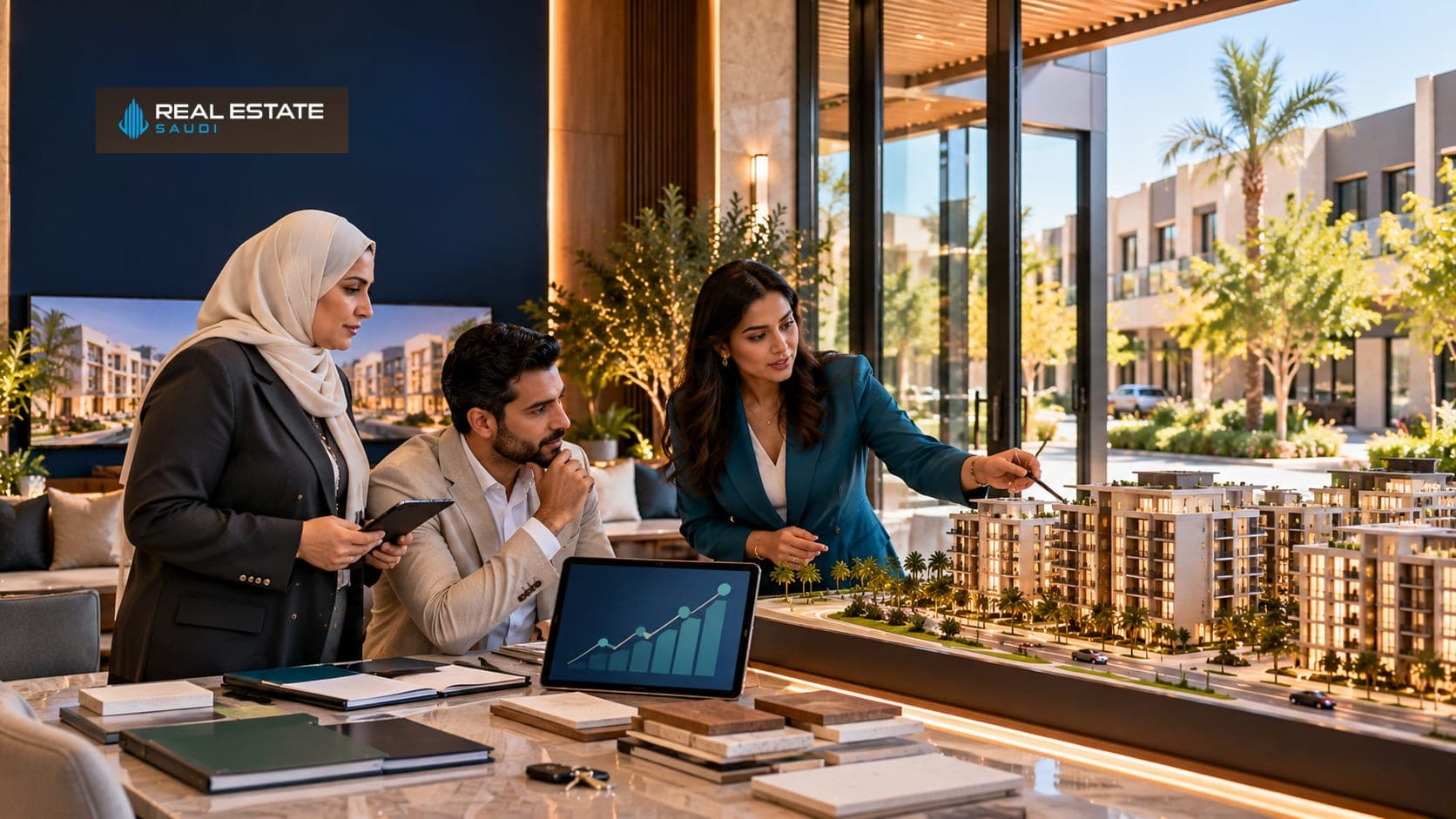
Inflation and Real Estate Prices in Saudi Arabia are closely connected, but they do not always move in the same direction. Rising consumer prices can increase construction expenses, reduce household purchasing power and influence mortgage affordability. At the same time, local housing supply, employment, rental regulations and investor demand determine what buyers actually pay for property.
In September 2026, Saudi Arabia recorded annual consumer inflation of 1.9%, according to official economic data. Housing-related consumer costs increased faster than the overall index, highlighting the importance of accommodation in household budgets. However, higher rents do not automatically mean apartment or villa selling prices are increasing.
For investors, inflation can affect both income and expenses. Property may provide some long-term protection against rising costs, but expensive financing, vacancies and maintenance can reduce real investment returns.
This guide explains the latest inflation trends, their impact on residential and commercial property, differences between Saudi cities, and the practical checks buyers should make in 2026.
Inflation and Real Estate Prices in Saudi Arabia: The 2026 Overview
Inflation measures changes in the prices consumers pay for a representative basket of goods and services. Real estate purchase prices measure the value of properties being sold. Although both are affected by economic conditions, they represent different markets.
Saudi Arabia's inflation data for September 2026 illustrates this distinction.
Economic Indicator | Latest Reported Change | Period |
|---|---|---|
Overall consumer inflation | 1.9% | September 2026, annual |
Housing, water, electricity, gas and fuels | 3.6% | September 2026, annual |
Actual housing rents | 3.5% | September 2026, annual |
Food and beverages | 1.4% | September 2026, annual |
Transport | 2.3% | September 2026, annual |
These figures describe consumer-price movements, not changes in the selling prices of residential properties.
The official DataSaudi economic indicators provide current inflation information and allow readers to distinguish overall consumer costs from specific spending categories.
A property investor should examine consumer inflation alongside transaction prices, rental contracts, financing rates and local housing supply.
What Inflation Means for Saudi Homebuyers
Inflation reduces purchasing power when household income does not increase at the same pace as living expenses.
A family spending more on groceries, transportation and utilities may have less money available for a housing deposit or monthly mortgage payment.
However, inflation can affect households differently. Some employees receive salary increases, while others face stagnant income or changes in job security.
Household budgets
Buyers should calculate housing affordability using actual monthly expenses rather than relying exclusively on lender eligibility.
Savings
Money held in cash may lose purchasing power over time when consumer prices rise.
This does not mean that purchasing any property is automatically a better alternative.
Borrowing
Financing expenses can have a much greater influence on affordability than small changes in the consumer price index.
Market consequences
When many households experience affordability pressure, demand for expensive properties may weaken even if construction costs increase.
The important question is whether buyers can afford the total property cost, not simply whether inflation is positive.
Which property type & region do you prefer?
Select property type and preferred city in Saudi Arabia.
Why Inflation Does Not Automatically Increase Property Prices
A common misconception is that property values must rise whenever consumer prices increase.
In reality, real estate prices reflect negotiations between buyers and sellers, the availability of suitable properties and financing conditions.
If construction becomes more expensive but buyers cannot afford higher prices, developers may face lower margins or reduce the pace of new projects.
Similarly, a neighbourhood receiving substantial new housing supply may experience price competition even during inflation.
Nominal versus real value
Nominal appreciation describes the increase in a property's selling price.
Real appreciation considers whether that increase exceeds general inflation and relevant costs.
A property can sell for more riyals after several years while delivering little improvement in purchasing-power-adjusted value.
Property categories
Apartment, villa, land and commercial property prices can follow different trends.
For that reason, investors should avoid assuming that a single national inflation figure predicts the return from every property.
Saudi Arabia's Latest Consumer Inflation Trends
Saudi Arabia's consumer inflation has remained relatively moderate during much of 2026, although certain spending categories have increased more quickly than others.
Official data recorded annual inflation of 1.8% in August and 1.9% in September.
Housing-related consumer costs were among the most important contributors to overall inflation.
Understanding the housing component
The housing division includes more than the buying and selling of property.
It captures consumption-related accommodation expenses and utilities under the statistical framework.
Monthly versus annual changes
Annual inflation compares prices with the same month in the previous year.
Monthly changes compare consecutive reporting periods.
A relatively small monthly increase can coexist with a higher annual rate.
Why official methodology matters
Different statistical measures answer different questions.
Investors should avoid combining the consumer price index with property transaction statistics as though both represent the same calculation.
Official figures are most useful when interpreted according to the period, geographic coverage and category they measure.
Consumer Inflation Versus Real Estate Price Inflation
Consumer inflation and real estate price inflation should be analysed separately.
The consumer price index reflects the cost of living, including housing-related expenditure. A real estate price index tracks changes in property transaction values using its own statistical methodology.
The General Authority for Statistics' real estate price index publications provide a dedicated source for examining changes in residential, commercial and other property categories.
Why the distinction matters
A rise in average rents can influence consumer inflation without establishing equivalent growth in home-sale prices.
Likewise, an increase in land values may affect developers and buyers without producing an immediate change in household rent.
Different reporting periods
Consumer inflation is commonly reported monthly, while real estate price indices are published quarterly.
Comparing figures requires careful attention to their periods.
Practical interpretation
Investors should use CPI to understand living costs and use property-market statistics to evaluate acquisition prices.
Neither measure is sufficient on its own to value an individual building.
How Rising Construction Costs Affect Housing Prices
Construction costs connect general economic inflation with the property development industry.
Materials, labour, equipment, engineering and transportation all contribute to the cost of delivering new apartments and villas.
When suppliers raise prices, developers may need additional capital to complete planned projects.
Building materials
Steel, cement, electrical components and finishing products can experience different price movements.
Imported products may also be affected by international shipping and currency conditions.
Labour and specialist services
Projects require engineers, contractors, technicians and other qualified personnel.
Changes in workforce availability can influence project budgets and completion schedules.
Developer decisions
Higher costs may lead developers to revise specifications, renegotiate contracts or adjust future project launches.
However, additional expenses cannot always be transferred to homebuyers.
Finished property prices
The effect depends on demand, competition and the price buyers are willing to pay.
A more expensive building process does not automatically establish a higher market value for the finished property.
Inflation, Mortgage Rates and Property Affordability
Mortgage conditions influence residential purchasing power because many households finance their homes over extended periods.
Inflation is relevant to monetary conditions, but mortgage rates also depend on bank funding expenses, lending policies and wider financial markets.
Why financing matters
A household may afford a particular property under one financing offer but find it unaffordable under different repayment terms.
Saudi monetary conditions
Saudi Arabia's currency peg to the US dollar influences the monetary-policy environment and domestic interest-rate conditions.
However, individual mortgage offers also reflect borrower characteristics and lender requirements.
Official financing information
The Saudi Central Bank's monthly banking statistics publish information about banking activity, real estate financing and related economic indicators.
Before applying
Buyers should evaluate their income stability, existing debts and repayment capacity.
The Saudi real estate financing guide provides additional context for evaluating mortgage options.
A lower purchase price may still create a larger financial burden when borrowing is expensive.
Why Rental Inflation Matters to Investors
Rental income is one way property owners may respond to changing economic conditions.
In markets with strong tenant demand, some landlords may seek higher rents to cover maintenance and other operating costs.
However, rental growth depends on local supply, household affordability and legal restrictions.
Rental demand
Properties near employment centres or established services may attract different tenants from homes in developing communities.
Operating expenses
Maintenance, utilities paid by the owner, management and repairs can increase over time.
Tenant affordability
Rapid rent increases can create vacancies or encourage households to seek cheaper accommodation.
Net returns
Higher scheduled rent does not guarantee a higher real return if ownership expenses increase faster.
Investors should compare actual lease agreements rather than assume all rents rise at the rate of consumer inflation.
For a wider perspective on tenant demand, the Saudi renting versus buying guide explains differences between the two housing decisions.
Riyadh's Five-Year Rental Restrictions
Riyadh has an important regulatory exception affecting rental income expectations.
On September 25, 2025, Saudi authorities introduced a five-year suspension of annual rent increases for residential and commercial properties within Riyadh's urban boundaries.
The Real Estate General Authority's official rental regulation announcement explains the applicable provisions.
Existing rental agreements
Landlords must follow the restrictions rather than assume that inflation justifies automatic annual increases.
Previously rented vacant properties
Relevant rental terms are linked to the last registered Ejar contract, subject to the applicable rules and exceptions.
Properties not previously rented
The initial rent may be agreed between the parties according to the regulatory framework.
Investment consequences
A landlord whose maintenance costs rise may not be permitted to increase contractual rent in response.
This makes existing lease records and projected expenses particularly important for Riyadh investors.
Riyadh Property Prices and Cost-of-Living Pressures
Riyadh's economy attracts households and businesses with different housing requirements.
That demand can support residential activity, but affordability remains an important constraint.
Premium districts, developing northern neighbourhoods and established central areas have different prices and property characteristics.
Apartments and villas
Apartments may be more accessible to some households than larger villas, depending on the location.
Villa buyers may require greater financing capacity and face more extensive maintenance responsibilities.
Local supply
New housing developments can provide alternatives that influence sellers' pricing decisions.
Commuting expenses
A distant property with a lower price may create higher transportation costs.
Investment research
Buyers researching the capital can use the Riyadh real estate market analysis to understand wider transaction and neighbourhood factors.
A property should be assessed through its total cost of ownership rather than its advertised price alone.
Jeddah and the Western Region
Jeddah's property market combines residential demand with business, trade and tourism-related activity.
Inflation can influence household budgets, hospitality operating costs and the construction expenses associated with new developments.
However, the effect varies across neighbourhoods.
Waterfront homes
Coastal properties can require specialised maintenance that affects long-term ownership costs.
Residential apartments
Apartment affordability depends on purchase price, financing and nearby housing alternatives.
Commercial premises
Business tenants may face rising labour and supply costs, affecting their ability to meet rent.
Location-specific research
The Jeddah property investment guide provides additional context for evaluating the city's residential and commercial markets.
Investors should not assume that changes in national inflation produce identical price movements in Jeddah and Riyadh.
Local employment, available supply and completed transaction evidence remain essential.
What is your approximate budget?
Narrow down property options based on your target budget.
Dammam and Eastern Province Property Trends
The Eastern Province has residential and commercial markets connected to industrial activity, professional employment and household demand.
Inflation may affect construction costs, tenant budgets and operating expenses, while local economic conditions determine the demand for particular properties.
Residential property
Apartments and villas serve different household groups and may have different resale characteristics.
Commercial property
Industrial-linked businesses can influence requirements for offices, warehouses and employee accommodation.
Property maintenance
Cooling systems, building repairs and other operating expenses affect net rental income.
Local comparisons
Buyers can examine the Dammam real estate investment overview to understand market characteristics.
A relatively stable national inflation rate does not guarantee that every Eastern Province neighbourhood will experience stable property prices.
Investors should evaluate completed transactions and the quality of individual assets.
Does Inflation Make Saudi Property a Better Investment?
Inflation and Real Estate Prices in Saudi Arabia are often discussed together because physical assets may retain value when money loses purchasing power.
Property can provide long-term benefits through use, rental income and potential resale value.
However, real estate is not a guaranteed inflation hedge.
Potential benefits
A well-located property may remain useful to households or businesses during changing economic conditions.
Rental income may also provide cash flow where legally permitted and supported by demand.
Important limitations
Property values can decline, and buildings require maintenance.
Financing, taxes and service charges can further reduce returns.
Time horizon
A long-term owner may be better positioned to absorb short-term fluctuations than an investor who must sell quickly.
Investment quality
The purchase price, location and financial structure matter more than the assumption that all physical assets appreciate during inflation.
Investors should evaluate actual income and risk before treating property as protection against rising living costs.
How Inflation Changes Real Investment Returns
Real investment performance reflects purchasing power rather than the number of riyals received from a sale.
A property may appreciate nominally while providing a weaker return after inflation, maintenance and transaction costs.
Capital appreciation
A rising sale price does not establish investment success without considering the original acquisition cost.
Rental income
Scheduled rent must be adjusted for vacancies, management fees and repairs.
Financing
Interest or financing charges can materially change profitability.
Transaction expenses
Acquisition and sale costs reduce the proceeds retained by the owner.
Liquidity
Property is not always easy to sell quickly at a favourable price.
The Saudi property investment returns guide provides further information about evaluating income and capital performance.
Investors should distinguish nominal gains from genuine improvements in purchasing power.
Residential Versus Commercial Property During Inflation
Residential and commercial property respond differently to changes in consumer prices.
Housing demand is influenced by households, employment, family requirements and financing affordability.
Commercial demand depends more directly on businesses, tenant finances and the suitability of premises.
Residential apartments
Smaller units may attract price-sensitive households, although local supply remains important.
Family villas
Larger homes can require more capital and greater maintenance expenditure.
Office buildings
Tenants may reconsider space requirements when business expenses increase.
Retail properties
Consumer spending patterns affect the ability of retailers to support higher occupancy costs.
Industrial assets
Demand depends on production, logistics and business requirements.
No category is inherently immune to inflation.
Investors should compare the strength of tenants, building expenses and future supply within the selected market.
Vision 2030, Housing Supply and Inflation
Vision 2030 aims to expand Saudi Arabia's economic capacity, support housing access and encourage development in multiple sectors.
These policies can influence property markets through employment, infrastructure and new residential construction.
However, large development programmes can affect supply as well as demand.
New housing communities
Additional completed units can increase customer choice and competition between sellers.
Infrastructure
Operational transport, utilities and public services can improve residential accessibility.
Employment
New businesses may attract households requiring accommodation.
Development expenditure
Construction programmes may also increase demand for labour, materials and specialist services.
These effects occur over different timescales.
A project associated with Vision 2030 should not automatically be described as increasing nearby property values.
Investors should verify project delivery and local market evidence before making assumptions.
Foreign Ownership and Property Demand in 2026
Saudi Arabia's updated property ownership framework for non-Saudis entered into force on January 22, 2026.
The Real Estate General Authority's official foreign ownership guidance describes procedures for eligible residents, non-residents and companies.
Why the reform matters
Eligible international purchasers may be able to participate in qualifying property transactions.
Geographic requirements
Ownership rights depend on the buyer category, location and regulatory conditions.
Market implications
Additional eligible buyers could influence demand in selected segments.
However, the scale of any price effect depends on actual transactions and available inventory.
Buyer due diligence
Purchasers should confirm eligibility before paying deposits.
Foreign ownership changes should be evaluated separately from consumer inflation because they are different influences on the property market.
Property Taxes, Fees and Inflation
Property investment costs include more than the amount negotiated with the seller.
Saudi Arabia generally imposes a 5% Real Estate Transaction Tax on qualifying property disposals, subject to statutory exemptions.
The official ZATCA Real Estate Transaction Tax Law explains the applicable legal framework.
Upfront costs
Potential expenses include valuation, brokerage, professional services and financing.
Ongoing expenses
Owners may pay for maintenance, insurance, management or shared facilities.
Inflation exposure
Some operating costs can increase even when property prices remain unchanged.
Foreign ownership
Additional statutory requirements or charges may apply depending on the transaction.
The Saudi property tax and transaction-fee guide explains related cost considerations.
Transaction-specific legal and financial advice may be necessary before purchasing.
How to Evaluate a Property During Inflation
A disciplined purchasing process helps buyers separate genuine value from market speculation.
First, identify the intended use: personal occupation, rental income or business operations.
Next, compare recent completed transactions involving similar properties in the same locality.
Review building condition and obtain reliable estimates for required repairs.
Investigate financing terms and determine whether the total repayment commitment remains affordable.
For investment properties, analyse legal rental arrangements, tenant demand and recurring operating expenses.
Check property ownership records and confirm any restrictions affecting the transaction.
Finally, consider whether the asset would remain suitable if inflation, financing conditions or the local market changed.
The goal is not to predict every economic movement. It is to purchase a property whose financial and practical characteristics remain sustainable.
Common Mistakes Investors Should Avoid
One mistake is assuming property prices rise automatically with consumer inflation.
Another is treating higher gross rent as proof of improved investment returns.
Some buyers ignore financing expenses or underestimate maintenance.
Others use national economic data to justify an asking price without checking neighbourhood transactions.
Investors may also overlook Riyadh's restrictions on rental increases.
Foreign purchasers risk delays or disputes if ownership eligibility is not confirmed.
A property's reputation or proximity to an announced development does not guarantee capital appreciation.
Strong investment decisions require reliable documentation, conservative income assumptions and adequate financial reserves.
How would you like to be contacted?
Choose your preferred channel for a private consultation.
Inflation and Real Estate Prices in Saudi Arabia
Future property performance will depend on inflation, financing, employment, housing supply and regulatory developments.
Moderate consumer inflation can coexist with rising property prices in one city and falling prices in another.
Additional residential construction may improve affordability by expanding available supply, although the outcome depends on buyer demand.
Financing costs can influence the budgets of households and developers.
Regulatory changes may also affect rental income and foreign participation.
Investors should monitor official consumer inflation figures, real estate price indices and completed transaction records rather than relying on confident forecasts.
The strongest opportunities will be those supported by sustainable demand, sound construction and reasonable total ownership costs.
Conclusion
Inflation and Real Estate Prices in Saudi Arabia are connected through household purchasing power, construction expenses, financing costs, rental income and market confidence.
In 2026, official data shows moderate national consumer inflation alongside faster growth in certain housing-related expenses. However, these figures do not establish equivalent increases in the selling prices of apartments, villas or land.
Riyadh, Jeddah and Dammam also have different housing conditions, making local research essential.
For homebuyers, affordability and building quality should come before speculation about future prices.
For investors, the key considerations are actual rental income, operating expenses, legal restrictions and resale demand.
Talk to Our Real Estate Experts
Get real-time insights on investment options, commercial properties, and market guidelines.
Frequently Asked Questions
Inflation can increase construction costs, maintenance expenses and household living costs. It may also influence mortgage affordability and rental demand. However, property prices depend on additional factors such as local housing supply, employment and financing. A rise in consumer inflation does not automatically cause apartment or villa prices to increase.
Saudi Arabia recorded annual consumer inflation of 1.9% in September 2026, according to official data. The housing, water, electricity, gas and other fuels category increased by 3.6% annually. These figures describe consumer spending and should not be interpreted as direct measures of residential purchase-price growth.
Property can provide long-term use, possible rental income and potential appreciation, but it is not a guaranteed inflation hedge. Financing, maintenance, taxes and changes in property values affect actual performance. Buyers should evaluate the specific asset and distinguish nominal returns from gains in purchasing power.
Property prices may decline when buyer demand weakens, financing becomes expensive or new housing supply increases. Construction costs can rise at the same time, putting pressure on developers. Inflation and property values are influenced by overlapping but different economic factors and therefore do not always move together.
Higher rent can improve gross rental income, but operating expenses and vacancy may also increase. Legal restrictions matter as well. In Riyadh, regulations introduced in September 2025 restrict annual rental increases for five years within the city's urban boundaries. Investors must calculate returns using legally achievable rent.
Inflation influences the wider financial environment, but mortgage terms also depend on monetary policy, bank funding costs and borrower eligibility. Saudi Arabia's currency peg to the US dollar is relevant to domestic monetary conditions. Buyers should compare actual financing offers and evaluate complete repayment obligations.
Riyadh, Jeddah and Eastern Province cities can experience different housing-cost trends. Their property markets are shaped by employment, housing supply, infrastructure and local demand. National inflation figures cannot establish which city offers the strongest investment performance. City-specific transaction and rental data are needed for meaningful comparisons.
Higher material, labour and transportation costs can increase the expense of building new homes. Developers may adjust budgets, specifications or launch schedules. However, they cannot always recover higher costs through selling prices because buyers face affordability limits and competition from existing properties.
Eligible foreign residents, non-residents and companies may acquire qualifying property rights under the updated framework effective January 22, 2026. Ownership depends on the buyer's status, location and applicable requirements. Foreign investors should verify eligibility through official channels before making payments or signing contracts.
Investors should compare completed transactions, assess financing obligations, calculate maintenance and operating costs, and verify legal rental restrictions. Maintaining financial reserves can reduce pressure during periods of weak demand. A diversified financial strategy and realistic holding period are generally more prudent than assuming property values will always rise.
