
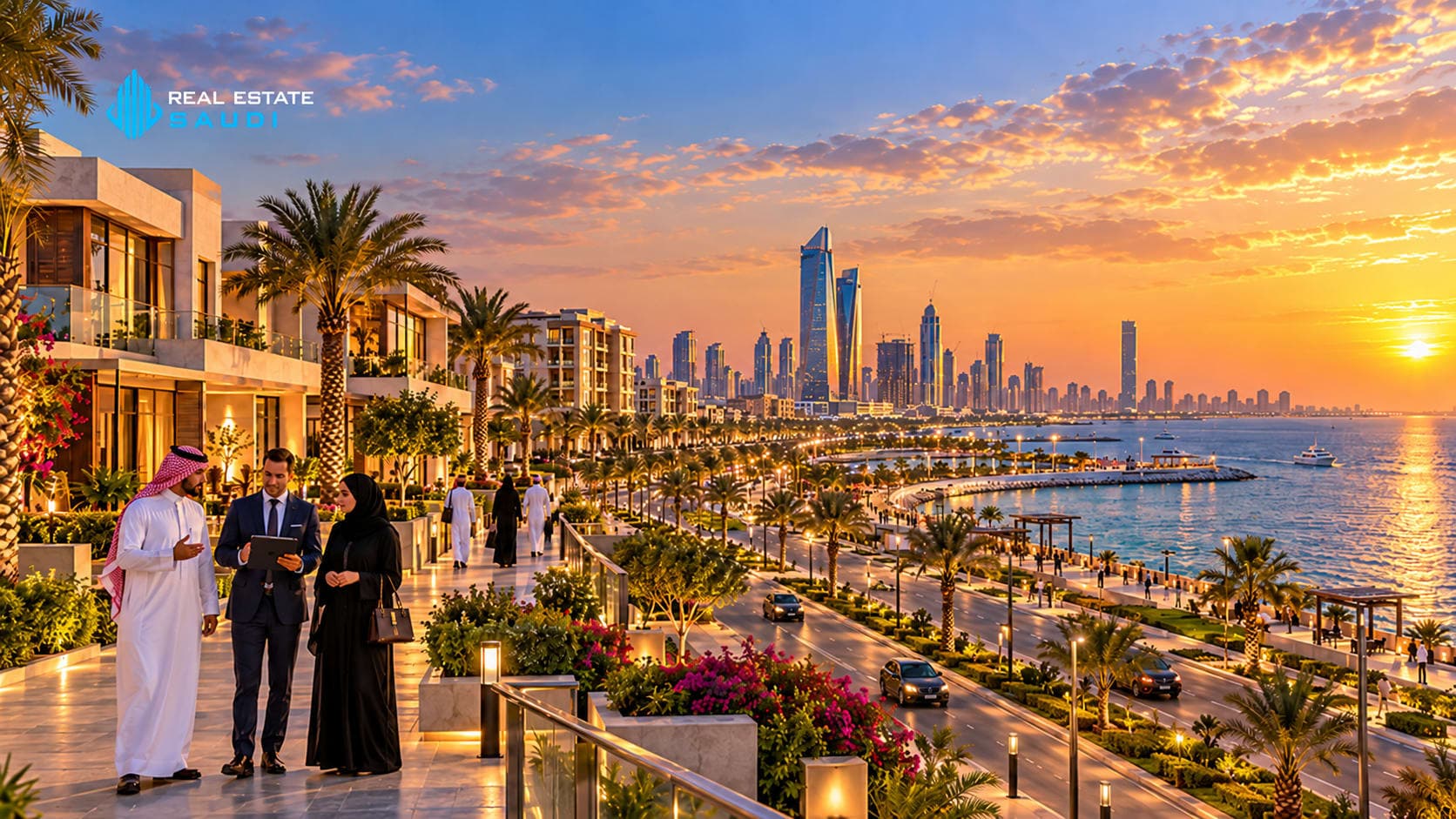
The Best Residential Areas in Jeddah in 2026 include Al Shati, Al Rawdah, Al Muhammadiyah, Al Zahra, Al Naeem, Al Salamah, Al Hamra, Al Khalidiyah, Al Safa and North Obhur. These neighborhoods offer different advantages for families, expatriates, professionals and property investors. The ideal location depends on housing affordability, proximity to workplaces, schools, lifestyle preferences and long-term financial objectives.
Jeddah is Saudi Arabia's principal Red Sea commercial centre and an important gateway to Makkah. Its residential landscape ranges from established urban neighborhoods to premium coastal homes and developing suburban communities. Northern districts are often associated with modern accommodation, while central and southern neighborhoods provide additional choices for households with different budgets.
However, no neighborhood guarantees rising property prices or consistent rental income. Buyers should evaluate individual properties using verified market information, legal documentation and realistic financial assumptions.
This guide compares Jeddah's leading residential districts, explains buying and renting considerations, and examines the property regulations relevant to residents and investors in 2026.
Best Residential Areas in Jeddah: Quick Comparison
Jeddah's neighborhoods differ in housing types, surrounding services and accessibility. The following comparison provides an editorial shortlist rather than an official ranking.
Neighborhood | Best Suited For | Main Consideration |
|---|---|---|
Al Shati | Premium coastal living | Higher budgets and maintenance |
Al Rawdah | Established upscale urban living | Property-specific pricing |
Al Muhammadiyah | Spacious villas and family privacy | Acquisition and upkeep costs |
Al Zahra | Families and professionals | Traffic and property condition |
Al Naeem | Residential convenience | Building specifications |
Al Salamah | Apartments and established services | Street-level congestion |
Al Hamra | Central coastal lifestyle | Parking and building age |
Al Khalidiyah | Established premium residences | Older property maintenance |
Al Safa | Conventional family housing | Daily commuting |
North Obhur | Coastal and suburban accommodation | Distance from employment centres |
Al Naseem | Families exploring other price points | Access and infrastructure |
Al Ajawad | South Jeddah housing alternatives | Travel requirements |
Buyers should compare actual listings rather than assume every property in a well-known district meets the same standards.
The broader Jeddah residential property and neighborhood guide provides further context for evaluating different parts of the city.
Which property type & region do you prefer?
Select property type and preferred city in Saudi Arabia.
Why Jeddah Attracts Homebuyers and Property Investors
Jeddah combines commercial employment, port-related activity, established residential communities and access to the Red Sea. The city's role as a gateway to Makkah also contributes to its importance within Saudi Arabia.
Its property market serves Saudi households, expatriate professionals and businesses requiring accommodation for employees. Residential preferences vary considerably between buyers seeking long-term homes and investors purchasing rental units.
Saudi Arabia's official Vision 2030 development programme includes objectives related to housing, investment, tourism and improved urban quality of life.
These objectives provide context for ongoing development, but they should not be interpreted as guarantees of appreciation for individual properties.
Jeddah's housing appeal also depends on everyday amenities. Families often prioritise schools and healthcare, while professionals may value access to commercial districts and major roads.
A neighborhood's reputation can help create an initial shortlist. However, its actual suitability depends on the specific property, surrounding streets and total cost of ownership.
1. Al Shati: Best for Premium Coastal Living
Al Shati is among Jeddah's prominent coastal residential districts. It is associated with access to the Red Sea, established hospitality facilities and premium residential accommodation.
Housing and lifestyle
Buyers may investigate apartments, villas and other properties with different levels of coastal access.
Some residences offer attractive views, while others are located farther inland within the wider neighborhood.
The distinction matters because waterfront marketing descriptions do not always mean unrestricted beach access or a permanent sea view.
Investment considerations
Premium coastal accommodation can involve substantial acquisition expenses.
Salt exposure, humidity and shared building facilities may also increase maintenance requirements.
Investors should compare realistic rental income against service charges, repairs and potential vacancies.
Al Shati may suit buyers seeking a coastal lifestyle, provided the financial commitment and building condition support their objectives.
2. Al Rawdah: Best for Established Upscale Urban Living
Al Rawdah is an established Jeddah district associated with residential accommodation, commercial activity and convenient urban services.
It may interest professionals and families seeking a location with developed surroundings.
Residential options
The district includes apartments, villas and buildings from different construction periods.
Some properties feature contemporary interiors, while others may require renovation.
Buyers should inspect electrical systems, plumbing, waterproofing and air-conditioning rather than rely solely on photographs.
Everyday convenience
Access to shopping destinations, restaurants, schools and healthcare facilities can be useful for residents.
However, convenience varies according to the actual street and distance from major roads.
Al Rawdah may appeal to households prioritising an established urban environment rather than a newly developing suburban community.
Investors should verify comparable rents and transaction prices before evaluating potential returns.
3. Al Muhammadiyah: Best for Villas and Family Privacy
Al Muhammadiyah is an established northern Jeddah neighborhood associated with premium family housing and independent villas.
It may appeal to buyers seeking larger homes and additional privacy.
Housing characteristics
Some properties offer multiple bedrooms, private parking, reception rooms and outdoor spaces.
The specifications of individual villas vary according to plot size, construction age and renovation history.
A recently refurbished property should still undergo technical inspection.
Family considerations
School accessibility, healthcare and commuting should influence the selection process.
Larger homes can involve higher electricity bills, maintenance costs and furnishing expenses.
For households considering this segment, comparing villas available for sale in Saudi Arabia can help identify relevant property features.
Al Muhammadiyah is worth considering when the household's requirements justify the total cost of owning or renting a larger residence.
4. Al Zahra: Best for Families and Working Professionals
Al Zahra offers a mixture of residential and commercial activity within Jeddah's northern urban environment.
It is worth comparing for households seeking access to daily amenities and established neighborhood services.
Property options
Accommodation can include apartments and family houses with different floor plans.
Buyers should examine the number of bedrooms, parking spaces and the condition of shared building facilities.
Modern finishing materials do not necessarily indicate superior construction quality.
Accessibility
Location within the district affects access to workplaces, schools and major roads.
A home close to commercial facilities may be convenient but could also experience more traffic.
Al Zahra may suit families seeking a practical residential location with available services.
The final decision should be based on actual property quality and affordability rather than generalized descriptions of the neighborhood.
5. Al Naeem: Best for Residential Convenience
Al Naeem is a northern Jeddah neighborhood offering a combination of residential buildings and community services.
Its location may interest families and professionals comparing accommodation across northern districts.
Housing choices
Prospective residents can investigate apartments and houses with varying specifications.
Some properties may offer spacious family layouts, while others prioritise smaller units.
Building age, construction quality and maintenance arrangements should be examined individually.
What residents should consider
Daily convenience depends on the property's exact location.
Check school accessibility, healthcare facilities, supermarkets and available parking.
For property investors, the relevant question is whether realistic rental demand supports the purchase price.
Al Naeem can be included in a northern Jeddah shortlist, particularly when comparing similar properties in Al Zahra and Al Salamah.
6. Al Salamah: Best for Established Apartment Living
Al Salamah is an established residential neighborhood that may appeal to tenants and buyers seeking apartment accommodation within Jeddah.
The district includes residential buildings alongside local shops and other urban services.
Apartment considerations
Prospective residents should inspect building management, parking capacity, lifts and shared maintenance arrangements.
Apartments in the same district may vary considerably in size and quality.
Some buildings offer recently updated interiors but older mechanical systems.
Renting opportunities
Al Salamah may be worth considering for people relocating to Jeddah before purchasing a permanent home.
Renting allows households to understand commuting patterns and local services without immediately making a substantial acquisition commitment.
The available apartments for rent in Saudi Arabia provide a broader comparison of residential rental options.
Rental terms should be reviewed carefully before signing.
7. Al Hamra: Best for Central Coastal Lifestyle
Al Hamra is a well-known central Jeddah district associated with urban living and access to coastal recreation.
Its character differs from quieter suburban neighborhoods.
Residential appeal
The district offers established accommodation and access to commercial and hospitality facilities.
Some properties may provide convenient access to waterfront destinations.
However, residents should investigate the actual walking or driving route rather than assume every Al Hamra address is directly beside the Corniche.
Property selection
Building condition is important, particularly where residential towers or older structures require ongoing maintenance.
Parking, traffic and access to local services may influence daily satisfaction.
Al Hamra may appeal to professionals and households prioritising a central location.
Investors should evaluate the property's legal classification and actual rental demand rather than assume coastal proximity guarantees attractive income.
8. Al Khalidiyah: Best for Established Premium Residences
Al Khalidiyah is an established Jeddah neighborhood offering residential accommodation within a developed urban setting.
It may interest buyers seeking traditional family houses or apartments in established surroundings.
Housing characteristics
Properties vary in architectural design, size and construction age.
An older villa may offer generous land dimensions but require improvements to electrical systems, roofing or air-conditioning.
Renovation costs should be included in the purchase budget.
Neighborhood advantages
Residents may value access to established commercial facilities and important road corridors.
However, property-level assessments remain necessary because traffic, parking and available services differ by street.
Al Khalidiyah can be suitable for buyers who prefer established neighborhoods and are willing to assess maintenance requirements carefully.
9. Al Safa: Best for Conventional Family Housing
Al Safa is a large established residential district offering alternatives to Jeddah's premium coastal locations.
It may appeal to families comparing apartments and conventional houses.
Housing suitability
Different parts of the district contain properties with varying construction dates and layouts.
Buyers should compare usable floor area, parking and building condition.
A relatively inexpensive property may require substantial repairs.
Lifestyle factors
School availability, local shops and healthcare facilities are relevant considerations.
Residents should also test routes to workplaces during normal commuting periods.
Al Safa may suit households prioritising practical accommodation rather than premium waterfront features.
However, affordability must be assessed against current comparable listings and the complete cost of living in the chosen property.
10. North Obhur: Best for Coastal and Suburban Living
North Obhur is associated with Jeddah's northern coastal environment, recreational activities and different forms of residential development.
It can attract interest from households seeking an alternative to central urban districts.
Housing environment
Property options may include villas, apartments and accommodation within managed communities.
Some locations offer convenient access to coastal recreation, while others are farther from the shoreline.
Development considerations
Prospective buyers should assess completed infrastructure, utilities and available services.
Surrounding construction may influence privacy, noise and accessibility.
North Obhur can suit households that value a coastal setting and are comfortable with their actual commuting requirements.
Investors should avoid treating development announcements as proof of guaranteed property appreciation.
11. Al Naseem: Best for Practical Family Accommodation
Al Naseem offers another residential option for households considering accommodation beyond Jeddah's premium northern coastal districts.
The area includes apartments and other family housing.
Advantages for residents
Buyers can investigate different property sizes and layouts according to household needs.
School access, shopping facilities and nearby roads should be compared carefully.
Important considerations
Property condition and street-level infrastructure can vary.
Prospective residents should inspect water pressure, air-conditioning, parking and surrounding traffic.
Al Naseem may be relevant to families exploring different budget categories, but a district-wide affordability claim requires verified current market evidence.
The selected property should meet daily requirements without imposing excessive commuting or maintenance costs.
What is your approximate budget?
Narrow down property options based on your target budget.
12. Al Ajawad: Best for South Jeddah Housing Alternatives
Al Ajawad is a residential district worth considering when exploring southern Jeddah.
It provides an alternative search area for families and buyers whose activities are concentrated outside the city's northern neighborhoods.
Residential options
Accommodation may include apartments and family houses with different specifications.
Buyers should evaluate construction condition, access to local services and current market availability.
Financial considerations
An apparently competitive acquisition price does not automatically establish strong investment value.
Maintenance requirements and commuting expenses can offset initial savings.
Al Ajawad may suit households with suitable workplace locations and access to essential services.
Prospective investors should verify rental demand instead of relying on unsupported forecasts of rapid neighborhood appreciation.
Which Jeddah Neighborhood Is Best for Your Lifestyle?
The Best Residential Areas in Jeddah serve different household priorities.
Families seeking larger homes may prefer examining Al Muhammadiyah, Al Safa or selected North Obhur properties.
Professionals interested in established urban convenience may shortlist Al Rawdah, Al Salamah, Al Zahra and Al Khalidiyah.
Buyers who place greater emphasis on coastal access can compare Al Shati, Al Hamra and North Obhur.
However, none of these distinctions should replace a detailed property inspection.
Household size, school requirements, employment location and budget are more useful selection criteria than general neighborhood popularity.
A successful choice also depends on whether the property's layout, parking and maintenance arrangements remain suitable over several years.
How Much Does Residential Property Cost in Jeddah?
Jeddah property prices vary according to location, land area, construction age, property type and available facilities.
A premium apartment facing the Red Sea should not be compared directly with an ordinary family apartment in an inland district.
Comparing purchase prices
Buyers should examine similar completed properties and reliable transaction evidence.
Advertised asking prices may differ from final transaction values.
Floor area, parking, building condition and service charges can also influence value.
Budgeting for ownership
A purchase budget should include transaction costs, inspections, financing expenses and necessary repairs.
Larger properties may involve higher maintenance and utility costs.
Before proceeding, compare the acquisition price against the household's available capital and expected long-term commitments.
A home should remain affordable without relying on speculative price appreciation.
Renting Versus Buying a Home in Jeddah
Renting may suit expatriates relocating for employment, families exploring unfamiliar neighborhoods or residents expecting future changes in their circumstances.
Buying may suit eligible purchasers intending to remain in Jeddah for many years.
Benefits of renting
Tenants generally face a smaller initial financial commitment than property buyers.
They may also find it easier to relocate when their contractual obligations permit.
Residential rental arrangements operate within Saudi Arabia's regulated Ejar framework.
The official REGA Ejar rental platform provides electronic services for documenting regulated tenancy agreements and related processes.
Benefits of buying
Ownership can provide greater control over accommodation and possible exposure to future property value changes.
However, it also involves acquisition expenses, maintenance obligations and resale risk.
The appropriate choice depends on legal eligibility, financial stability and expected length of residence.
Can Foreigners Buy Property in Jeddah in 2026?
Eligible foreign individuals and entities may acquire qualifying real estate rights under Saudi Arabia's updated ownership framework.
The revised system entered into force on January 22, 2026.
According to the Real Estate General Authority's official announcement on non-Saudi property ownership, applications are processed through the Saudi Properties digital platform.
Ownership eligibility
Foreign ownership remains subject to geographical permissions, applicant classification and applicable legal conditions.
A property being advertised for sale does not mean every foreign buyer can acquire it.
Application requirements
Eligible residents may initiate the process using their Iqama.
Non-residents may require a recognised digital identity obtained through prescribed channels.
Foreign companies may face additional registration obligations.
Buyers should verify eligibility for the exact property before transferring deposits or entering binding agreements.
Professional legal advice may be appropriate when ownership rights or transaction structures are unclear.
Financing and Mortgage Considerations
Mortgage financing can help eligible buyers acquire residential property, but approval depends on lender requirements and the applicant's circumstances.
Income, existing debts, residency status and property characteristics may influence financing availability.
Comparing mortgage offers
Buyers should examine repayment periods, financing costs and early settlement conditions.
A larger approved financing amount does not necessarily mean purchasing a more expensive property is financially sensible.
Financial planning Best Residential Areas in Jeddah
Households should retain reserves for unexpected repairs and changes in employment circumstances.
Mortgage eligibility does not replace legal ownership verification or technical inspection.
The ideal property should remain affordable under realistic financial assumptions.
Property Taxes and Additional Buying Expenses
Saudi Arabia generally applies a 5% Real Estate Transaction Tax to qualifying real estate disposals, subject to statutory exemptions.
The official ZATCA Real Estate Transaction Tax Law explains the relevant regulatory framework.
Other acquisition costs may include professional valuations, legal review, inspections and financing arrangements.
Foreign purchasers should also check fees applicable to their ownership category.
The contractual allocation of transaction expenses should be clarified before completion.
Buyers must distinguish the initial purchase price from the full cost of acquiring and maintaining the property.
Accurate budgeting is particularly important when comparing premium villas with apartments in managed residential buildings.
New Residential Developments and Off-Plan Opportunities
Jeddah's housing landscape includes existing residential communities alongside planned developments.
New projects may offer contemporary layouts, shared facilities and contractual payment arrangements.
However, off-plan properties introduce construction and delivery risks.
Project verification
The official REGA WAFI off-plan sales and leasing platform provides information about project regulation and licensing.
Buyers should verify the individual project rather than rely exclusively on the developer's reputation.
Contract review
Purchase agreements should identify the property, payment schedule, approved specifications and relevant completion obligations.
Marketing illustrations are not guarantees of final construction quality.
The new residential developments in Jeddah provide additional options for researching the city's planned housing projects.
Jeddah Waterfront Development and Residential Demand
Major urban development can influence the attractiveness of surrounding locations.
Jeddah Central is a notable example of planned investment involving residential, cultural, commercial and hospitality components.
According to the Public Investment Fund's Jeddah Central project information, the master plan includes a substantial waterfront destination and major public attractions.
Its first phase has an announced end-2027 target, which should not be confused with confirmation of completed facilities in 2026.
Potential effects on housing
New infrastructure and employment may influence residential preferences over time.
However, additional housing supply can also increase competition.
Buyers should distinguish confirmed construction progress from unverified predictions of neighborhood appreciation.
Investment decisions should be based on actual property demand, financial analysis and legal rights.
How to Evaluate Jeddah Property Investment Opportunities
Investors should examine acquisition costs, achievable rental income, ongoing expenses and resale conditions.
A well-known neighborhood does not automatically guarantee strong returns.
Rental property assessment
Review comparable rental agreements where reliable information is available.
Account for potential vacancies, maintenance, management fees and service charges.
Property condition
An older apartment may offer an attractive purchase price but require significant renovation.
A newer property may involve higher acquisition costs or shared management obligations.
Investment strategy
Long-term residential renting, personal occupation and property resale have different financial characteristics.
Investors can use the Saudi Arabia property investment guide for additional information about planning and evaluating property opportunities.
Realistic assumptions are more useful than guaranteed-return claims.
Step-by-Step Guide to Choosing a Property in Jeddah
A structured approach can help buyers and tenants avoid unnecessary expenses.
Step 1: Define your requirements
Identify the preferred property type, number of bedrooms, budget and intended length of residence.
Step 2: Shortlist suitable districts
Compare neighborhoods according to workplace accessibility, schools and available services.
Step 3: Review comparable properties
Examine current listings and available transaction evidence.
Step 4: Arrange inspections
Check structural condition, utilities, parking and the surrounding environment.
Step 5: Verify legal documents
Confirm the seller's authority, registered ownership and any restrictions affecting the property.
Step 6: Review financing and expenses
Calculate acquisition costs, maintenance and any mortgage commitments.
Step 7: Complete the transaction
Follow applicable registration procedures and retain all relevant documentation.
The Saudi Arabia property buying guide provides additional details about purchasing procedures and due diligence.
How would you like to be contacted?
Choose your preferred channel for a private consultation.
Common Mistakes to Avoid When Choosing a Neighborhood
One common mistake is selecting a property solely because the neighborhood is frequently described as luxurious or rapidly developing.
Marketing descriptions do not establish construction quality, affordability or long-term demand.
Another mistake is relying on unsupported forecasts of rental yields or capital appreciation.
Families should also avoid choosing accommodation without testing commuting routes or investigating school availability.
For expatriates, failing to verify ownership eligibility can create serious legal difficulties.
Property inspections should examine both the individual unit and shared building facilities.
Finally, buyers should avoid committing their entire available budget to the purchase price without retaining reserves for maintenance and other expenses.
Jeddah Residential Market Outlook Beyond 2026
Jeddah's housing market will continue to be influenced by residential demand, employment, construction activity and infrastructure development.
Established neighborhoods may remain attractive because of their existing services, while developing districts can introduce additional accommodation options.
However, increased residential supply may also create competition between similar properties.
The financial performance of an investment depends on property-specific conditions, acquisition cost and actual tenant demand.
Buyers should monitor official regulations and reliable market information rather than assume uniform price growth across the city.
For owner-occupiers, the most valuable neighborhood is usually one that supports everyday convenience, long-term affordability and household needs.
Talk to Our Real Estate Experts
Get real-time insights on investment options, commercial properties, and market guidelines.
Frequently Asked Questions
Al Shati, Al Rawdah, Al Muhammadiyah, Al Zahra, Al Naeem, Al Salamah, Al Hamra, Al Khalidiyah and Al Safa are among Jeddah's neighborhoods worth considering. North Obhur also offers coastal and suburban alternatives. The best choice depends on budget, family requirements, employment location, transport and the condition of individual properties.
Al Muhammadiyah, Al Zahra, Al Naeem, Al Safa and selected parts of Al Rawdah may suit families seeking conventional residential accommodation. However, school availability, nearby healthcare, property layout and commuting requirements should determine the final choice. Families should compare individual streets and properties rather than assume an entire neighborhood offers identical services.
Al Muhammadiyah, Al Shati, Al Rawdah and selected areas of North Obhur are worth investigating for premium residential properties. Available villas vary in construction quality, plot size, privacy and facilities. Buyers should assess technical condition, maintenance requirements and comparable market evidence before accepting premium asking prices.
North Obhur may suit households seeking coastal surroundings and alternatives to central Jeddah. However, the suitability of individual locations depends on road access, schools, healthcare, completed infrastructure and commuting distance. Buyers should inspect the property's surroundings and verify development status rather than rely on predictions of future appreciation.
Eligible foreign individuals and entities may acquire qualifying property rights under Saudi Arabia's updated ownership framework effective January 22, 2026. However, legal eligibility depends on geographical permissions, applicant category and regulatory conditions. Foreign buyers should confirm that the intended property is available to their ownership category before signing agreements or paying deposits.
Renting can offer flexibility for expatriates expecting changes in employment or residency arrangements. Buying may suit legally eligible residents with long-term plans and sufficient financial resources. The decision should consider rental expenses, acquisition costs, financing, maintenance responsibilities and resale risks. Ownership eligibility should be independently verified before purchasing.
Al Rawdah, Al Salamah, Al Zahra, Al Shati and other established residential districts may interest investors, depending on the property type and acquisition price. However, investment performance varies by building, rent, expenses and local demand. No neighborhood guarantees rental yields or capital appreciation. Individual properties require realistic financial analysis.
Saudi Arabia generally imposes a 5% Real Estate Transaction Tax on qualifying property disposals, subject to exemptions. Buyers may also face valuation, legal, financing and inspection expenses. Foreign ownership arrangements can involve additional requirements or fees. The applicable obligations should be confirmed before completing the transaction.
Saudi Arabia regulates qualifying off-plan developments through the Real Estate General Authority's WAFI framework. However, regulatory oversight does not eliminate construction delays, changes in specifications or developer-performance risks. Buyers should verify the specific project licence, payment arrangements, completion obligations and contractual protections before making financial commitments.
Start by defining the household budget, preferred property type and essential services. Compare several neighborhoods according to schools, employment accessibility, healthcare and daily travel requirements. Inspect individual properties, verify legal documents and calculate the complete financial commitment. For investment purchases, assess realistic rental demand and resale conditions independently.
